
Sumatra Blackouts Serve as Critical Warning for National Electricity System
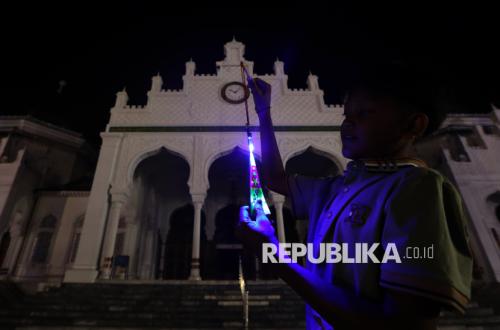
The Institute for Essential Services Reform (IESR) has stated that the large-scale blackouts occurring in Sumatra over the last month serve as a crucial warning for Indonesia to evaluate the resilience of its national electricity system. The evaluation must consider not only the system’s ability to reliably distribute power but also the resilience of electrical infrastructure against extreme events, including severe weather that is becoming more frequent due to the climate crisis.
IESR noted that state-owned electricity company PLN explained that bad weather caused two 500 kV transmission circuits in the eastern corridor to trip, leading to a power transfer to the western corridor’s 275 kV line. This transfer triggered high voltage and frequency oscillations, which ultimately forced an isolation scheme to split the Sumatran electrical system into two parts—north and south—to prevent a wider disturbance. This situation resulted in a power supply deficit in the northern region, while the southern region experienced a surplus. Defence systems in the south operated successfully, preventing blackouts, but the declining frequency in the north forced power plants to trip, causing outages.
A similar disruption occurred again on 4 June 2026, when twelve PLN transmission towers were reported damaged, either collapsing or bending, disrupting electricity supply in several areas. The damage affected two main transmission lines: the 275 kV Galang–Simangkuk Extra High Voltage Air Line (SUTET) and the 150 kV Tebing Tinggi–Sei Rotan High Voltage Air Line (SUTT). Initial indications suggest the disturbance was also linked to heavy rain and strong winds.
Deon Arinaldo, Director of the Energy System Transformation Programme at IESR, stated that these incidents demonstrate the need to test Indonesia’s electricity system not only for reliability but also for resilience. Reliability refers to the system’s ability to supply power stably under normal conditions, while resilience is the capacity to withstand, respond to, and recover from unexpected events such as storms, floods, strong winds, and extreme heat. He emphasised that the challenge is not just ensuring daily reliable electricity distribution, but also ensuring that networks, power plants, and supporting infrastructure can endure increasingly frequent extreme weather.
This risk is becoming more pertinent as the climate crisis increases the frequency and intensity of extreme weather. Data from the World Meteorological Organization (WMO) indicates that 2023–2025 were the three warmest years on record, with the average global temperature reaching 1.48 degrees Celsius above pre-industrial levels. According to the Indonesian Disaster Information Data (DIBI) from BNPB, weather-related disasters, floods, and landslides have dominated disaster events in Indonesia in recent years. Between 2021 and 2025, nearly 18,000 such events were recorded, averaging around 3,600 per year, a sharp increase from the 2011–2015 period which recorded approximately 7,700 events, or an average of about 1,500 per year.