
Sumatra Blackout Exposes Power Grid Vulnerabilities to Climate Change Weather Variability
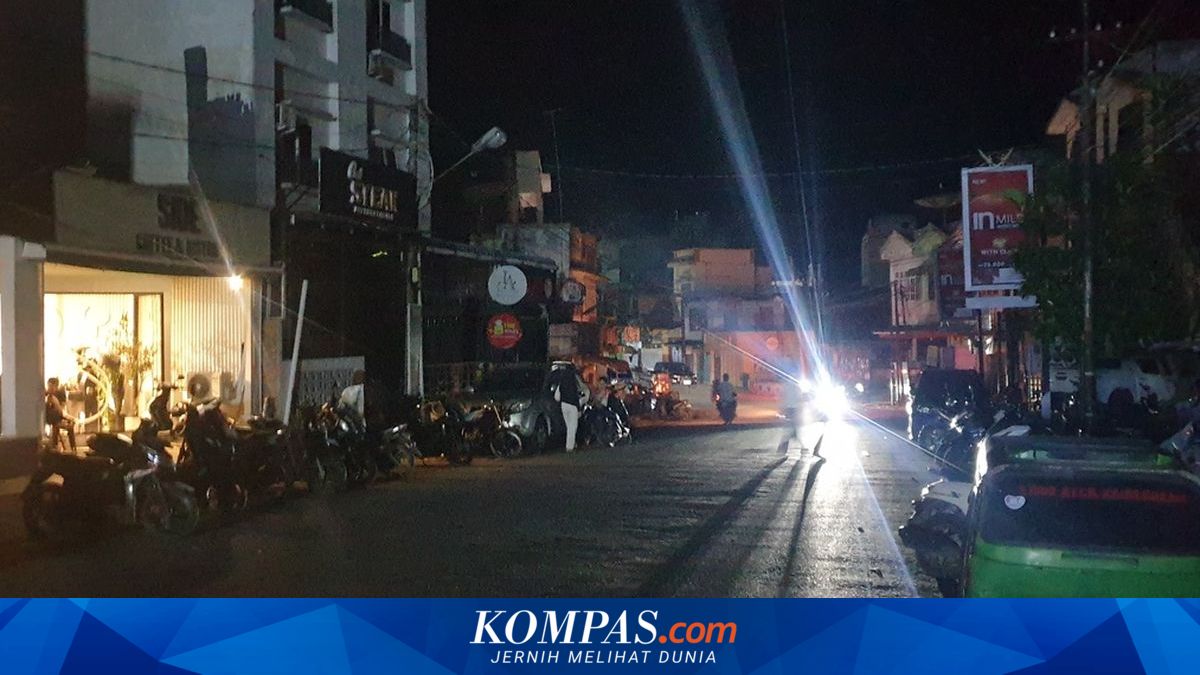
JAKARTA - A widespread power outage or blackout that recently occurred in parts of Sumatra has highlighted the significant challenges facing modern interconnected power systems amid increasing weather variability due to climate change.
Kevin Marojahan Banjar Nahor, an electricity system expert from the Bandung Institute of Technology (ITB), explained that high-voltage transmission systems are heavily influenced by environmental conditions such as temperature, wind speed, rainfall, and humidity, as these factors affect the mechanical and electrical characteristics of conductors during operation.
“In modern power systems, weather conditions are a critical parameter considered in transmission network operations,” he stated in a written statement on Saturday, 30 May 2026.
According to Kevin, climate change is also contributing to increasingly dynamic weather variability.
“Climate change does not always mean a single extreme event directly causing system disruptions. However, increased weather variability adds challenges to transmission network operations,” he added.
He explained that in large-scale transmission networks, disruptions rarely stem from a single factor but rather a combination of multiple contributing factors occurring simultaneously.
“Disruptions in large interconnected systems are probabilistic. Under certain operating conditions, a localised fault could escalate into a cascading disturbance if it affects power flow and system stability,” he said.
Kevin noted that automatic protection systems in interconnected networks are designed to safeguard generation and transmission equipment during system disturbances.
“When power system stability is compromised, protection systems automatically activate to prevent further damage to the network and generators while avoiding a total blackout across the entire interconnected system,” he added.
Kevin stated that larger interconnected systems improve energy transmission efficiency and flexibility.
However, the complexity of managing system stability increases accordingly.
Therefore, real-time monitoring technology, data-driven system analysis, and drone-based network inspections are becoming increasingly vital for modern power system operations.
Nevertheless, these efforts must be accompanied by strengthening transmission and generation infrastructure to minimise vulnerabilities that could trigger power system instability.
“Advances in monitoring and protection technology now enable operators to assess system conditions more quickly, allowing for earlier responses to disruptions,” he said.