
Sultan HB Emphasises that Investors in DIY Must Prioritise Environmental Conservation
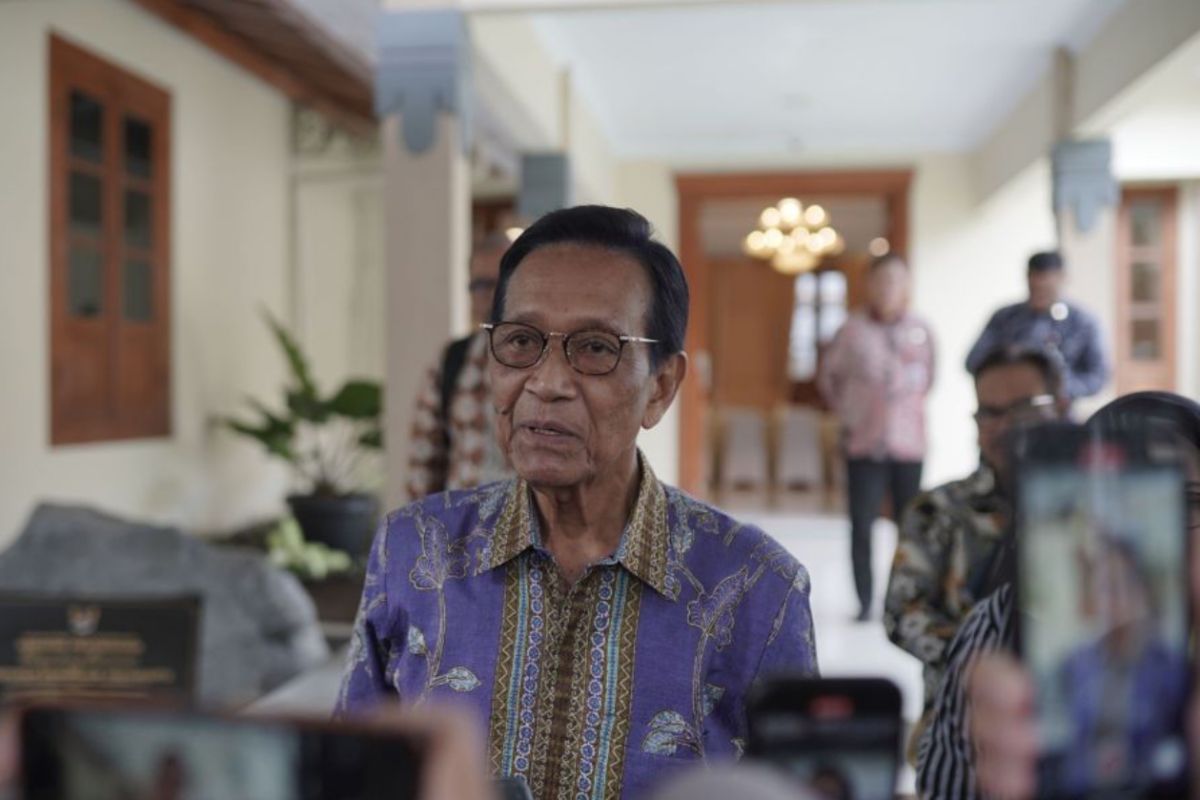
Yogyakarta (ANTARA) - The Governor of the Special Region of Yogyakarta, Sri Sultan Hamengku Buwono X, has emphasised that every investor interested in entering DIY must prioritise environmental conservation to align with the context of Hamemayu Hayuning Bawana, where Jogja’s natural environment must not be damaged.
“The safety of nature is only possible through human policies, so do not damage the environment. We focus on not damaging nature, so for investments, we are selective; if it only damages the environment or causes pollution, it’s better not to enter (invest) in Jogja,” said the Sultan at the Kepatihan Complex in Yogyakarta on Thursday.
According to the Sultan, DIY must continue to protect its natural environment from being damaged by human actions. Environmental damage mostly occurs due to human behaviour. And if damaged, nature can ‘retaliate’ by bringing disasters.
“So how do we protect His creation, how can we manage it wisely, that’s all,” he said.
The Sultan stated that investments in the southern region have limitations. For example, to market marine products, infrastructure is certainly needed, including roads. Meanwhile, access to the South Cross Road (JJLS) and the future toll road will only connect from west to east, or vice versa.
“That’s why we need roads from south to north or vice versa. Because if not, marine products cannot get out. And the road qualifications must also be equivalent for large vehicles to pass. If the road status is only a village road or district road, vehicles cannot even pass each other,” he said.
Furthermore, the Governor of DIY said that the southern region of the province holds great potential, ranging from marine resources, tourism, to micro, small, and medium enterprises (MSMEs).
However, the Sultan continued, the area still faces structural challenges in the form of economic disparities and poverty, suboptimal utilisation of coastal potential, mobility limitations, low investment interest, and vulnerability to disasters.
“Therefore, the southern region as a new growth engine needs to be pursued through the optimisation of potential and investments that align with blue economy and green economy approaches,” he said.
Meanwhile, the Secretary General of DIY, Ni Made Dwipanti Indrayanti, said that the north-south investment disparity in DIY is not a matter of geographical coincidence, but rather the result of complex interactions between historical factors, bio-geophysical limitations, and the uniqueness of the agrarian system.
According to her, the northern region, namely Sleman and Yogyakarta City, has locked in agglomeration advantages through superior human capital and established educational infrastructure.
“Meanwhile, the southern region (Bantul, Kulon Progo, and Gunungkidul) must face high operational costs due to fulfilling basic permits on environmental and spatial aspects, clean water issues in karst areas, and coastal disaster risks,” she said.
Therefore, she said, future investments must be directed towards sectors that align with the local characteristics of the southern region, such as sustainable tourism in the Geopark area, marine or modern agricultural processing industries in the south.
“An expansion of the investment mindset to all regional apparatus organisations (OPD) is also necessary, because investment is a shared responsibility of all parties,” she said.