
Sulphur Imports Disrupted, Business Owners Request This from the Government
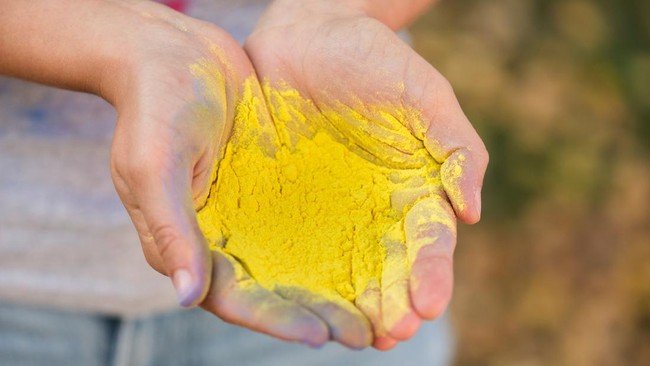
Jakarta, CNBC Indonesia - Global sulphur supply disruptions are beginning to impact the nickel downstreaming industry in Indonesia. Therefore, business actors are requesting that the government take swift action, particularly in relaxing import permits for alternative raw materials.
Chairman of the Indonesian Nickel Industry Forum (FINI) Arif Perdana Kusumah revealed that the disrupted sulphur supply due to geopolitical conditions has driven several industry players to seek alternative sources from countries outside the Middle East.
However, these efforts are not proceeding smoothly. This is because, in addition to longer distribution distances, the production capacity from alternative countries is deemed not as large as that of Middle Eastern countries, which have been the main suppliers.
“This is not easy, because the distance can be further and the quantity is not as much as produced by Middle Eastern oil and natural gas producing countries. Besides that, the world sulphur price is currently experiencing a very significant increase,” said Arif to CNBC Indonesia on Thursday (23/4/2026).
As an alternative, some companies are also beginning to consider importing in the form of sulphuric acid. However, this option also faces various obstacles, from logistical complexity, special handling requirements, to import permitting processes that are not straightforward.
Therefore, in emergency conditions like the current one, more flexible government policies are needed. He emphasised the importance of easing the import permitting process for sulphuric acid to maintain the continuity of industrial operations.
“Government policies are needed to facilitate the granting of import permits for sulphuric acid during emergency conditions like this,” he said.
As is known, the government is beginning to be wary of potential disruptions in the sulphur supply chain that could impact the nickel downstreaming programme. This became known after the Chairman of the National Economic Council (DEN) Luhut Binsar Pandjaitan met President Prabowo Subianto at the State Palace.
In that meeting, Luhut conveyed several recent developments, including risks from prolonged global conflicts that could affect the energy and strategic commodities sectors.
Through a post on his personal Instagram account @luhut.pandjaitan, he stated that over the next three months, Indonesia’s economic growth and activity will remain relatively stable.
However, the government has prepared scenarios to anticipate various possibilities in facing a worsening global situation.
“Especially if this global conflict lasts longer than we anticipated. One of the things we are monitoring is the surge in energy prices,” explained Luhut, quoted on Thursday (23/4/2026).
In addition, the government is also monitoring potential disruptions in the supply chain of other important commodities, particularly sulphur. Luhut assessed that this commodity plays a crucial role in the nickel downstreaming process and the development of electric vehicle batteries in Indonesia.
“In addition to energy, we are also monitoring disruptions in the supply chain of other strategic commodities; such as sulphur which is crucial for nickel downstreaming and electric vehicle batteries,” he said.