
Sukamiskin Subdistrict in Bandung City Builds Community-Based Waste Management Ecosystem
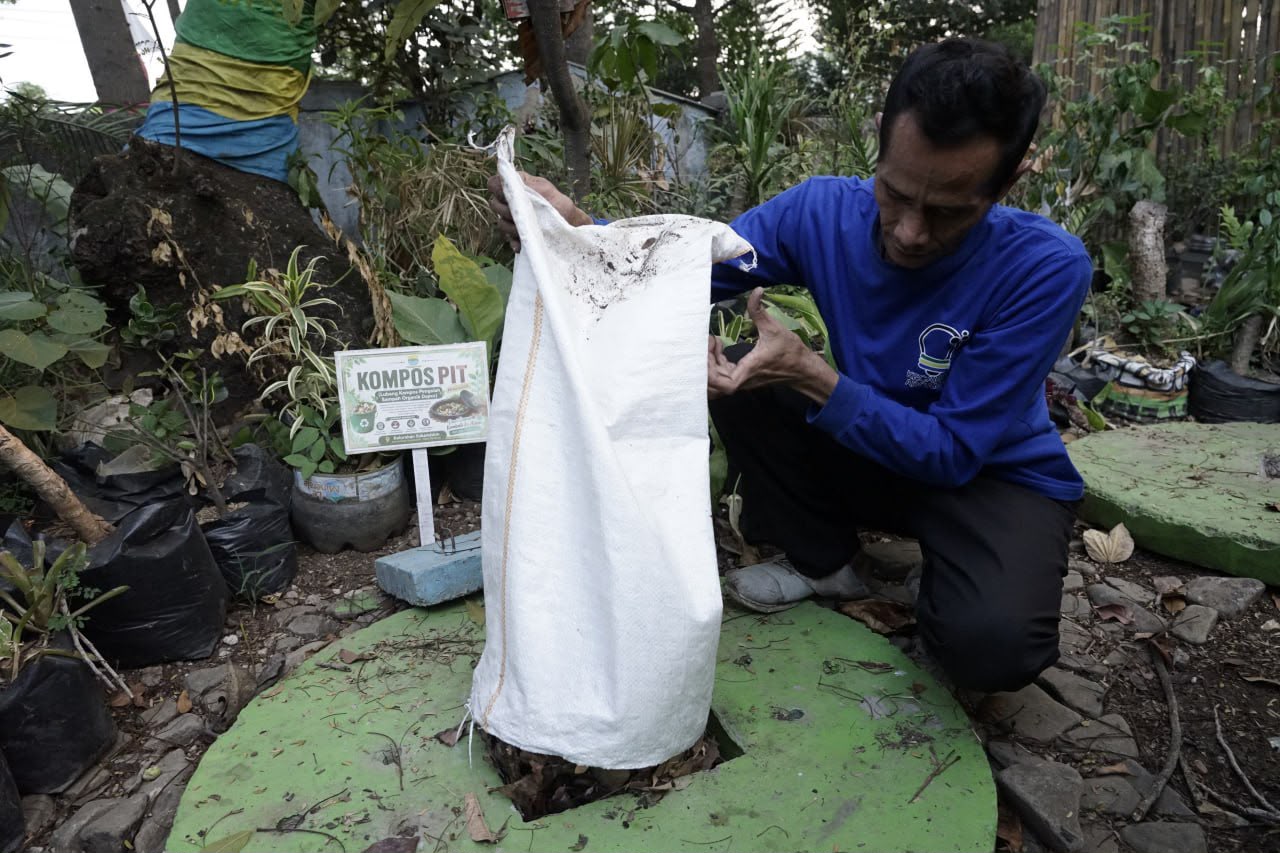
Sukamiskin Subdistrict, Arcamanik District, Bandung City, continues to strengthen community-based waste management by building a processing ecosystem from household level up to subdistrict level. Various methods are already running, from waste sorting at home, processing organic waste using maggots and composters, to processing non-organic waste into alternative fuel in the form of briquettes.
Sukamiskin Subdistrict Head Sofian Ismail stated that waste management in his area is carried out in stages involving the community, RT, RW, and various elements of community institutions. One of the processing methods already running is maggot cultivation to decompose organic waste. Currently, this processing has a capacity of around 400 to 500 kilograms of waste per day, although the target is to reach 1 tonne per day in the future.
“Maggot capacity is around 400 to 500 kilograms a day. The target is one tonne, but because maggots are living creatures, they are certainly influenced by temperature and other factors,” he explained.
According to Sofian, in addition to processing at the subdistrict level, Sukamiskin also encourages behavioural change in the community through a waste sorting programme at source. Around 500 households have received socialisation and education on sorting waste into organic, non-organic, and residue. Of that number, about half, or roughly 250 households, have begun sorting and processing independently. These efforts are reinforced by providing processing facilities in each RW. Of the total 17 RWs, each has at least two composter-based processing units, while several RWs have up to five units.
“These facilities allow the community to process organic waste directly without having to take it to a temporary disposal site (TPS). Our target is 100 percent sorting at source. At least 50 percent of households are already sorting and processing waste themselves at home,” he said.
Sofian added that Sukamiskin Subdistrict is developing other waste processing through waste peyeumisation. The facility is currently supported by six machine units used to process non-organic waste into briquettes. The process begins by putting non-organic waste into a processing container. The waste is then stacked gradually with a thickness of about 20 centimetres and given a bioactivator. The process is repeated until the pile reaches about 1.2 metres.
“After drying for at least seven days, the waste is then ground using machines. There are stages of coarse grinding, fine grinding, and mixing with tapioca adhesive before being moulded into briquettes. If all facilities run optimally, the non-organic waste processing capacity is projected to reach 6 tonnes per day,” he stressed.
Sofian said Sukamiskin Subdistrict is also being prepared as a waste management laboratory, where communities, RT, RW, non-governmental organisations, and other regions wishing to conduct study visits can see the waste management process directly.
The development of briquette processing is also planned to be expanded to the RW level. RW 13 has expressed readiness to become a production site. Around 200 square metres of land has been prepared, divided for production machines, drying, and storage.
“The plan is that the briquettes produced will be collected and transported to be used by various industrial sectors, such as cement factories, tile factories in Majalengka, and the textile industry,” he added.
In addition to processing at the subdistrict level, Sofian continued, Sukamiskin is also developing cooperation with Bandung Islamic University (Unisba) and the West Java Provincial Government through cold plasma technology to process non-organic waste. The facility was previously able to process about 1.5 tonnes of non-organic waste per day in the initial stage of operation. However, the machine is currently experiencing problems and is still waiting for replacement components that must be imported from abroad.
“We hope the facility can resume operations in the near future so that Sukamiskin’s waste processing capacity becomes even greater. And if all processing facilities are running, Sukamiskin even has the potential to receive waste from other areas because its processing capacity is projected to exceed the waste generated by the local community,” he added.
Currently, waste generation in Sukamiskin Subdistrict is estimated at 4 to 6 tonnes per day. Of that amount, about 30 percent still has to be taken to the TPS, while the rest is gradually directed to be processed through the various available facilities. Waste management from source is also strengthened through the Waste Sorting and Processing Officer (Gaslah) programme. In Sukamiskin there are about 17 officers tasked with assisting waste management in each RW.
These officers not only collect waste from residents’ homes but also encourage the sorting process before waste is taken to processing points. They sort organic waste. The target from DLH is around 25 kilograms per day, and that has been exceeded. Some collect 60 kilograms or even more than 100 kilograms. At the RT level, waste collection from residents’ homes also continues. The collected waste is then taken to Gaslah points for sorting. Organic waste is directed to processing facilities such as composters and maggots, while non-organic waste enters the next processing stage.