
Sukamiskin Prison Inmates Build Boats for Fishermen, Dinghies and Duchy Boats
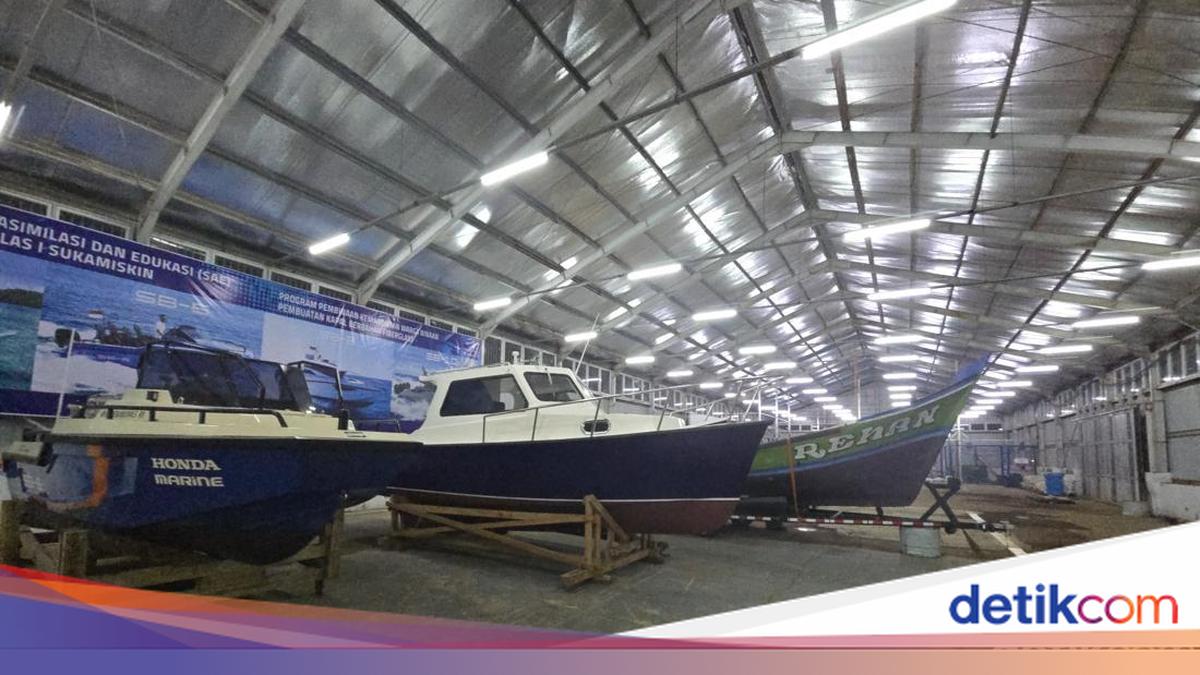
Sukamiskin Class I Prison in Bandung, West Java, is empowering inmates through a boat production programme, manufacturing vessels ranging from fishing boats and dinghies to duchy boats. The boats are branded ‘Sukaboat’ and have already penetrated the market with more than 25 units sold across various types.
‘I have learned so much here at the Sukaboat workshop. I am certainly proud to be able to build boats. I have studied boat theory, which has broadened my knowledge. I have already worked on five SB6-type boats,’ said Wawan (26), an inmate serving a sentence for a drug offence, to detikcom on Thursday evening (20/8/2026).
Minister of Immigration and Corrections Agus Andrianto has launched 15 Action Programmes for 2026. Point 10 of the programme emphasises products made by inmates and micro, small and medium enterprise (MSME) initiatives behind prison walls.
‘In February we collaborated with Honda to participate in the Indonesia International Motor Show (IIMS) 2026 at Kemayoran. They supported us by preparing a booth at the exhibition and so on. In the end we took part in the exhibition; while other booths displayed motorcycles, we exhibited boats made by inmates,’ said Emirsyah Satar, an inmate serving a sentence for corruption, on the same occasion.
The development of Sukaboat, or Suka Kapal, is supervised by Emir, who has a background as an economist and previously led Garuda Indonesia, along with several inmates who have expertise in transportation, shipping and design. To equip other inmates, particularly on the technical side, the prison has partnered with fibreglass vendors.
‘We are on the managerial side, so we learn how to supervise the technical team, and we also learn the technical aspects ourselves. To learn about fibreglass, we are taught by vendors who supply boat materials,’ Emir explained.
Emir said the materials used for Sukaboat products vary, including fibreglass, aluminium, wood and HDPE. However, he noted that production training is currently still focused on fibreglass boats.
The following are the types of boats developed by Sukaboat:
- 4-Metre Dinghy
One of Sukaboat’s initial products is a 4-metre boat, or dinghy. In 2024, 20 dinghy units were produced through a CSR programme by PLN, and six additional units were made for individual buyers. Fifteen inmates spend their productive hours each day working in the Sukaboat hangar.
- 8-Metre Duchy Boat
The success of the dinghy boat was followed by the birth of the duchy boat. The vessel was initially intended as a BTS (base transceiver station) support boat for island regions. Two units of the 8-metre boat have been purchased by private parties. In 2026, the project is back on the development agenda under the name Duchy Reborn.
‘There is the Duchy, a 27-foot or 8-metre boat. We have already built two units, but we are still revising them; they are not yet finished,’ said Emir.
The concept is to modernise the Duchy, repowering it with conventional engines and updating its design. Despite the modernisation, the boat’s function remains directed towards serving as an ‘internet boat’ for underdeveloped, frontier and outermost (3T) regions.
- SBF-10 Fishing Boat
Sukaboat has also entered the fishing boat segment with the type code SBF-10. This boat was created as a form of modernisation of traditional fishing vessels.
An inmate named Rio, who is part of the managerial team, explained that the SBF-10 will not eliminate the character of fishing boats currently used by communities. The traditional shape and character are retained, while several technical aspects are updated.
‘We started from an area not far from Sukamiskin, namely the blue swimming crab fishermen in Cirebon. We took one example of a wooden fishing boat and converted it into fibreglass, but with a traditional design and look,’ Rio explained.
Four main areas are targeted for modernisation: material, hull shape, engine and propeller. The design aims to make the hull lighter and more durable, easier to maintain, faster and more fuel-efficient.
‘It should be more economical because fibreglass is not as heavy as wood,’ Rio added.
- 6-Metre Speedboat SB-6
The SB-6 boat falls within the personal speedboat segment. The Sukaboat managerial team saw potential in the jet ski market, so they created a product design as an alternative to jet skis, with a capacity of five people (one skipper and four passengers).
‘Its function is also multi-purpose. The SB-6 can be developed into a tourist boat, patrol boat, fishing boat, diving boat or even a SAR vessel,’ said Rio. The product already has buyers.
- 8-Metre Speedboat SB-8
The SB-8 is a speedboat approximately 8 metres in length. This boat serves as a training object requiring more complex technical skills.
Due to its larger size, the SB-8 can be fitted with an enclosed cabin. Consequently, the training material for inmates at the Sukaboat workshop has expanded to include glass installation, interior flooring, walls and ceilings, seating, safety equipment, railings, fuel and water tanks, engines, steering systems, mooring systems, electrical systems and piping.
- 10-Metre Speedboat SB-10
Lastly, Sukaboat’s newest boat design is the SB-10, with a length of 10 metres. This type is deliberately designed to target speeds of up to 50 knots.
Sukaboat hopes this vessel can support patrol, security and rapid emergency response activities. Plans call for the use of materials such as Kevlar and aramid on the SB-10, with the aim of protecting the boat from certain projectiles.
Photo caption (from left to right):
SB-6 Speedboat
SB-8 Speedboat
SBF-10 Fishing Boat
Source: jawawa.id (https://jawawa.id/newsitem/sukamiskin-prison-inmates-build-boats-for-fishermen-dinghies-and-duchy-boats-1787413905)
Originally published by detikcom (https://news.detik.com/berita/d-8630485/ragam-kapal-karya-napi-sukamiskin-untuk-nelayan-dinghy-hingga-duchy-boat), translated from Indonesian