
Sugiono States Gerindra Agrees on 5% Parliamentary Threshold
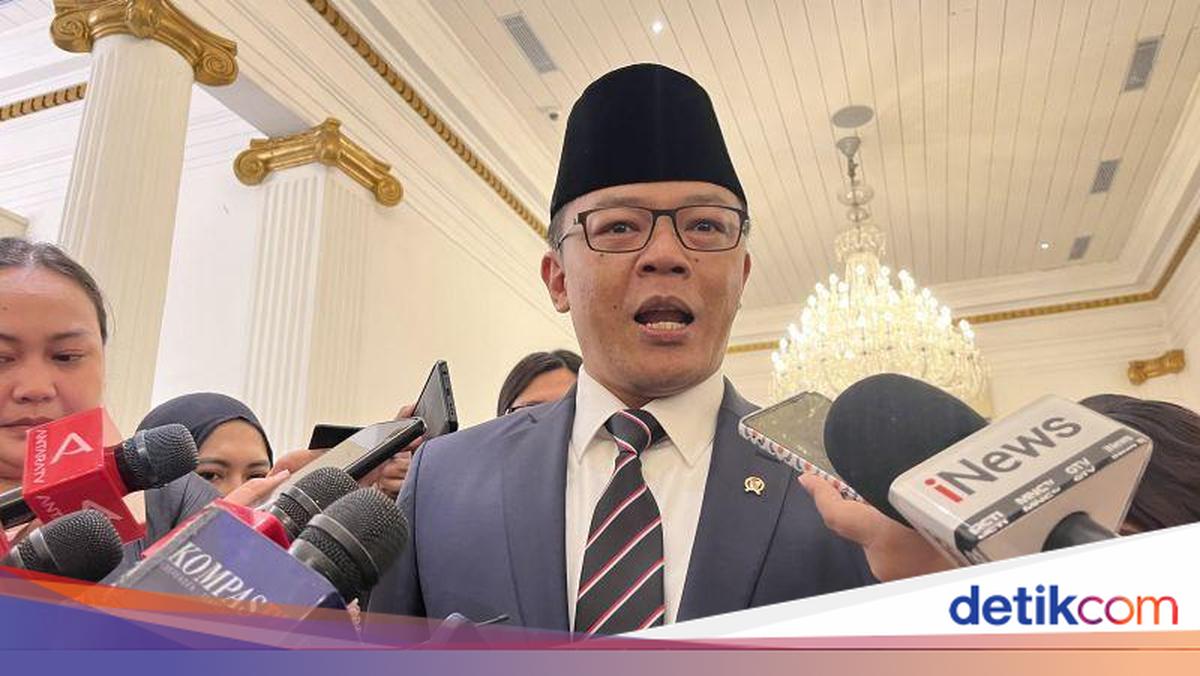
Gerindra Party Secretary-General Sugiono has shared updates regarding a meeting between political party chairpersons to discuss the Election Bill. Sugiono stated that during the meeting, Gerindra agreed to a parliamentary threshold (PT) of 5%.
“One thing that everyone seems to agree on—though I cannot speak on behalf of other parties—is that Gerindra also agrees on the 5% PT,” Sugiono told reporters at the DPR building in Senayan, Jakarta, on Wednesday (16/9/2026).
Sugiono noted that the Golkar Party and PKS also proposed this figure. He assessed that all political parties in attendance were in agreement with the percentage.
“As mentioned yesterday, Golkar also expressed this, as did PKS, and I believe that is what we have agreed upon,” he said.
Furthermore, Sugiono mentioned that the attending party chairpersons discussed ways to ensure elections are both effective and efficient. Discussions also focused on how to ensure that all people’s votes are properly accommodated.
“Other matters were also discussed. The core objective is how to make this election more efficient and effective, and how the remaining voices of the people can still be well-accommodated,” he added.
Previously, the Deputy Chairman of Commission II for the Democratic Party, Dede Yusuf, spoke regarding the meeting between the Golkar and PKS parties, where one of the primary agendas was the Election Bill. Dede confirmed that a meeting between the chairpersons had indeed taken place.
“I believe it is necessary. I heard that a meeting has already occurred. However, whether there will be a second meeting remains to be seen,” Dede said at the parliamentary complex in Senayan, Jakarta, on Tuesday (15/9).
Dede also mentioned that several options are being prepared for the future Election Bill, and these options are currently under consideration.
“Basically, there are several options. We are creating options: an option to implement the Constitutional Court’s decision, an option based on input from civil society and academics, and an option to use the previous version of the DPR,” he explained.