
Sugarcane Farmers Urge Removal of Sugar Price Caps, Present Grievances to Parliament
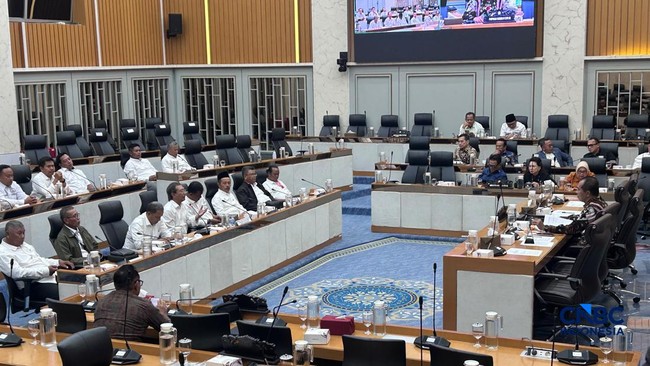
The Indonesian Sugarcane Farmers Association (APTRI) has presented several grievances to the House of Representatives (DPR RI) regarding the current conditions facing sugarcane farmers. One of the primary demands is the removal of the Maximum Retail Price (HET) for sugar at the consumer level.
APTRI General Chairman Soemitro Samad .adikoen expressed these aspirations during a Public Hearing with Commission IV of the DPR RI. He noted that many sugarcane farmers are currently forced to use non-subsidised fertilisers, which has significantly increased production costs.
Soemitro argued that if farmers are required to purchase non-subsidised fertiliser, then sugar prices should not be restricted. “If we are using non-subsidised fertiliser, then the price should not be limited. Let us sell sugar according to market prices,” Soemitro stated during the hearing at the Parliament Complex in Jakarta on Wednesday (23/9/2026).
He explained that the price of non-subsidised ZA fertiliser experienced a significant increase throughout 2026. At the beginning of the year, the price paid by farmers was approximately Rp4,300 per kg. However, following the escalation of the Iran-US conflict, the price of this fertiliser surged to between Rp9,700 and Rp10,500 per kg.
“At the start of 2026, it was fine; we bought fertiliser at around Rp4,300 per kg. But when Iran was hit by the US, in the middle of our season when we needed fertiliser most, the price of non-subsidised ZA rose to Rp9,700 or even Rp10,500 per kg. We are prepared, provided that the sugar price is not restricted at the consumer level,” he said.
According to Soemitric, these conditions make it difficult for farmers to operate while facing sugar price ceilings. He stated that farmers are willing to face market mechanisms, provided the government maintains instruments to manage prices during consumer-level surges.
“If prices spike, address it with market operations. That is fine. But let the market be stabilised through market operations, rather than being constrained by HET or HAP (Maximum Reference Price) ceilings,” he added.
APTRI proposed that, in addition to maintaining the Government Purchase Price (HPP), there should be no more Reference Selling Price (HAP) or Maximum Retail Price (HET) limiting sugar prices for consumers.
“Therefore, in addition to the HPP, we propose the abolition of HAP or HET at the consumer level. It is not that we want prices to be high. For rice or chillies, market operations are fine. But we should be allowed to sell sugar without HET restrictions at the consumer level. This is about fairness,” Soemitro said.
Limited Fertiliser Subsidies
Furthermore, Soemitro revealed another issue facing farmers: the limited availability of subsidised fertiliser. He noted that the allocation of subsidised fertiliser for sugarcane farmers is currently calculated based on a specific land area. In practice, farmers with large plots of land may only receive subsidies for approximately 2 hectares.
“Currently, if I have 10 hectares, I am only given enough for 2 hectares. If I have 20 hectares, I still only get enough for 2 hectares. Even if I have 40 hectares of crops, I only receive subsidies for 2 hectares. Even 100 hectares only gets 2 hectares,” he explained.
While the requirement for ZA fertiliser for sugarcane is estimated to be at least 500-600 kg per hectare, Soemitro stated that the farmers he meets only receive about 108 kg per hectare.
Soemitro emphasised that the issue is not simply a demand for more subsidised fertiliser. Rather, he requested that the use of non-subsidised fertiliser not be framed as a burden already covered by the government through subsidies.
“Please, do not narrate that sugarcane farmers have already been given subsidised fertiliser or that the prices have dropped, which is the basis of these complaints. It is fine if we do not receive subsidies. But do not act as if we are receiving them,” he said.
With rising fertiliser costs and limited fertiliser subsidies, APTRI believes farmers need greater freedom to determine sugar prices based on market conditions. According to Soemitro, the government can utilise market operations to protect consumer purchasing power during price spikes, while ensuring farmers are not continuously burdened by consumer-level price caps.
Source: jawawa.id (https://jawawa.id/newsitem/sugarcane-farmers-urge-removal-of-sugar-price-caps-present-grievances-to-parliament-1790157428)
Originally published by CNBC Indonesia (https://www.cnbcindonesia.com/news/20260923141043-4-770251/petani-tebu-desak-harga-gula-dilepas-ke-pasar-curhat-begini-ke-dpr), translated from Indonesian