
Sugarcane Farmers Reveal Four Root Causes of Indonesia's Sugar Import Addiction—Threatening Self-Sufficiency
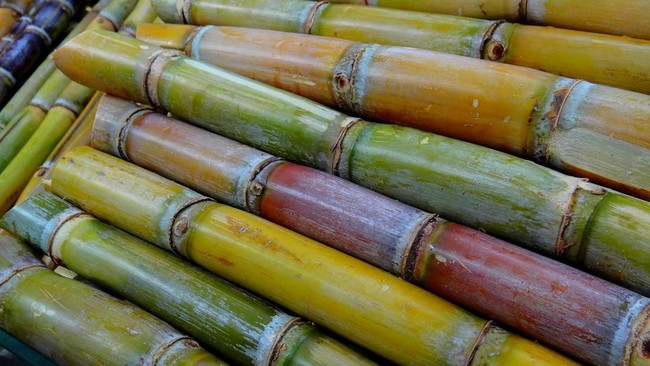
The Chairman of the Indonesian Smallholder Sugarcane Farmers Association (APTRI), Soemitro Samadikoen, has outlined several fundamental problems that keep Indonesia dependent on sugar imports and hinder achieving self-sufficiency targets. He argues that the main issue is not just insufficient production but a chain of problems from upstream to downstream, including inaccurate data on needs, inconsistent import policies, and weak incentives for farmers. Soemitro highlights the use of data on sugar needs, particularly for industry, which he deems overstated and directly impacts import decisions. “What the Minister of Agriculture said there (in a working meeting with Commission VI of the DPR RI) was that the industrial sugar needs are still 3.9 million tonnes. That’s too much. Yes, because inaccurate data is used. So we import more,” Soemitro told CNBC Indonesia on Friday (10/4/2026). According to him, similar practices occur with other food commodities like soybeans and corn. Needs are often exaggerated, while imported product prices are cheaper because other countries are more advanced technologically. “Why? Because food prices from abroad are relatively cheaper than ours. There, agriculture already uses mechanisation which is far cheaper in cost compared to our manual labour,” he said. Not only about data, he also criticises import policies deemed not aligned with real field conditions. He gave an example from last year, when domestic sugar stocks were still available, yet imports continued. “Last year there were imports, and we had warned them. Because there were still stocks of our sugar from previous years’ imports. This is what’s left. But the government still imported,” he said. This situation directly impacts the absorption of farmers’ sugar. In fact, he mentioned that domestic sugar was unsellable even though the new milling season had just begun. “And it was proven in mid-year, we had only been milling for 2 months, our sugar was already unsellable. You’ve heard, right, farmers’ sugar not selling, then we shouted for the government to buy it quickly?” he said. He also touched on the inconsistency between statements and policy practices in the field. “So what is said there is different from the practice elsewhere. That’s what sometimes confuses us. If we really want to be serious, how? Yes, be serious,” Soemitro stressed. 1. Prices Restrained, Farmers Reluctant to Plant Sugarcane Meanwhile, from the production side, Soemitro assesses that low interest from farmers in planting sugarcane is the main factor why national sugar production is not optimal. The cause is that sugar prices are deemed not to provide sufficient incentives. “Growing or planting sugarcane is still not attractive. Because the sugar price is restricted,” he revealed. He explained that ideally, the sugar price should be around 1.5 times the rice price to be attractive to farmers. However, in reality, prices are capped while production costs continue to rise. “Sugar now, the cost of production is already over Rp15,000. So the price minimally we break even at almost Rp16,875,” he clarified. With that condition, farmers’ margins become very thin. As a result, farmers tend to switch to other more profitable commodities. “Compared to planting rice, planting rice is still more profitable. So don’t cap the sugar price,” he said. He also urged the government to remove the upper price limit in the Reference Selling Price (HAP) for sugar and leave the price to market mechanisms. “Let the market determine the price. Don’t let us be pegged like this. Our production cost is already that much, but the selling price above it is restricted,” Soemitro stressed. 2. Imported Sugar More Competitive Meanwhile, dependence on imports is also driven by the cost disparity between Indonesia and other countries. Soemitro said other countries already use mechanisation and have vast lands, making costs far more efficient. “Much cheaper because there everything uses mechanisation. Their plantations are vast. We are manual, using human labour, and the areas are small-small,” he said. He even compared the scale of sugarcane farmers’ lands in Indonesia with abroad. “Sugarcane farmers here, 200 hectares is already considered large. There, 2,000 hectares,” he said. 3. Production Stalled by Management and Policy Issues Besides the farmer factor, Soemitro also spotlighted management and policy problems, including in state-owned enterprises in the sugar sector. “Say now, for example, PT SGN (Sinergi Gula Nusantara) is losing Rp680 billion. Why? Because of imported sugar? No way. It’s because they can’t, the management can’t work,” Soemitro snapped. He assessed that improvements in management, regulations, and policies are key to increasing national production. “What needs to be fixed is the policies and regulations,” he added. With these various problems, Soemitro believes the sugar self-sufficiency target must be viewed realistically. He emphasised that self-sufficiency is not just about production numbers but also the ability to absorb domestic production. “Self-sufficiency must truly be fulfilled from domestic production. Don’t just talk about self-sufficiency casually,” he said. He gave an example: even if national consumer sugar production is said to be close to needs, local sugar can still not be absorbed if the market is flooded with foreign products. “We are not yet self-sufficient, but our sugar is already unsellable. How is this? It means there is other sugar entering us,” said Soemitro. According to him, before talking about self-sufficiency targets, the government needs to fix data, import policies, and protection of the domestic market. “The problems need to be unravelled. Don’t guess. Invite us farmers to talk,” he said. 4. Farmers Need Consistency Nevertheless, Soemitro is optimistic that Indonesia can break free from sugar import dependence if reforms are carried out consistently. “It can (break free from imports and achieve sugar self-sufficiency). In fact, I guarantee it can be done by 2030. But the stages must”
Source: jawawa.id (https://jawawa.id/newsitem/sugarcane-farmers-reveal-four-root-causes-of-indonesias-sugar-import-addiction-threatening-self-sufficiency-1775832654)
Originally published by CNBC Indonesia (https://www.cnbcindonesia.com/news/20260410172732-4-725811/petani-tebu-ungkap-4-biang-keladi-ri-doyan-impor-gula-ancam-swasembada), translated from Indonesian