
Sugarcane Farmers Highlight Anomalies: Low Rendition and Poorly Timed Sugar Imports
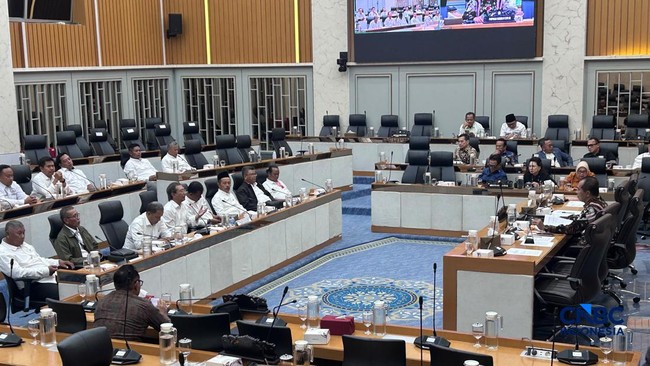
The Indonesian Sugarcane Farmers Association (APTRI) has brought several issues faced by sugarcane farmers to a Public Hearing with Commission IV of the Indonesian House of Representatives (DPR RI).
One of the key concerns highlighted by APTRI General Chairman Soemitro Samadikoen is the sugar rendition rate, which is deemed to remain low despite entering September. According to Soemitro, simply put, the increasingly dry conditions of the cane should lead to an increase in rendition. He compared the current situation with patterns observed in previous years.
“In the past, if harvesting began in early June, the rendition in May would be approximately 6%. By July, as it gets drier, it would rise to 7%. In August it would be 8%, and in September 9%; it followed the months,” Soemitro stated during the hearing at the Parliament Complex, Jakarta, on Wednesday (23/9/2026).
However, according to him, this pattern is not visible in the current conditions. Even as September has arrived, there are still cane renditions below 8%, and even below 7%. “It is now September, yet we can report that some renditions are still below 8% or even 7%. This is anomalous,” he said.
Soemitro questioned this condition because, on the other hand, the government, through the Ministry of Agriculture, has reported an increase in production. “It is quite contradictory, as the Ministry of Agriculture reports that production is increasing,” he remarked.
According to Soemitro, the issue of rendition is vital for farmers as it directly relates to the sugar yield obtained from the cane they cultivate.
APTRI Highlights Sugar Imports During Milling Season
After addressing the rendition issue, Soemitro then highlighted another problem in the national sugar trade, namely import policy. APTRI is questioning the import of approximately 150,000 tonnes of raw sugar for consumption needs while farmers are still in the middle of the milling season.
Soemitri questioned this policy because, according to APTRI’s calculations, the national sugar supply is deemed sufficient for consumption needs. “Last year, there was an import of 200,000 tonnes. Our remaining stock at the end of 2025 is 1.2 million tonnes. If we add the imports, there is approximately 1.4 million tonnes,” he said.
He added that this stock would be supplemented by domestic sugar production this year. Soemitro noted that production, based on several government releases, reaches approximately 3.02 million tonnes. Even if this year’s production only matches last year’s at 2.6 million tonnes, he believes the supply remains sufficient when combined with existing stocks.
“Based on the harvests and several releases from the Ministry of Agriculture, it is 3.02 million tonnes. Let’s say 3 million tonnes. Or even if we use a pessimistic calculation, matching last year’s 2.6 million tonnes, plus the 1.4 million tonnes (carryover from last year), it is enough for our consumption,” Soemitro explained.
With these calculations, Soemitro questioned the urgency of sugar imports while domestic production is ongoing. However, he emphasised the need to distinguish between white crystal sugar for consumption and raw sugar used as raw material.
“There are no imports of white crystal sugar. What we are importing is raw sugar. The 3 million tonnes is for industrial sugar; it is just a matter of ensuring it enters the system. The 200,000 tonnes is the quota for white crystal sugar,” he clarified.
In the context presented by APTRI, the import of 150,000 tonnes of raw sugar is a concern because that raw sugar will be processed into consumer sugar while local farmers are still in the milling season.
Previously, APTRI had expressed objections to the 150,000-tonne raw sugar import for consumption needs. The import is reportedly allocated through ID Food, with 50,000 tonnes to be processed at the Madukismo Sugar Factory and another 100,000 tonnes at a private sugar factory in Bombana, Southeast Sulawesi.
Soemitro then reminded the committee of the farmers’ experience in 2025, when he claimed that farmers’ sugar production was not well-absorbed following import permits issued at the start of the year. “In 2025, there were sugar imports that we opposed, with permits for around 200,000 tonnes,” said Soemitro.
For APTRI, the issue with imports is not merely about whether imports occur, but rather the timing and the impact on the absorption of farmers’ sugar while the milling season is still underway.
Source: jawawa.id (https://jawawa.id/newsitem/sugarcane-farmers-highlight-anomalies-low-rendition-and-poorly-timed-sugar-imports-1790160822)
Originally published by CNBC Indonesia (https://www.cnbcindonesia.com/news/20260923160843-4-770298/petani-tebu-ungkap-hal-aneh-rendemen-rendah-impor-gula-salah-waktu), translated from Indonesian