
Sugarcane Farmers Frustrated, Claim Not All Receive Subsidised Fertiliser
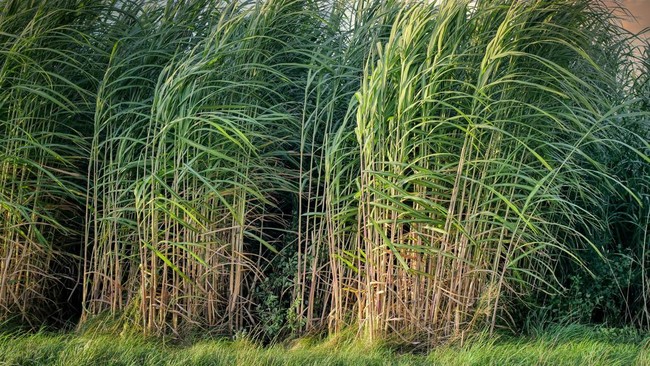
The Indonesian Sugarcane Farmers Association (APTRI) has candidly revealed that not all sugarcane farmers receive subsidised fertiliser according to their actual requirements. It was noted that farmers managing tens to hundreds of hectares may only receive fertiliser allocations sufficient for just two hectares.
This was stated by the General Chairman of APTRI, Soemitro Samadikoen, during a Public Hearing with Commission IV of the Indonesian House of Representatives (DPR RI) at the Parliament Complex, Jakarta, on Wednesday (23/09/2026). Soemitro explained that the limited allocation of subsidised fertiliser forces sugarcane farmers to rely on non-subsidised alternatives to meet crop needs.
“Currently, if I have 10 hectares, I am only given enough for 2 hectares. If I have 20 hectares, I also only get enough for 2 hectares. For example, for my 40-hectare plantation, I only receive fertiliser for 2 hectares. Even for 100 hectares, it is only 2 hectares,” he said.
According to Soemitro, the requirement for ZA fertiliser for sugarcane crops is at least 500-600 kg per hectare. However, he noted that farmers he has met only receive approximately 108 kg per hectare.
This situation compels farmers to purchase non-subsidised fertiliser at significantly higher prices. Soemitro noted that the price of non-subsidised ZA fertiliser at the beginning of 2026 was around Rp4,300 per kg. However, that price surged amidst the Iran-US conflict, precisely when farmers were entering a period of high fertiliser demand.
“At the start of 2026, it was fine; we bought fertiliser at around Rp4,300 per kg. But once Iran was hit by the US, in the middle of our season when we needed fertiliser in large quantities, the price rose. Non-subsidised ZA rose to Rp9,700 or even Rp10,500 per kg. We are prepared for this, provided that the price of sugar is not restricted at the consumer level,” he stated.
Farmers Request Sugar Prices Not Be Fixed
Given these conditions, Soemitro requested that farmers forced to use non-subsidised fertiliser should not be burdened by sugar price ceilings at the consumer level. He argued that while farmers are willing to bear the high cost of non-subsidised fertiliser, the consequence should be that sugar prices are allowed to follow market mechanisms.
“If we use non-subsidised fertiliser, the price should not be restricted. Let us sell sugar according to the market price,” said Soemitro.
He believes the government can still protect consumers if sugar prices spike without restricting farmers’ selling prices through the Maximum Retail Price (HET) or the Reference Selling Price (HAP).
“If prices surge, tackle it with market operations. That is fine. But let the market be stabilised through market operations, not by shackling it with HET or HAP,” he added.
Consequently, APTRI proposes that the government maintains the Government Purchase Price (HPP) but abolishes the Reference Selling Price (HAP) and the Maximum Retail Price (HET) for sugar at the consumer level.
“Therefore, in addition to the HPP, we propose the abolition of HAP or HET at the consumer level. We do not want prices to be expensive. For rice or chilli, market operations are fine. But we should be allowed to sell sugar without HET restrictions at the consumer level. This is our demand for fairness,” he explained.
Soemitro also emphasised that APTRI does not object if farmers ultimately have to use non-subsidised fertiliser. The issue is the misconception that sugarcane farmers are enjoying full fertiliser subsidies.
“Please, do not narrate that sugarcane farmers have been given full fertiliser subsidies and that prices are now falling, which is why we are complaining. It is fine if we are not given subsidies. But do not assume that we are receiving them,” he concluded.
According to APTRI, the scarcity of subsidised fertiliser and the high cost of non-subsidised fertiliser are the reasons why farmers require the flexibility to determine sugar prices. Meanwhile, the government can still utilise market operations as an instrument to maintain stability if price increases burden consumers.
Source: jawawa.id (https://jawawa.id/newsitem/sugarcane-farmers-frustrated-claim-not-all-receive-subsidised-fertiliser-1790167983)
Originally published by CNBC Indonesia (https://www.cnbcindonesia.com/news/20260923164332-4-770312/petani-tebu-gerah-blak-blakan-bilang-tak-semua-dapat-pupuk-subsidi), translated from Indonesian