
Sugar Production Rises, Association Urges Government to Hold Back Imports
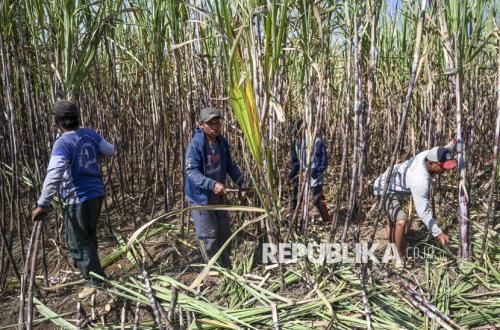
JAKARTA — National sugar production in 2026 is projected to reach at least 2.8 million tonnes, potentially its highest level in about a decade. The Indonesian Sugar Association (AGI) has urged the government not to open the door to imports that could depress prices and disrupt the absorption of domestic production.
AGI Secretary-General Dwi Purnomo said sugar production from sugar cane had reached around 2.6 million to 2.7 million tonnes towards the end of this year’s milling season. The total is expected to continue rising to at least 2.8 million tonnes.
“Policies that would reduce the income of farmers and the sugar industry should not be introduced. Policies that lead in that direction must not be allowed,” Dwi said, as quoted on Tuesday (10 November 2026).
Dwi said higher production needed to be matched by trade policies that provided market certainty for farmers and the domestic sugar industry. Before making decisions on imports, the government should take account of domestic supply and actual market needs.
Imports entering the market while domestic production is rising could put downward pressure on prices and reduce opportunities to absorb farmers’ harvests. This risk needs to be anticipated to ensure that improved performance in the sugar industry does not end up reducing the incomes of businesses in the sector.
Dwi said this year’s production increase was partly the result of several Ministry of Agriculture policies. Programmes to replant sugar cane, known as bongkar ratoon, expand plantation areas and improve sugar recovery rates had all contributed to better output.
“I think [the policies] have been quite good. This means the policies implemented so far have delivered strong operational performance in production from a technical perspective,” Dwi said.
He said production gains needed to be sustained by strengthening three areas: land intensification, sugar-cane replanting, and improvements to sugar-mill performance. Plantation improvements also need to go hand in hand with greater processing efficiency so that the harvest can be absorbed optimally.
Meanwhile, Agriculture Minister Andi Amran Sulaiman is pushing for improvements across the sugar sector, from upstream to downstream, to achieve self-sufficiency in sugar for consumption. One government priority is replanting sugar cane, after a Ministry of Agriculture assessment found that around 70 to 80 per cent of the country’s sugar-cane plants were no longer suitable or were not producing at an optimal level.
The ministry is targeting bongkar ratoon across around 100,000 hectares annually for three years. The government is also targeting the development of 99,547 hectares of sugar-cane areas in 2026, alongside the provision of high-quality seed, farmer support, agricultural mechanisation and sugar-mill revitalisation.
“We must increase sugar-cane production, strengthen productivity and advance downstream processing so that farmers and the national industry benefit from the added value. Sugar self-sufficiency can only be achieved if the upstream and downstream sectors move forward together,” Amran said.
The government aims to raise national sugar production to 3.27 million tonnes in 2027, as set out in the national sugar self-sufficiency road map. Meeting that target will require sustained gains in productivity and processing efficiency, as well as import controls that take domestic production capacity into account.
Source: jawawa.id (https://jawawa.id/newsitem/sugar-production-rises-association-urges-government-to-hold-back-imports-1794318652)
Originally published by Republika (https://ekonomi.republika.co.id/berita/toaeeu416/produksi-gula-naik-asosiasi-minta-pemerintah-tahan-impor), translated from Indonesian