
Sudirman Said: Indonesia Must Strengthen National Leadership
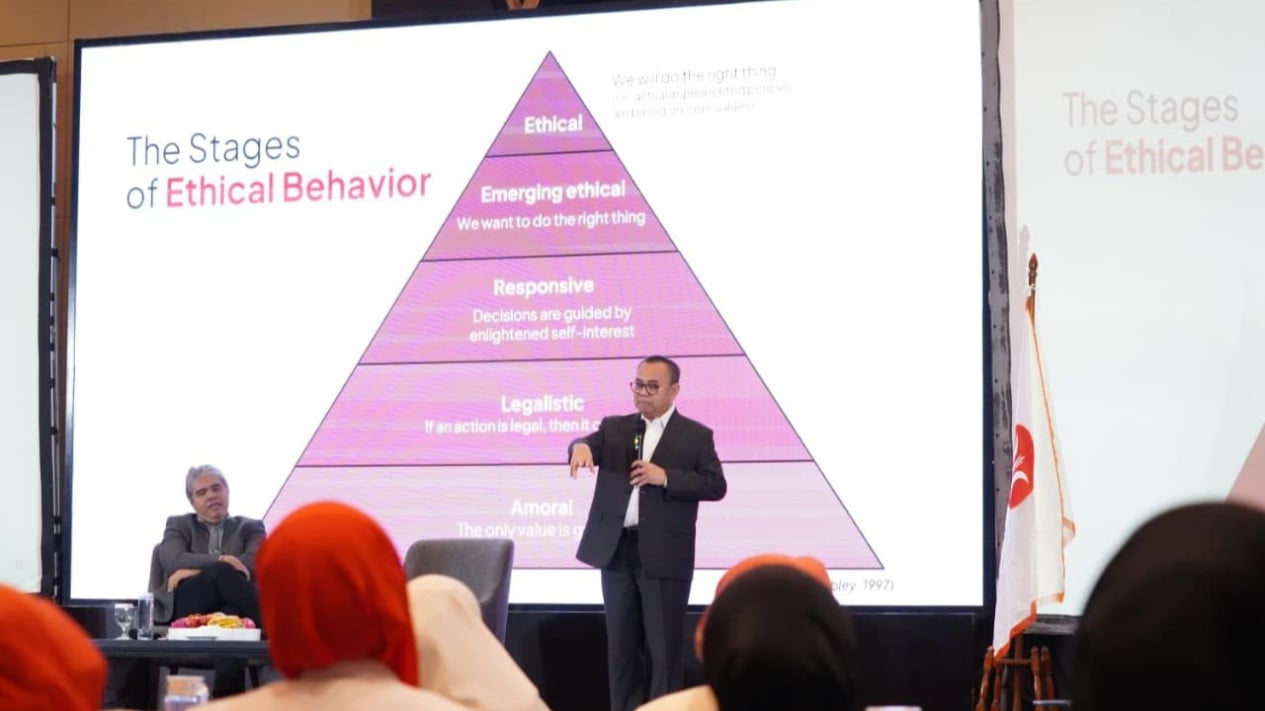
Rector of Harkat Negeri University (UHN) Sudirman Said has stated that Indonesia is in a dark era in terms of governance, describing the administration of President Joko Widodo as the worst period. ‘The structure is damaged, the people are damaged, and the culture is damaged,’ Sudirman Said said on Thursday, 25 June 2026. According to Sudirman, Indonesia is currently experiencing three simultaneous deficits: a deficit of morality and state ethics, an intellectual deficit, and a spiritual deficit. He added that Indonesia must strengthen its national leadership to set an example and take responsibility for the continuity of national life. He therefore proposed three models he believes Indonesia needs: institutional leadership, collective leadership, and intrinsic leadership. From a long-term perspective, Sudirman noted that the Indonesian nation has continuously progressed, pointing to the National Awakening of 1908, the Youth Pledge of 1928, the Proclamation of 1945, the events of 1966, and the 1998 Reformation as evidence that Indonesia has repeatedly been able to correct its own course. He again offered a solution in the form of three leadership models needed today: institutional leadership that places rules above the appetite for power, collective leadership that shares responsibility and prevents the concentration of power, and intrinsic leadership based on values and integrity. On the same occasion, Agus Rahardjo stated that the establishment of the KPK, PPATK, the Deposit Insurance Corporation, the Judicial Commission, and the Constitutional Court should have become foundational achievements. ‘Nowadays, it seems no one pays attention to the MPR Decree on Clean and Bureaucratic Governance Free from Corruption, Collusion, and Nepotism. Nepotism occurs everywhere, and corruption is rampant across all levels and sectors. There must be a movement to restore the results of reform, and civil society and academia must act,’ Agus said. Agus also highlighted the decline in Indonesia’s position on the Corruption Perception Index, which has stagnated at 34 for years, far behind Singapore (84), Brunei (around 65), and Malaysia (51), and even surpassed by Timor Leste. He assessed that the revision of the KPK Law, which placed the institution under the president and removed its independence, was one of the triggers for this decline.