
Sudirman Said: Conflict of Interest is the Root of National Energy Resilience Weakness
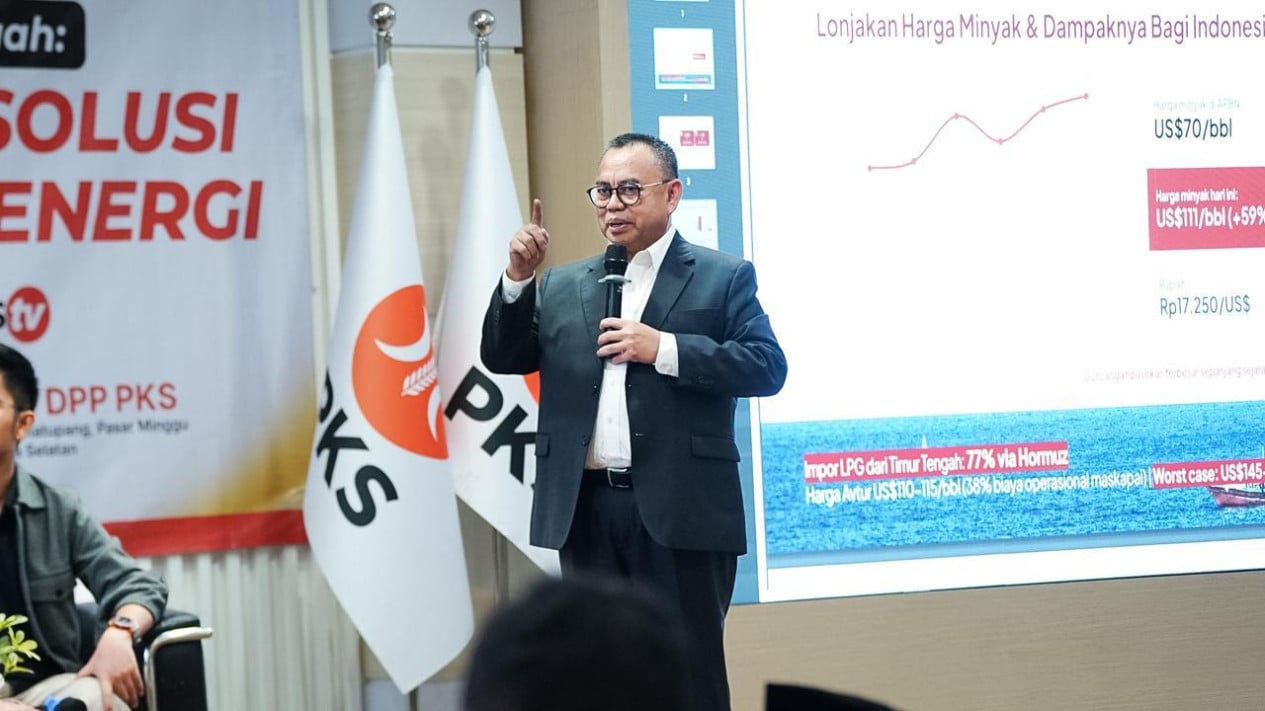
Jakarta, VIVA – Former Minister of Energy and Mineral Resources, Sudirman Said, assesses that there are three main problems affecting energy resilience in Indonesia, aside from fluctuating oil prices due to the closure of the Strait of Hormuz.
“Pressure on our energy security continues due to three fundamental aspects. First, short-term thinking or ‘short-termism’. Second, dominant populist politics and policies. Third, the prevalence of conflict of interest practices between policymakers and business actors,” Sudirman stated in a written remark on Thursday, 30 April 2026.
According to him, these three problems have created recurring systemic failures from one administration to the next.
“As a result of these three factors, we always fail in managing fundamental and long-term dimensional affairs. Oil and gas research and development, exploration, energy transition, and oil supply governance—all are sluggish or stalled,” he said.
Indonesia consumes 1.6 million barrels per day (bpd) of fuel oil but can only produce 600-610 thousand bpd. This means more than half of the national needs fully depend on imports. To finance it, the country must spend at least USD100 million in foreign currency every day. On 29 April 2026, this pressure drove the rupiah to its all-time low: Rp17,326 per USD.
Sudirman believes this could be anticipated if national energy governance were not eroded by short-term interests. He exemplifies how the discourse on energy transition in Indonesia always follows the oil price cycle, rather than a strategic vision.
“Observe the pattern: the clamour for energy transition only arises when oil prices are extremely high. Once conditions normalise, we forget and return to business as usual,” he said.
This pattern, Sudirman continues, is the most evident proof of short-termism dominance in energy policymaking. When production does not increase and energy transition becomes merely a seasonal slogan, Indonesia will forever be trapped in the same snare.
“So, the question we must answer now is not how to survive this crisis. But: why are we always unprepared and in disarray when a crisis arrives?” Sudirman concluded.
Source: jawawa.id (https://jawawa.id/newsitem/sudirman-said-conflict-of-interest-is-the-root-of-national-energy-resilience-weakness-1777557290)
Originally published by VIVA.co.id (https://www.viva.co.id/bisnis/1895741-sudirman-said-konflik-kepentingan-jadi-akar-masalah-lemahnya-ketahanan-energi-nasional), translated from Indonesian