
Sudirman Said Calls for Indonesia to Strengthen Institutional Leadership
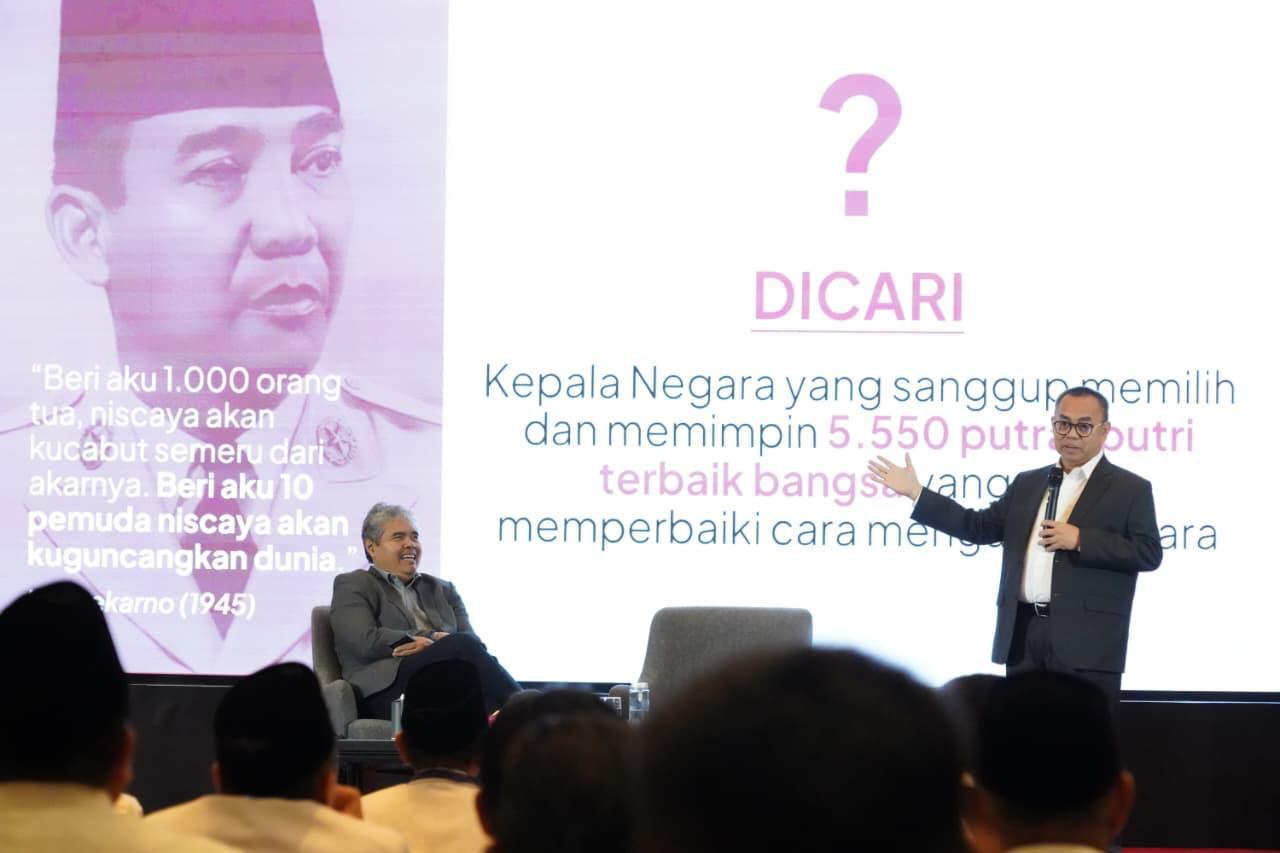
Rector of Harkat Negeri University (UHN) Sudirman Said has stated that Indonesia needs to promptly strengthen leadership rooted in institutions to anticipate a governance crisis whose symptoms are already visible. Sudirman highlighted the danger of power that relies too heavily on figures rather than systems. He offered a model of transformative leadership based on three pillars.
The first pillar is institutional rather than populist leadership, meaning a leader’s authority is rooted in functioning systems and rules, not in the fickle cheers of the masses. The second pillar is collective rather than personal leadership, which demands that leadership be shared and cultivated across many shoulders instead of being centralised to elevate a single name. The third pillar is intrinsic rather than nominal leadership, asserting that a leader’s influence grows from genuine capacity and exemplary conduct, not merely from a title or position.
“Transformative leadership is leadership that keeps the institution running even when the person changes. That is what distinguishes it from power that only lives as long as the figure holds office,” Sudirman said during a technical guidance session for PKS Regional House of Representatives members throughout Kalimantan on Saturday (13/6).
Sudirman noted that the temptation to personify power strengthens when politics loses its long-term orientation. He cited economist Dambisa Moyo, who in Edge of Chaos argues that politicians are now busier winning elections than tending to the long-term health of their countries. This condition, Moyo suggests, breeds mediocracy—politics driven by short-term concerns rather than substantive policy. “In a space starved of long-term ideas, the figure replaces the system, and personal loyalty displaces public accountability,” Sudirman said.
The urgency to strengthen institutional leadership is heightened by already visible signs of governance decline, according to fellow speaker Yanuar Nugroho. “The decline in governance is marked by the strengthening of vested interests and conflicts of interest among state administrators,” he said.
Yanuar Nugroho, a lecturer at STF Driyarkara, pointed to a concrete manifestation of this decline: the tendency to pull control back to the centre. He argued that this recentralisation weakens regional institutions because it contradicts the spirit of reform. “The symptom of recentralisation, concentrating control in the central government, must be stopped because it violates the principles of regional autonomy,” he stressed.
Consequently, Yanuar urged regional heads and local representatives to close ranks to restore the authority of autonomy as a form of institutional leadership. “Regents, mayors, governors, and local council members must close ranks to restore the dignity of autonomy. Indonesia is too large to be managed in a centralised manner,” he said.