
Sudaryono Uncovers 'Ghost' Kitchens in Free Nutritious Meal Programme Aimed at Embezzling State Funds
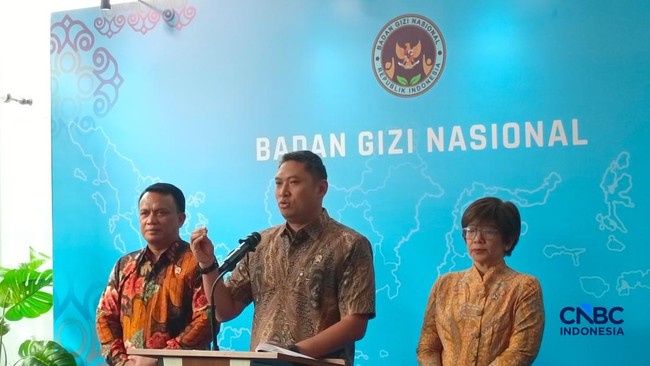
The National Nutrition Agency (BGN) suspects that the transfer of budget allocations for the Free Nutritious Meal (MBG) programme to several problematic kitchen accounts may involve more than just alleged criminal corruption. The Head of BGN, Sudaryono, revealed that these practices were also allegedly carried out to inflate budget realisation or absorption figures to make them appear higher.
According to Sudarylaro, these allegations are currently being investigated alongside law enforcement agencies. Beyond the possibility of criminal elements, the BGN is also exploring the possibility that funds were sent to numerous accounts specifically to make the agency’s budget absorption appear more significant. “We suspect—and this is merely a suspicion, as proof lies with law enforcement—that there is a reason why funds were sent to accounts where kitchens have duplicate accounts or where kitchens are not yet operational. We suspect certain former officials within the BGN may have orchestrated this. The investigation into the motivation is ongoing,” Sudaryono stated during a press conference at the BGN Office in Jakarta on Friday.
He explained that two primary motives are being investigated: first, the presence of ‘mens rea’ or criminal intent to commit theft; and second, an attempt to artificially enhance the BGN’s budget absorption performance. “The criminal intent might be to steal. Alternatively, it could simply be an attempt to distribute funds across many accounts to make the absorption rate appear high, as high absorption is often viewed as a sign of good institutional performance. We are investigating this, and if there are indications of criminal intent to embezzle, we will leave it to the law enforcement agencies,” he added.
These suspicions emerged after the BGN conducted an audit of thousands of virtual accounts (VA) belonging to Nutrition Fulfilment Service Units (SPPG), or MBG kitchens, across Indonesia. “After inspecting thousands of accounts, we found anomalies. We discovered that funds transferred from the central office to kitchen accounts via virtual accounts were actually being sent to accounts for kitchens that are not yet operational, or where a single kitchen holds multiple virtual accounts,” Sudundaryono explained.
Verification results revealed 414 kitchens with duplicate or inactive accounts. Following these findings, the BGN has returned state funds amounting to Rp311,246,295,184 to the state treasury. The largest portion of the returned funds came from Bank Rakyat Indonesia (BRI) accounts, totaling Rp137.5 billion from 121 units, followed by Bank Negara Indonesia (BNI) with Rp74 billion from 117 units. Bank Mandiri accounts contributed Rp71.6 billion from 129 units, while Bank Syariah Indonesia (BSI) and Bank Tabungan Negara (BTN) returned Rp12.9 billion and Rp15.3 billion, respectively.
Sudaryono emphasised that the audit is ongoing and the findings have been reported to the Attorney General’s Office to determine if criminal elements exist. “No one, whether it be kitchen partners, third parties, or even officials within the National Nutrition Agency, is above the law. We are reporting everything to the law enforcement authorities,” he asserted.