
Sudaryono Outlines Improvements to Free Nutritious Meal Programme, from SPPG Incentives to Beneficiary Data
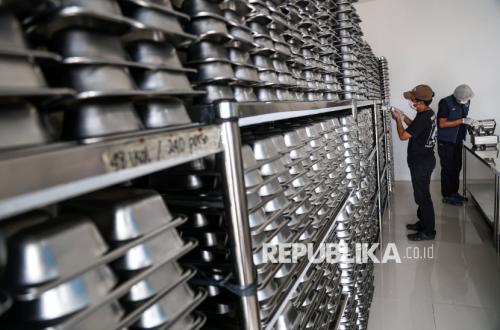
The Head of the National Nutrition Agency (BGN), Sudaryono, has revealed a series of improvements for the implementation of the Free Nutritious Meal (MBG) programme. These improvements encompass changes to the incentive scheme for Nutrition Fulfillment Service Units (SPPG), the tidying up of beneficiary data, kitchen evaluations, the strengthening of food safety standards, and the expansion of services to priority regions.
Sudaryono stated that the change in the incentive scheme is intended to ensure that the state budget is used efficiently and proportionally. The BGN is reverting the incentive scheme to Rp 2,000 per portion, after previously implementing a payment of Rp 6 million per kitchen.
“The core keyword is efficiency, and also fairness; this is more fair and proportional. Clearly, we want every part of the state budget to be managed correctly and converted into the MBG programme properly,” said the Head of BGN when met by journalists at the Ministry of Agriculture Headquarters, Jakarta, on Tuesday (6/10/2026).
According to him, the Rp 2,000 per portion scheme still provides room for profit for SPPG partners, but does not allow partners to obtain excessively large profits. The BGN also takes into account the capacity of each kitchen, as the number of beneficiaries served by each SPOG is not always the same.
Sudaryono emphasised that SPPG partners are not targeted to incur losses. However, partner profits must remain proportional to the services provided and the budget used. “It is impossible to lose money, but it is also impossible to make massive profits,” he said.
The next improvement involves the data of MBG beneficiaries. Currently, there are 27,022 SPPGs operating, but approximately 1,100 kitchens have not yet obtained a Beneficiary Determination Letter (SPS) and therefore cannot yet serve the programme.
Of that number, around 500 SPPGs are currently suspended due to several issues, including wastewater treatment plant (IPAL) installations, food poisoning cases, and other necessary repairs. The BGN is conducting inspections to determine whether these kitchens can resume operations or must be permanently closed.
Furthermore, the BGN is evaluating SPPGs recorded as having fewer than 1,000 beneficiaries. This evaluation relates to both the feasibility of the kitchens and the validity of the beneficiary data used as the basis for MBG distribution.
Sudaryono revealed that the BGN found that the Dapodik (Education Data) has not been fully updated to reflect the actual conditions in schools. Consequently, the BGN has requested schools to complete student data so that the recorded number of beneficiaries can be updated.
“We want the ‘by name, by address’—the BNBA (By Name, By Address) data—to be absolutely correct,” said the figure affectionately known as Mas Dar.
According to him, tidying up the data is necessary so that every MBG recipient can be clearly identified, ranging from identity and National ID Number (NIK) to school and class. This data is also required to monitor the development of recipients before and after receiving the MBG.
In addition to data, the BGN is tightening kitchen safety and hygiene standards. Sudaryono stated that MBG meals are ready-to-eat foods, so their handling must meet high standards to reduce the risk of food spoilage and health disturbances.
“The standards must be high because this is ready-to-eat food,” explained Mas Dar.
Source: jawawa.id (https://jawawa.id/newsitem/sudaryono-outlines-improvements-to-free-nutritious-meal-programme-from-sppg-incentives-to-beneficiary-data-1791273402)
Originally published by Republika (https://ekonomi.republika.co.id/berita/tmh2wk423/sudaryono-ungkap-pembenahan-mbg-dari-insentif-sppg-hingga-data-penerima), translated from Indonesian