
Subsidised Train Services Gain Popularity, Serving 7.8 Million Passengers Through May 2026
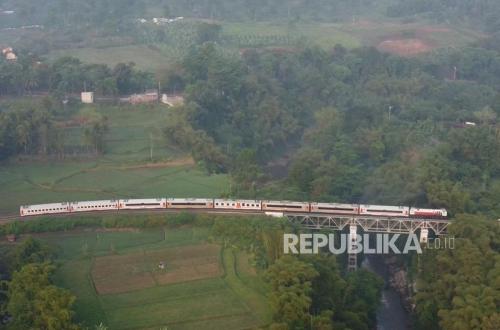
Public interest in using subsidised trains, known as Public Service Obligation (PSO) services, continues to grow. PT Kereta Api Indonesia (Persero) recorded that PSO train services carried 7.88 million passengers from January to May 2026, an increase of 7.9 percent compared to the 7.3 million passengers served during the same period last year. This increase demonstrates that subsidised train services remain the primary choice for long-distance travel and daily local mobility. The service is operated with government support through the Directorate General of Railways (DJKA) of the Ministry of Transportation to provide affordable transport for the public.
Vice President Corporate Communication of KAI, Anne Purba, stated that PSO trains play a crucial role in supporting public mobility across various regions. According to her, the service helps people access travel at more affordable costs for various needs, ranging from work, school, and medical treatment to trading and visiting family. “PSO trains help the public obtain more affordable travel access for work, school, medical treatment, trading, meeting family, and inter-regional travel. Together with the government through the DJKA of the Ministry of Transportation, KAI continues to ensure this service remains relevant to customer needs,” Anne said in a statement.
Based on KAI data, the number of long-distance PSO train passengers reached 4.95 million during the first five months of this year. This figure increased by 5.1 percent compared to the 4.71 million passengers in the same period last year. Meanwhile, local PSO train services recorded higher growth. From January to May 2026, local PSO train passengers totalled 2.93 million, a 13 percent increase from 2.59 million passengers in the corresponding period the previous year.
Anne explained that long-distance PSO train services connect various cities in Java and Sumatra at more affordable travel costs. Trains such as Kahuripan, Bengawan, Airlangga, Serayu, and Cikuray are choices for people needing economical transport for intercity travel. On the other hand, local PSO trains are the backbone of regional mobility, widely used by the public to travel from residential areas to centres of economic activity, schools, campuses, markets, and health facilities.
According to Anne, the rise in local PSO train passengers indicates that the need for short and medium-distance travel continues to increase. Trains are considered the preferred choice because they have regular schedules, large capacity, and fares that help the public manage daily transport costs. “For many passengers, PSO trains are a link to opportunity. There are students going to school, workers heading to their workplaces, traders sustaining economic activity, and families staying connected between cities,” she said.
KAI also continuously strives to maintain the quality of subsidised train services by improving travel safety, facility cleanliness, operational regularity, and ease of ticket purchase access. PSO train tickets can be obtained through the Access by KAI application, the official KAI website, station counters, and other official sales channels. Anne added that the sustainability of PSO services requires synergy between the government, operators, and the public so that the benefits can continue to be widely felt. “KAI expresses gratitude for the government’s support through the DJKA of the Ministry of Transportation in operating PSO trains. With this collaboration, trains can continue to be present as public transport that is safe, comfortable, affordable, and close to the needs of the community,” Anne concluded.