
Subsidised Housing and Stagnating Purchasing Power
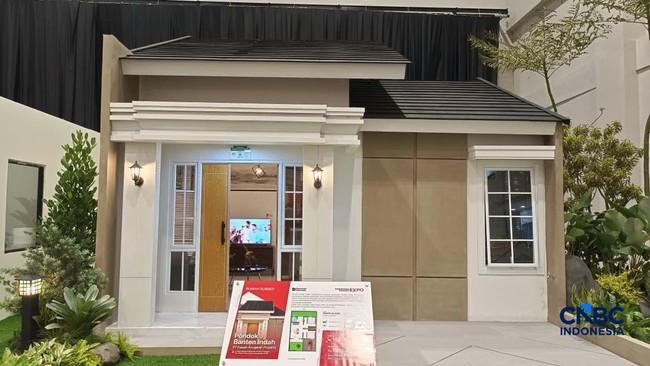
The decline in subsidised housing sales in 2026 is not merely a technical issue within the property industry, but a danger signal for the national economy. This phenomenon reflects the weakening effective demand from low-income communities (MBR) and serves as a test of the effectiveness of government housing finance policies.
The current market condition is considered even more challenging than the Covid-19 pandemic era. Data from the Association of Residential and Housing Developers (Himperra, 2026) notes that the primary issue in this sector is no longer supply, but market absorption. As of the end of September 2026, the realisation of the Housing Finance Liquidity Facility (FLPP) had only reached 161,746 units, or approximately 46.2 per cent of the annual target of 350,000 units (BP Tapera, 2026).
From a public policy analysis perspective, this imbalance indicates a policy mismatch. The government has been aggressive in deploying financing instruments—such as a fixed 5% mortgage interest rate and long tenures—yet has failed to resolve the main bottleneck on the demand side, which is the erosion of the real purchasing power of low-scale earners.
The Paradox of Backlog and Mobility Costs
Indonesia’s housing sector is marked by a structural paradox. On one hand, the need for housing remains immense. The Central Bureau of Statistics, through the 2026 Housing Statistics, recorded a housing ownership backlog of 9.29 million households, while the habitability backlog reached 18.01 million households (BPS, 2026).
The problem is not a lack of need, but a lack of financial capacity to convert that need into effective transactions. Economist Mohammad Faisal (2025) emphasises that the affordability of subsidised housing cannot be measured partially by monthly instalments alone. Project locations that are increasingly marginalised from work centres create ballooning transportation costs.
This aligns with William Alonso’s (1964) bid-rent theory in urban economics, where the price efficiency of suburban housing is often eliminated by high commuting costs. Therefore, public policy orientation must shift from merely providing cheap housing towards providing affordable housing.
Bank Indonesia’s Residential Property Price Survey for Q2-2026 confirms that primary property sales remain in a contraction zone of 2.36 per cent year-on-year (BI, 2026). On the developer side, inflationary pressure on building materials has triggered proposals to adjust subsidised house prices by up to 15 per cent (Apersi, 2026). This presents a policy dilemma: raising prices will further eliminate low-income earners from mortgage access, but freezing prices for too long risks squeezing developer margins and halting supply.
Policy Structure Strategy and Economic Synergy
To resolve this issue, the approach cannot rely solely on the property sector in isolation. The government must increase the real income of low-income earners by creating quality jobs and cutting regulatory hurdles to facilitate ease of doing business. As John Maynard Keynes (193rag) asserted, the level of labour absorption and community income is the primary foundation for driving consumption and effective demand. Without the certainty of income from stable employment, even the cheapest financing instruments will be unable to stimulate public purchasing power.
For the community, amidst macroeconomic uncertainty, it is important to practice frugal living by suppressing non-essential expenditures to maintain the saving rate. This aligns with Franco Modigliani’s (1954) Life-Cycle Hypothesis, which states that managing consumption and increasing savings during risky periods is key to household financial resilience against potential crises.
To achieve this, the government needs to redesign public housing policy through five strategic steps: First, a transition to income-based affordability subsidies, where financing schemes are made more flexible and proportional. Low-income earners in the lowest income deciles require a larger portion of subsidies so that the debt-to-income ratio does not exceed the safe limit of 30 per cent.
Second, the integration of employment and housing policies. Subsidised housing programmes must be directly integrated with real job provision and ease of entrepreneurship to ensure sustainable income growth. Third, the development of an early detection system for subsidised mortgages. BP Tapera, the Financial Services Authority (OJK), and banks are advised to build early detection systems to monitor potential defaults or transfers of ownership. Policy success should not be measured solely by mortgage disbursement figures, but by the ability of low-income earners to maintain their homes.
Fourth, measured and transparent price evaluations. Adjustments to subsidised house prices should be conducted periodically based on transparent calculations that account for the building material price index, inflation, minimum wage, and the purchasing power of low-income earners. Fifth, infrastructure and area connectivity. The feasibility of subsidised housing projects must include requirements for accessibility to public transport, educational facilities, and economic activity centres.
The drop in subsidised mortgage absorption is an early warning of the economic pressure experienced by lower-middle-class communities. The indicator of success for public housing policy can no longer be measured simply by how many hundreds of thousands of housing units are built. The fundamental question for policymakers is: how many low-income families are truly able to afford and maintain decent housing without being suffocated by the cost of living?