
Subsidised Diesel Consumption Exceeds 50% Quota by June 2026
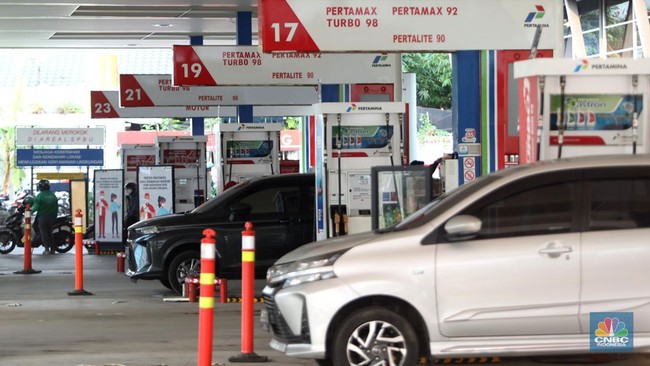
The Downstream Oil and Gas Regulatory Agency (BPH Migas) has revealed that the distribution of subsidised fuel, specifically subsidised diesel, has reached 50.85% of the quota set for this year. Subsidised diesel consumption was recorded to have increased following the rise in non-subsidised diesel prices in June 2026.
Head of BPH Migas Wahyudi Anas detailed that the realisation of subsidised diesel distribution as of 30 June 2026 reached 9.48 million kilolitres (KL) from this year’s quota of 18.64 million KL. He stressed that the surge in consumption occurred after the government adjusted the prices of general fuel types such as Pertamax and the Dex Series some time ago.
‘Where for the distribution of diesel, the realisation reached 9.48 million KL, or 50.85% of the quota set by the government of 18.64 million KL,’ he said during a Hearing Meeting with Commission XII of the Indonesian House of Representatives in Jakarta on Thursday (16/7/2026).
In addition to diesel, consumption of the Special Assignment Fuel Type (JBKP) or Pertalite as of 30 June 2026 also showed an increasing trend. The distribution of Pertalite was recorded to have touched 13.96 million KL, equivalent to 47.68% of the total state budget quota set at 29.27 million KL.
‘Meanwhile, for JBKP Pertalite RON 90, the distribution realisation reached 13.96 million KL, or 47.68% of the quota set in the state budget of 29.27 million KL,’ he explained. ‘The current increase is indeed in the diesel sector, following the price increase of general fuel types, both the Dex series and Pertamax and others. There has been an increase where people who originally used non-subsidised fuel tend to switch to subsidised.’
To anticipate the thinning quota, BPH Migas is currently strengthening supervisory cooperation with provincial governments through 25 cooperation agreements. The agency has also blocked hundreds of thousands of digital identities suspected of misuse to maintain stock sustainability until the end of the year. ‘We also continue to optimise efforts so that subsidised fuel distribution is on target, by blocking almost 307,107 QR codes. And this continues to move and increase due to illegally produced QR codes,’ he concluded.