
Subsidies from Rp 7 Million to Free: Why Is Electric Motorcycle Conversion Lacking Interest?
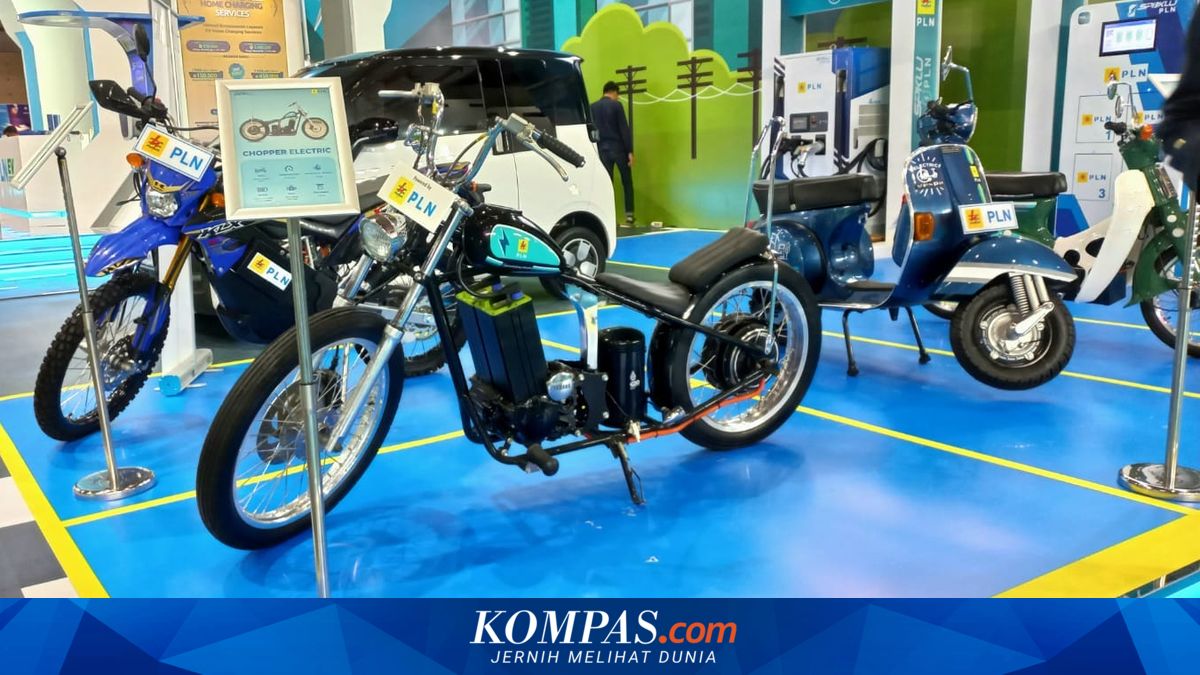
The journey of Indonesia’s petrol-to-electric motorcycle conversion programme can be described as fraught with challenges. Since its launch, the government has been observed continuously revising regulations to boost the population of environmentally friendly vehicles, which remains far from the target.
For instance, from March 2023, the government provided a Rp 7 million subsidy through Ministry of Energy and Mineral Resources Regulation Number 3 of 2023. Due to low interest, in December 2023, the subsidy value was raised to Rp 10 million per unit.
Interest in converting petrol motorcycles to electric ones remained low, leading to the emergence of various free conversion programmes.
Bambang Setiawan Yudistira, or Ibeng as he is popularly known, an electric motorcycle advocate from EV Holic, offers an honest perspective. According to him, this failure is not due to the subsidy amount being insufficient, but rather because owners must bear other losses.
For Indonesians, motorcycles are assets that must have stable resale value. Ibeng emphasises that conversion actually destroys that investment value.
In other words, even if the conversion cost is free, owners feel they lose asset value of Rp 7-8 million in an instant.
The second obstacle is performance expectations. Ibeng recounts his experience converting his Vario 110 and 125 models. Due to regulatory and technical limitations, the motorcycles, which were previously responsive, now feel sluggish.
Based on regulatory standards, a 110 cc scooter can only be fitted with a 1,000 Watt dynamo. Meanwhile, the 125 cc uses a 1,500 Watt dynamo.
“There is a clear drop in performance that is noticeable. Not to mention the range. Because the frame of a standard automatic motorcycle is not designed for large batteries, the largest battery that can fit is only strong enough for 50 km. For daily use, that is not reliable,” he said.
Administratively, conversion is also not straightforward. Although there are many skilled local mechanics, certified workshops officially authorised to change the STNK and BPKB (blue plate) are still very few.
“Information is often hard to obtain. Many workshops that were once enthusiastic about joining the programme now no longer serve it because the type testing process is complicated. If there are no standards that facilitate it, people will continue to feel that conversion is troublesome,” Ibeng continued.
Ultimately, Ibeng assesses that the conversion programme is more suitable to be implemented mandatorily for institutional or government service vehicles rather than for the general public.
“For the public, it would be better to redirect subsidies to a trade-in programme. Old motorcycles are taken back, and they receive new electric units with proper ergonomics and measurable performance. That would be a win-win solution,” said Ibeng.