
Suahasil Officially Appointed Finance Minister, Six Heavy Tasks Await
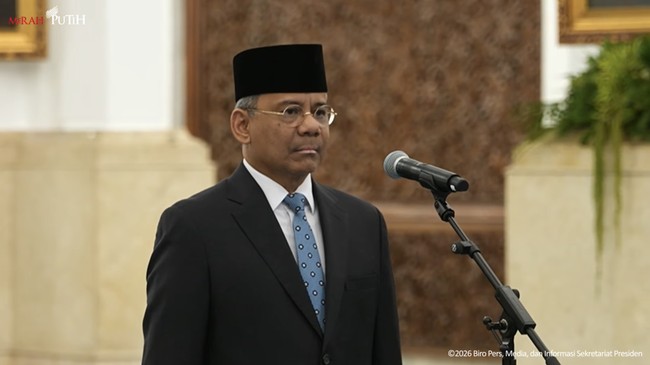
The command baton of the Ministry of Finance has changed hands once again. President Prabowo Subianto has just inaugurated Suahasil Nazara as the new Finance Minister at the Palace on Monday (14/9/2026).
Suahasil replaces Purbaya Yudhi Sadewa, who held the post for one year. The transition comes as the 2026 fiscal year has run for more than eight months and the government is discussing the 2027 Draft State Budget (RAPBN) with the House of Representatives.
Suahasil is no newcomer to the Ministry of Finance. He previously served as Deputy Finance Minister since 2019, from the second term of President Joko Widodo’s era.
His long experience means Suahasil is familiar with the fiscal conditions now under his control. However, he will immediately face a number of tasks awaiting completion.
From chasing tax revenue targets, safeguarding the state budget deficit, managing debt, to ensuring transfers to the regions continue running — all with the overarching aim of maintaining fiscal credibility and securing support for the government’s priority programmes.
- Chasing Tax Revenue Targets
One of the tasks he will face is none other than chasing tax revenue.
As of July 2026, tax revenue had reached Rp1,224.3 trillion, growing 23.7% compared to the same period last year. That figure equals 51.9% of the tax revenue target in the 2026 state budget of Rp2,357.7 trillion.
This means around Rp1,133.4 trillion must still be collected in the final five months of the year.
Previously, the government estimated that tax revenue for 2026 would only reach Rp2,310.8 trillion, or Rp46.9 trillion short of the budget target.
Tax revenue will certainly face many dynamics, especially amid a global environment filled with uncertainty due to geopolitical conflict in the Middle East. This condition weighs on businesses and public consumption, making tax collection increasingly challenging.
Under Purbaya’s leadership, revenue growth was pursued through broadening the tax base, strengthening compliance, and improving tax administration and systems without raising rates.
Suahasil will now determine how this strategy is carried out. His job is not only to chase revenue in the remaining months, but also to ensure tax collection efforts do not disrupt business activity and public purchasing power amid global turbulence.
- Managing Programmes: From Budget Surplus Funds to Village Cooperatives
Suahasil also inherits the policy of placing government funds sourced from the Budget Surplus (SAL) in state-owned banks.
That policy was one of Purbaya’s flagship programmes as Finance Minister. Funds previously held at Bank Indonesia were moved into the banking system to boost liquidity and encourage lending.
Government funds placed in state-owned banks are planned to reach nearly Rp400 trillion. Of that amount, Rp200 trillion is confirmed to remain in the banking system until July 2027.
Meanwhile, Rp100 trillion is placed until the end of 2026, and around another Rp100 trillion is dynamic and can be adjusted according to government cash needs.
The fund placement is designed to lower banks’ cost of funds, giving banks greater room to lend at lower interest rates.
However, these funds remain government cash. The Ministry of Finance must account for spending needs, liquidity conditions, withdrawal timing, and coordination with Bank Indonesia’s monetary policy.
Certainty over the programme’s continuation will be one of the things awaited after the ministerial change — particularly because sudden withdrawals could affect banking liquidity, whilst excessive placement must also be matched against government cash requirements.
Another programme closely tied to the Ministry of Finance is the Red and White Village/Kelurahan Cooperatives (Kopdes Merah Putih).
The programme requires not only the establishment of legal entities and the construction of outlets. Behind it lies a financing scheme involving banks, government fund placements, transfers to the regions, and Village Funds.
The 2026 Village Fund allocation reaches Rp60.57 trillion, of which 58.03%, or Rp34.57 trillion, is directed to support the implementation of Kopdes Merah Putih.
Under Finance Minister Regulation Number 15 of 2026, the construction of outlets, warehouses, and facilities for Kopdes can be financed up to Rp3 billion per unit. Financing carries 6% annual interest with a six-year tenor and a principal payment grace period of up to 12 months.
Instalments can be paid through the disbursement of the General Allocation Fund, Revenue Sharing Fund, or Village Funds, whilst the facilities built become assets of regional or village governments.
This scheme gives the Ministry of Finance a key role in ensuring smooth financing and fund disbursement.
- Safeguarding the State Budget Deficit
One particularly important task is keeping the state budget deficit to GDP below the limit set by law, at 3% of GDP.
Since the start of 2026, the domestic financial market has been rattled by warnings from global rating agencies, from Moody’s to Fitch, which highlighted the 2025 budget deficit realisation of 2.92% — nearly touching the legal limit.
However, the budget deficit up to the end of July 2026 was recorded at Rp235.6 trillion, or 0.91% of GDP, still well below the ceiling.
Even so, deficit realisation typically rises in the second half as ministry and agency spending, transfers to the regions, subsidies, compensation, and various government programmes are accelerated.
The government estimates the full-year 2026 deficit could reach 2.85% of GDP. That figure is higher than the initial budget target of 2.68% of GDP, but still below the 3% maximum limit.
The movement of global oil prices, which have surpassed US$100 per barrel, adds another factor to consider. Rising oil prices can affect subsidy and energy compensation spending, whilst a weakening rupiah potentially raises the cost of foreign-currency expenditure.
- Debt Management
Debt management is another task immediately awaiting Suahasil, especially as the government’s large financing needs confront rising bond yield trends.
Government debt stood at Rp10,293.69 trillion at the end of June 2026, equivalent to 41.26% of GDP. The figure grew by Rp373.27 trillion in just three months.
Most of the debt is in the form of Government Securities (SBN), at Rp8,966.79 trillion, or 87.11%. The remainder, Rp1,326.90 trillion, comes from loans.
Indonesia’s debt ratio remains below the 60% of GDP legal ceiling. However, the cost of obtaining new financing is rising along with yields in the bond market.
This comes amid ever-growing government interest payment obligations, with the 2026 outlook reaching Rp582.2 trillion.
- Transfers to the Regions
Cuts to Transfers to the Regions (TKD) have become a problem for a number of regional governments.
The TKD allocation in the 2026 state budget was set at Rp693 trillion, down some Rp226.9 trillion, or 24.7%, from the initial 2025 allocation of Rp919.9 trillion. The government explained that part of the budget was shifted to ministry and agency spending on programmes still implemented in the regions.
Nevertheless, the reduction has forced a number of regions to adjust their regional budgets. Regions with small locally generated revenue face greater pressure, as staff spending, public services, and development still depend on central government transfers.
Purbaya had previously acknowledged that some regions could face financial difficulties. The Ministry of Finance even prepared additional funds should monitoring show that regional government operations could not continue.
As of 14 September 2026, TKD realisation reached Rp485.54 trillion, or 73.38% of the running allocation of Rp661.67 trillion. For 2027, the government has proposed raising the allocation to Rp735 trillion.
Going forward, Purbaya’s successor also faces the task of maintaining the health of the central budget whilst responding to regions struggling after losing part of their fiscal space due to the TKD reduction.
- Consolidation After the Finance Ministry’s Major Reshuffle
The new Finance Minister will face the domestic task of internal consolidation.
Notably, the Ministry of Finance underwent a reshuffle of hundreds of officials just four days before his inauguration. On Thursday (10/9/2026), Purbaya inaugurated officials ranging from senior leadership, administrators, supervisors, functional staff, to heads of non-structural organisational units. At the echelon III level alone, around 350 officials were sworn in.
The inaugurations were carried out to help the ministry continue adapting, strengthen revenue, improve spending effectiveness, and maintain fiscal discipline.
The new official lineup means Suahasil must rebuild the rhythm of coordination under his leadership. He must also ensure the adjustment process does not disrupt services or the running of the state budget.
Consolidation must be accompanied by continued bureaucratic reform, strengthened integrity, and internal communication.
Suahasil also needs to understand the various issues long faced by ministry staff so he can identify which parts of the organisation need improvement.