
Suahasil Nazara Faces a Test of Fiscal Credibility
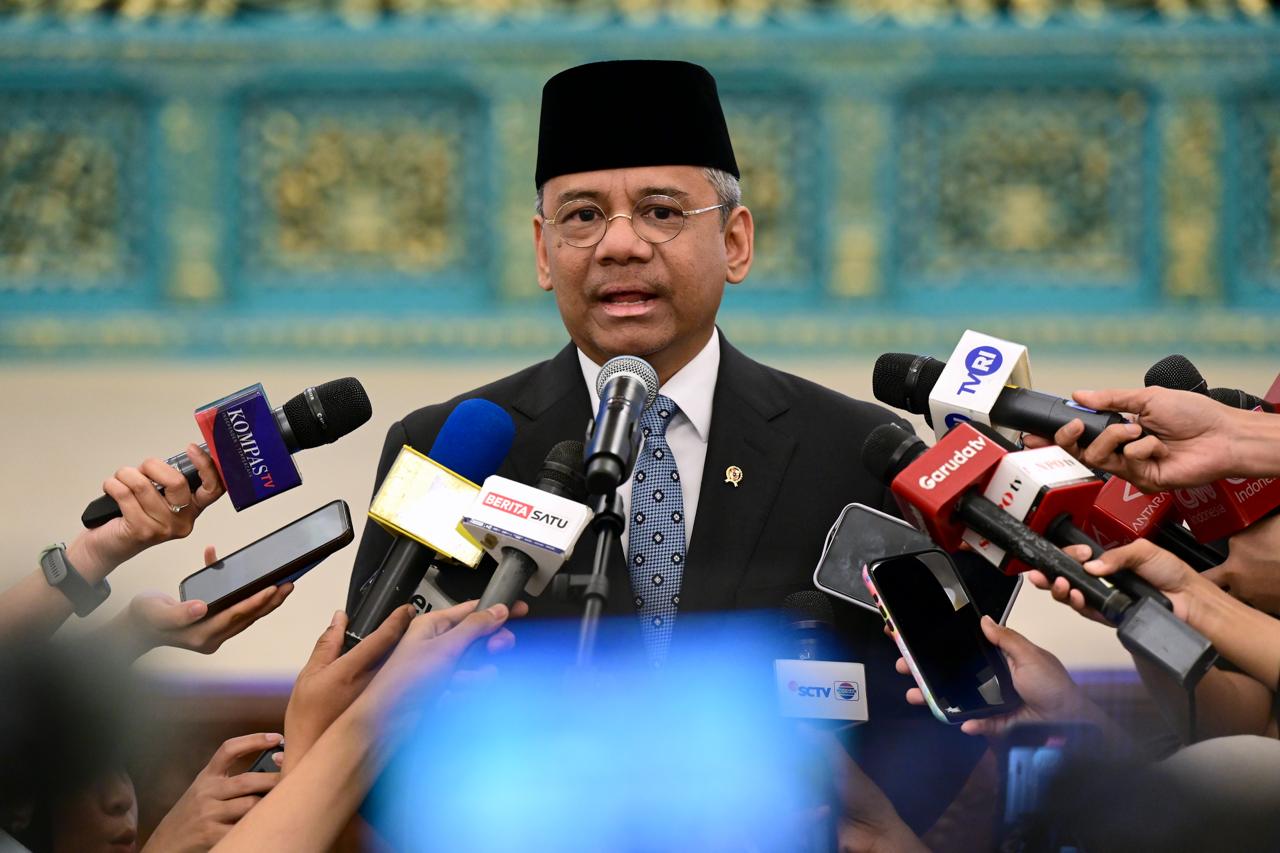
Suahasil Nazara has been entrusted with ensuring that the state budget continues to grow and stabilise the economy.
The change of finance minister should be seen not merely as a personnel change, but as an effort by the government to maintain continuity and credibility of fiscal policy amid pressure on the state budget and the markets.
Yusuf Rendy Manilet, a researcher at the Center of Reform on Economics (Core) Indonesia, believes Suahasil Nazara’s track record at the finance ministry is an important asset for carrying out that mandate.
“In my view, this change is best read as an effort to maintain the continuity and credibility of fiscal policy,” Yusuf said when contacted on Tuesday (15/9).
Officially, the palace has not explained in detail why President Prabowo Subianto replaced the finance minister. However, on 14 September 2026, the President, through Presidential Decree Number 97 P of 2026, dismissed Purbaya Yudhi Sadewa and appointed Suahasil to serve the remainder of the 2024-2029 Red and White Cabinet’s term.
Suahasil becomes the third finance minister in the administration, after the post was previously held by Sri Mulyani Indrawati and Purbaya. Before being entrusted with the ministerial role, Suahasil had served as deputy finance minister since 2019.
According to Yusuf, that background gives Suahasil an advantage because he does not need to build an understanding of fiscal policy from scratch. He is a technocrat with long experience within the finance ministry, having previously served as Head of the Fiscal Policy Agency before accompanying the finance minister as deputy minister.
That experience includes an understanding of the state budget’s architecture, revenue and state spending policy, and fiscal coordination with Bank Indonesia. As such, Suahasil’s presence can be read by the market as a signal of continuity.
Nevertheless, Yusuf cautioned that it is too early to judge Suahasil’s success because his term has only just begun. The challenges he faces are not light, particularly as the ministerial change took place while fiscal conditions and the markets are under scrutiny.
Indonesia’s debt rating outlook has come under pressure from rating agencies. The rupiah has also faced pressure, while the policy on placing liquidity with banks briefly sparked differences of opinion with Bank Indonesia.
Market attention has also been drawn to the controversy over Danantara’s plan to transfer around Rp120 trillion in profits to help meet the deficit target. These conditions underscore the importance of consistency and coordination in every policy related to fiscal, monetary, and state asset management.
Amid this situation, government communication is an equally important factor. Yusuf noted that communication by the previous finance minister repeatedly drew negative responses from the market. However, he believes the market’s response to the ministerial change cannot be taken as sole proof of the President’s reasons for making the decision.
“I think the market’s reaction to the ministerial change should be read as a response to shifting expectations, not as sole evidence of the President’s reasons for making the change,” he said.
Going forward, Suahasil’s work will be very concrete. He is considered obliged to ensure the state budget deficit remains under control while pushing to improve state revenue. At the same time, spending on government priority programmes must be kept effective so that it is not merely absorbed, but also has an impact on the economy.
The debt interest burden is also a concern, as it must remain managed within a sustainable fiscal space. Thus, Suahasil’s challenge is not only to keep the deficit figure in check, but to ensure the whole of fiscal management remains trusted by the market.
Yusuf believes inter-agency coordination also needs strengthening. Relations with Bank Indonesia and Danantara must have an increasingly clear direction so that fiscal policy, monetary policy, and state asset management do not send different signals to market players.
That mandate aligns with Suahasil’s message after being appointed finance minister, namely to safeguard the health and credibility of state finances, particularly the state budget, so that it remains able to fund the government’s priority programmes without disrupting economic stability.
Amin Ak, a member of Commission XI of the House of Representatives, viewed the appointment of Suahasil Nazara as finance minister as a moment to strengthen fiscal credibility and market stability.
Source: jawawa.id (https://jawawa.id/newsitem/suahasil-nazara-faces-a-test-of-fiscal-credibility-1789462358)
Originally published by Media Indonesia (https://mediaindonesia.com/ekonomi/933610/suahasil-nazara-hadapi-ujian-kredibilitas-fiskal), translated from Indonesian