
Suahasil Issues Rules for Cash Injections into BPJS Kesehatan When Funds Run Short
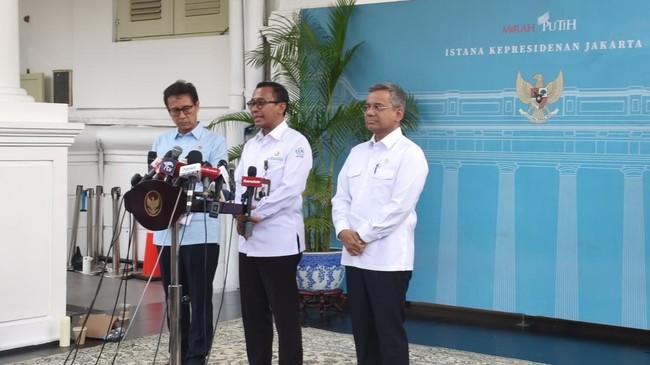
Jakarta, CNBC Indonesia — Finance Minister Suahasil Nazara has issued guidelines for providing additional funding to BPJS Kesehatan through Finance Minister Regulation (PMK) No. 73 of 2026.
The new regulation on the Procedures for Allocating, Paying and Accounting for Assistance Funds to Ensure the Adequacy of the Health Social Security Fund (DJS) was stipulated on 1 October 2026 and took effect when promulgated on 8 October 2026.
“To ensure the continued operation of the health insurance programme, the government may take special measures in the form of providing additional funding to ensure the adequacy of the health social security fund,” the explanatory considerations of PMK 73/2026 state, as quoted on Friday (9 October 2026).
Article 2 of the regulation says additional funding for the Health DJS will be determined following coordination between the finance minister, the minister responsible for health, the chair of the National Social Security Council (DJSN) and the president director of BPJS Kesehatan.
The Health DJS assistance funds will be allocated under the State General Treasury’s Special Transactions Budget Subsection (999.99).
The regulation comes as cash flow in the Health DJS is under pressure. By September 2026, contributions collected totalled Rp118 trillion, while benefits payable amounted to Rp132 trillion.
The government is preparing a Rp20 trillion injection: Rp10 trillion in October and Rp10 trillion in November 2026. The funds are already included in the 2026 state budget, separate from approximately Rp47 trillion allocated for contribution assistance (PBI). PMK 73/2026 itself does not specify the injection amount, setting out only the mechanism.
BPJS Kesehatan President Director Maj Gen (ret.) Prihati Pujowaskito previously explained that several factors were behind the cash-flow problems.
First, 52 million participants are not actively paying contributions. Based on his calculations, if they paid at the Class III contribution rate, around Rp2 trillion would be collected each month, or Rp24 trillion a year.
Second, the contribution adjustment procedure has yet to be implemented, despite a proposal having been submitted six years ago. “We have been seeking the adjustment for six years,” he said.
Third, other pressures include medical cost inflation, population growth, changes in disease patterns and increased utilisation for various reasons.
Fourth, there are issues with healthcare providers’ conduct in implementing the BPJS system, as well as fraud in its administration.
“We will address several other issues, including fraud in services. Provider behaviour that is volume-based is also important; we will shift towards value-based care,” he said.
According to Prihati, a volume-based approach encourages healthcare providers to focus on treating more patients in order to receive higher claims.
“We do not yet have a remuneration system, so providers earn more by treating 15 patients rather than 10. Going forward, we will move towards value-based care, and we have also pledged to improve service quality so that it meets participants’ needs and is appropriately targeted,” Prihati said.
Source: jawawa.id (https://jawawa.id/newsitem/suahasil-issues-rules-for-cash-injections-into-bpjs-kesehatan-when-funds-run-short-1791517873)
Originally published by CNBC Indonesia (https://www.cnbcindonesia.com/news/20261009091239-4-774631/suahasil-terbitkan-aturan-suntik-dana-bpjs-kesehatan-saat-tekor), translated from Indonesian