
Stunting Reduction Requires Accurate Data Down to Village Level
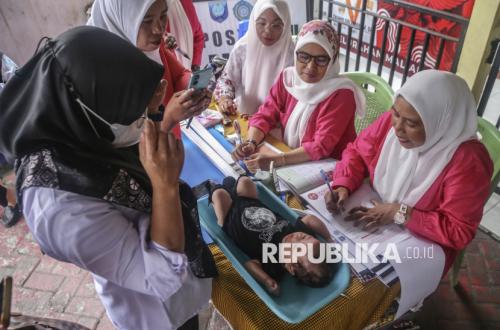
The government is encouraging the use of more accurate data to accelerate the reduction of stunting in Indonesia. A name-and-address-based approach is considered vital to ensure that government assistance and interventions precisely target families in need.
Secretary of the Ministry of Population and Family Development (Sesmendukbangga)/Principal Secretary of BKKBN Budi Setiyono stated that precision data is the main instrument for improving the effectiveness of stunting reduction programmes. “This approach allows the government to more accurately identify individuals, families, and areas requiring priority attention, so that programmes can reach the target groups that truly need them,” Budi said in Jakarta on Thursday (11/6/2026).
According to Budi, strengthening the data system must be carried out continuously through improved data collection quality, validation, periodic updates, and integration of data across ministries and agencies. He explained that the availability of quality data is a prerequisite for formulating evidence-based policies, ensuring that interventions have a real impact on accelerating stunting reduction.
“The Ministry of Population and Family Development/BKKBN has so far built a database of families at risk of stunting down to the village/sub-district level, which can serve as a basis for intervention by various ministries, agencies, and local governments,” Budi said.
Besides accurate data, inter-agency and local government coordination is also considered a determining factor for the programme’s success. Local governments play a direct role in implementation because they engage with the community and understand the needs of their respective regions. “Therefore, policy support, technical assistance, and capacity building for local governments need to be continuously enhanced to ensure successful programme implementation,” he added.
Budi assessed that tackling stunting is a long-term investment that will determine the quality of Indonesia’s human resources. Children who grow up with adequate nutrition and a supportive environment have greater opportunities to develop optimally in terms of health, education, and economic productivity. He noted that improving human resource quality is a crucial factor for capitalising on the demographic bonus and supporting the Golden Indonesia 2045 target.
Budi said that accelerating stunting reduction cannot rely solely on the health sector. The issue is also linked to access to drinking water and sanitation, food security, education, social protection, family empowerment, and the socio-economic conditions of the community. The Investing in Nutrition and Early Years (INEY) programme, involving the World Bank and Bappenas, is cited as a platform to strengthen synergy across ministries and agencies so that stunting reduction efforts are more integrated and on target.
“Efforts to accelerate stunting reduction cannot be carried out partially or sectorally, but require policy alignment, programme synchronisation, and strong coordination at all levels of government,” Budi concluded.