
Study: Wildfire Smoke More Toxic Than Other Forms of Air Pollution
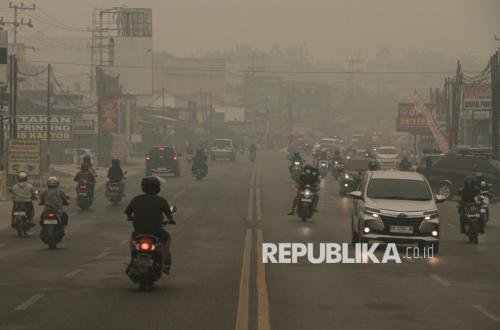
Wildfire smoke has the potential to pose a greater health risk compared to other forms of air pollution. This conclusion emerged from two large-scale studies conducted by researchers from the Icahn School of Medicine at Mount Sinai, USA, published in the journal The Lancet in September 2026.
The first study found that exposure to wildfire smoke is associated with a decreased chance of survival for lung cancer patients. The second study revealed that long-term exposure to wildfire pollution is linked to an increased risk of hospitalisation due to various heart and lung diseases.
Both studies were led by researchers Min Zhang and senior author Yaguark Wei. According to Wei, these findings demonstrate that when assessing the impact of air pollution, it is not just the quantity of pollution that matters, but also its source.
“Our research shows that particulate pollution associated with wildfires is more dangerous than pollution levels from other sources. As wildfire activity increases, public health and environmental policies must consider both the amount and the source of air pollution,” said Wei, as reported by US News on Wednesday (23/9/2026).
Both studies focused on PM2.5, which refers to air pollution particles with a diameter of 2.5 microns or smaller. Due to their extremely small size, PM2.5 can penetrate deep into the lungs and even enter the bloodstream. These particles can originate from various sources, including vehicles, industrial activities, agriculture, and wildfires.
For the first study, researchers analysed data from 414,016 adults aged 65 and over suffering from lung cancer. The data was sourced from the SEER-Medicare database for the period between 2006 and 2019.
Researchers then assessed exposure to PM2.5 originating from wildfires and PM2.5 from other sources based on the patients’ places of residence. The results showed that exposure to both types of PM2.5 was associated with an increased risk of death following a lung cancer diagnosis.
However, when compared at the same level of increased exposure, PM2.5 from wildfires demonstrated greater toxicity. Researchers also found that more smoky days and longer periods of smoke exposure led to worse patient survival outcomes.
Overall, wildfire smoke accounted for only about 4 per cent of the total PM2.5 exposure experienced by patients in the study. However, researchers noted that wildfire exposure contributed to approximately 17 per cent of deaths related to PM2.5 exposure.
“Lung cancer patients are already medically vulnerable, and our findings show that wildfire smoke can place them at even greater risk,” said researcher Min Zhang.