
Study: The Amazon Releases More Carbon Dioxide Than It Absorbs
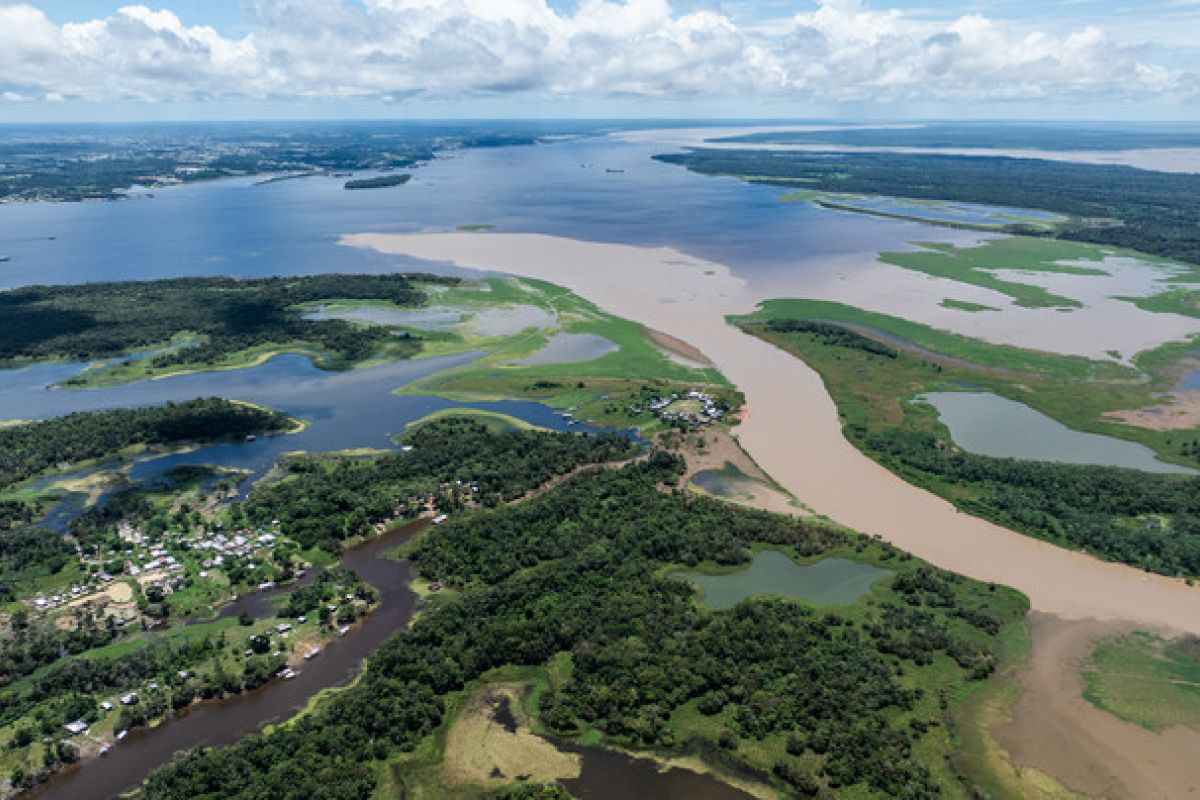
São Paulo (ANTARA) – A study by the São Paulo Research Foundation found that Brazil’s Amazon released an average of 1.17 billion tonnes of carbon dioxide a year between 2010 and 2024, more than the amount absorbed by the tropical rainforest.
The findings, released on Thursday (22 October), show an imbalance that is worsening global warming and eroding the rainforest’s role as the planet’s most important regulator of the tropical climate.
The research, also published in the British scientific journal Nature, found that fires release around 1.47 billion tonnes of carbon dioxide each year, compared with the forest’s absorption capacity of only about 300 million tonnes a year.
The study, led by specialists from Brazil’s National Institute for Space Research (INPE), said that sharply reducing fires, halting deforestation and restoring forest are essential to prevent the Amazon from reaching a “tipping point”. Beyond that threshold, the forest would lose its ability to sustain itself and recover as a tropical rainforest.
Brazil is home to 60 per cent of the Amazon rainforest.
“The main conclusion of this study is very striking: the problem in the Amazon is human activity. We are losing the rainforest because the region’s development model has been based on destruction,” said Luciana Vanni Gatti, coordinator of INPE’s Greenhouse Gas Laboratory and the study’s lead author.
In an analysis covering 46 years, the research team also detected a 1.13°C rise in average annual temperatures and a 1.81°C increase during the dry season. These changes have reduced regional humidity and worsened conditions that fuel the spread of fires and environmental degradation.
“This places enormous pressure on the remaining forest,” Gatti said, explaining that the loss of forest cover reduces rainfall and raises temperatures, creating a feedback loop that leads to more fires and accelerates damage to the forest that remains.
Scientists are investigating why the rainforest is absorbing less carbon, and the extent to which this is driven by reduced photosynthesis as opposed to increased decomposition of vegetation.
The São Paulo Research Foundation said the findings further highlight the importance of conservation and restoration policies for the Brazilian Amazon. Its role in carbon storage and regulating the water cycle is crucial to regional and global climate balance.