
Study reveals the role of porcupines in fossil formation in China's karst caves
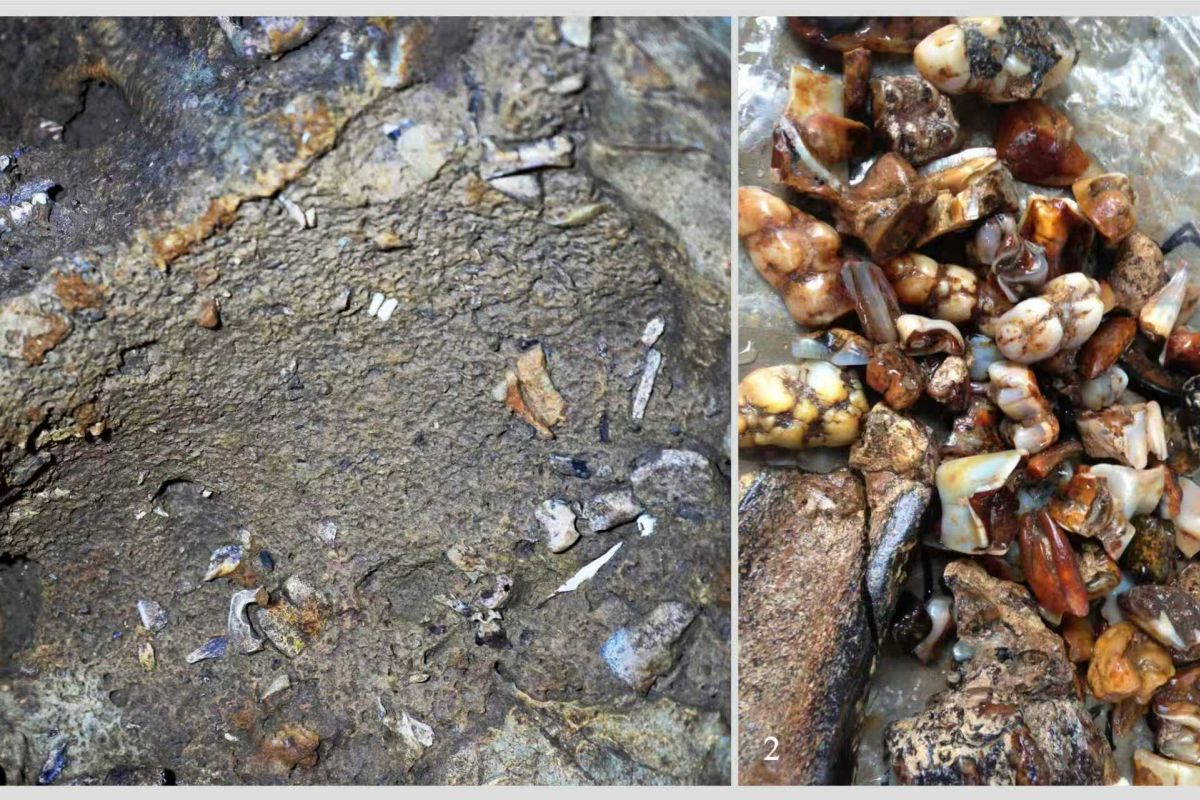
Nanning (ANTARA) - A multinational research team comprising academics from China, France, and the Netherlands, using a combination of fossil observations and zoological experiments, has revealed that porcupine behaviour is a significant factor in the formation and accumulation of cave fossils in the karst caves of southern China and mainland Southeast Asia.
The study establishes a regional diagnostic framework to identify bone modifications influenced by porcupine behaviour in Asia. These findings help solve a long-standing puzzle regarding how cave fossils are formed, a question that has perplexed the academic community for decades.
The findings were recently published in the Journal of Archaeological Science: Reports.
Vertebrate fossils from the Quaternary period stored in karst caves across southern China and mainland Southeast Asia, including fossils of apes and hominins, provide invaluable scientific evidence for exploring the origins, migration, and dispersal of ancient humans in East and Southeast Asia.
How did these fossils enter the caves? Why are complete skeletal fossils so rare, while fossil assemblages are dominated by fragmented teeth, and why do many tooth fossils show incomplete roots? These questions have long confused the academic community.
In recent years, researchers have examined numerous animal bite marks on fossil surfaces, narrowing the research focus to rodents, specifically porcupines. As one of the most common mammalian fauna encountered in southern China and mainland Southeast and Southeast Asia, porcupines have been widespread and have had abundant populations in the region since the Pleistocene.
Porcupines prefer to inhabit caves and typically bring various food items into the caves, including plant fruits and animal carcasses, for consumption or storage.
According to Yao Yanyan, a researcher at the Guangxi Museum of Anthropology and the paper’s first author, the research team fed fresh animal bones to porcupines and observed how they collected, dragged, and gnawed on the bones. They then collected the gnawed bones and scattered teeth.
When comparing these experimental samples with fossils excavated from caves, they found that the bite marks, missing tooth roots, and ring-shaped bone fragments in the fossils were almost identical to the marks left by porcupines.
During the experiment, the porcupines demonstrated a strong desire to collect bones. Some porcupines even worked together to drag a five-kilogram cow skull, and they continued to gnaw on it until only the hard teeth fell out and scattered on the ground, said Yao.
“This explains why mammal tooth fossils of various sizes, including Asian elephants, wild boars, sambar deer, and macaque monkeys, are found in these caves,” said Yao.
Tens of thousands or even millions of years ago, porcupines, acting as secondary consumers, took animal remains left by carnivores and brought them into caves to chew for nutrient extraction. Harder carcass components, such as teeth, were then discarded and eventually buried within the caves.
“Porcupines play a crucial role in the formation of faunal fossil assemblages within caves,” said Wang Wei, a professor at Shandong University and the paper’s lead author.
Wang explained that this research not only assists paleontologists in understanding the formation of fossils found in karst caves in southern East Asia and Southeast Asia, but also assists archaeologists in determining whether early hominins played a role in the accumulation of cave deposits.
Source: jawawa.id (https://jawawa.id/newsitem/study-reveals-the-role-of-porcupines-in-fossil-formation-in-chinas-karst-caves-1785432769)
Originally published by Antara (Indonesian) (https://www.antaranews.com/berita/5673475/studi-ungkap-peranan-landak-dalam-pembentukan-fosil-di-gua-karst-china), translated from Indonesian