
Study Reveals Long-Term Melatonin Use Risks for Heart Health
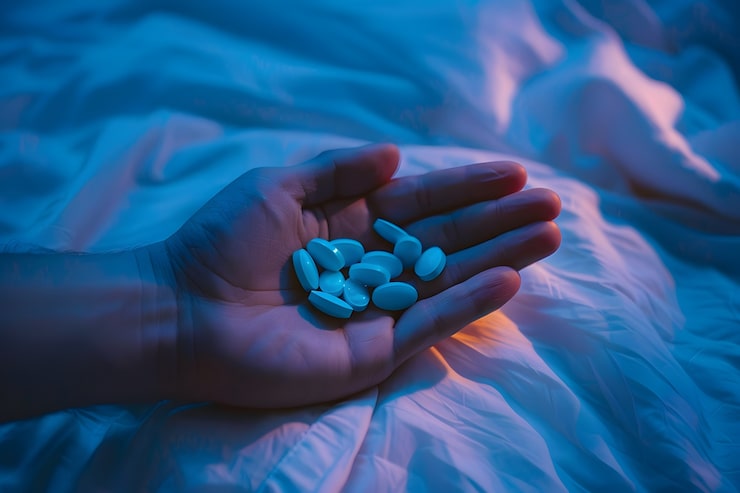
Melatonin supplements have long been widely recognised as a safe and natural sleep aid, with many people using them to treat insomnia and other sleep disorders. However, recent research suggests that long-term melatonin use may not be entirely safe, particularly for heart health.
The findings were presented at the American Heart Association’s Scientific Sessions 2025, an international scientific forum discussing the latest developments in heart and vascular health.
The study linked long-term melatonin use to an increased risk of heart failure, heart failure-related hospitalisations, and death among chronic insomnia patients.
Melatonin is a natural hormone produced by the pineal gland to regulate the sleep-wake cycle. Levels typically rise at night and fall during the day. Synthetic versions are widely available over-the-counter as sleep supplements in various countries, including the United States.
The research involved 130,828 adults diagnosed with chronic insomnia, with an average age of 55.7 years and approximately 61% female.
Of these, 65,414 participants had used melatonin for at least one year according to electronic medical records, and were compared with those who had never used it.
Results showed that chronic insomnia patients using melatonin long-term had a nearly 90% higher risk of heart failure within five years compared to non-users. Heart failure incidence was 4.6% among melatonin users and 2.7% in the control group.
Moreover, melatonin users were almost 3.5 times more likely to be hospitalised due to heart failure, and had nearly double the risk of death from any cause compared to non-users.
Lead researcher Dr. Ekenedilichukwu Nnadi from SUNY Downstate/Kings County Primary Care in Brooklyn, New York, said the results were surprising given melatonin’s reputation as a safe natural sleep aid.
“Melatonin may not be as safe as commonly assumed by the public. If further confirmed, these findings could influence how doctors advise on sleep aid usage,” he stated.
The study used data from the TriNetX Global Research Network, an anonymous global medical database used for various health research.
Researchers reviewed electronic medical records over five years. To ensure accuracy, participants previously diagnosed with heart failure or using other sleep medications like benzodiazepines were excluded.
The melatonin user and non-user groups were adjusted for factors such as age, gender, race or ethnicity, blood pressure, BMI, history of heart and neurological diseases, and specific medication use.
In addition to the main analysis, researchers conducted a sensitivity analysis with stricter melatonin use criteria, requiring at least two prescriptions spaced at least 90 days apart. The results still showed an increased heart failure risk.
Although the findings are noteworthy, researchers stressed that the study does not prove a direct cause-and-effect relationship between melatonin and heart failure.
Nnadi explained that other factors, such as more severe insomnia, depression, anxiety, or use of other sleep medications, could contribute to increased heart risks in melatonin users.
The study also has limitations, including data from countries with differing melatonin sales regulations. In the UK, melatonin is available only by prescription, whereas in the US it is sold over the counter.
As a result, over-the-counter melatonin users may not be recorded in the study data and could be incorrectly classified as non-users. Additionally, the abstract presented at the American Heart Association has not undergone peer review like a journal publication. Thus, the findings are preliminary and require further research to confirm safety for heart health.
Sleep expert and professor of nutritional medicine at Columbia University Irving Medical Center, Marie-Pierre St-Onge, said long-term melatonin use should not be taken lightly.
She noted that in the US, melatonin is not recommended as a primary insomnia treatment. Due to its over-the-counter availability, many assume it is safe for long-term use without medical supervision.
She warned that sleep supplements should still be used cautiously and only when medically necessary. The findings serve as a reminder that natural products are not necessarily risk-free, especially with prolonged use.