
Study Reveals Indonesia's Air Pollution Worsened After China Banned Plastic Waste Imports
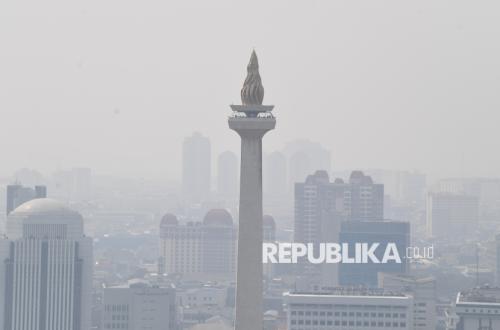
China’s policy to halt plastic waste imports in 2018 has had unexpected environmental consequences for Indonesia. Recent research shows that air pollution in Indonesia increased after a portion of the plastic waste previously sent to China was diverted to Southeast Asian countries, including Indonesia.
The study, conducted by the University of Colorado Boulder and published in the Journal of the Royal Statistical Society—Series C: Applied Statistics, found that concentrations of fine particles around open landfill sites in Indonesia increased between 2018 and 2019 compared to the period before the import ban was implemented.
Lead researcher Ellen Considine stated that this increase is linked to the growing volume of plastic waste entering Indonesia and the continued practice of open waste burning. “When high-income countries send plastic waste to middle- and low-income countries, more waste is burned,” Considine noted, as reported by Phys.org.
The research highlights the secondary impacts of China’s decision to stop importing plastic waste from the United States, Japan, Australia, the Netherlands, and several other developed nations. Much of this waste was subsequently redirected to countries with more limited waste management capacities.
The research team utilised satellite data to analyse changes in air quality across 3able 356 open landfill sites in Indonesia before and after the policy implementation. The analysis isolated other factors, such as weather, to more accurately measure the impact of plastic waste imports.
Results showed that concentrations of fine particulate matter, or PM2.5, increased by an average of 3.3 per cent around open landfill sites in 2018 and 2019 compared to the 2012–2017 period. Fine particles are among the most dangerous air pollutants due to their microscopic size, which allows them to enter the lungs and even the human bloodstream.
According to the study, the increase in PM2.5 potentially raises the risk of death from lung cancer by approximately 1.9 per cent and the risk of death from lower respiratory tract infections by about 3.5 per cent.
Considine noted that while most previous studies only measured the local impact of waste burning using specific air quality monitors, this study analysed the impact on a much broader regional scale over a longer period. “Our approach is more powerful because we can observe changes in air pollution through large-scale regional studies over specific timeframes and identify its connection to plastic waste imports,” said Considine.
The study also highlights the issue of global environmental injustice, where developed nations producing large amounts of waste can reduce domestic environmental pressure by exporting trash, while the resulting pollution and health impacts are borne by the recipient nations.
These findings are seen as supporting the policies of Indonesia and Malaysia, which have tightened or banned plastic waste imports in recent years. Such measures are considered vital to reducing environmental pollution risks and health impacts caused by inadequate waste management. Researchers hope the methods used in this study can assist governments in evaluating the impact of waste management policies and international waste trade in the future.
Source: jawawa.id (https://jawawa.id/newsitem/study-reveals-indonesias-air-pollution-worsened-after-china-banned-plastic-waste-imports-1780793514)
Originally published by Republika (https://esgnow.republika.co.id/berita/tg8jm4416/studi-ungkap-polusi-udara-ri-memburuk-setelah-china-larang-impor-limbah-plastik), translated from Indonesian