
Study on Revising the Corruption Eradication Law in the DPR's Legislation Body Said Not to Influence Chromebook Case
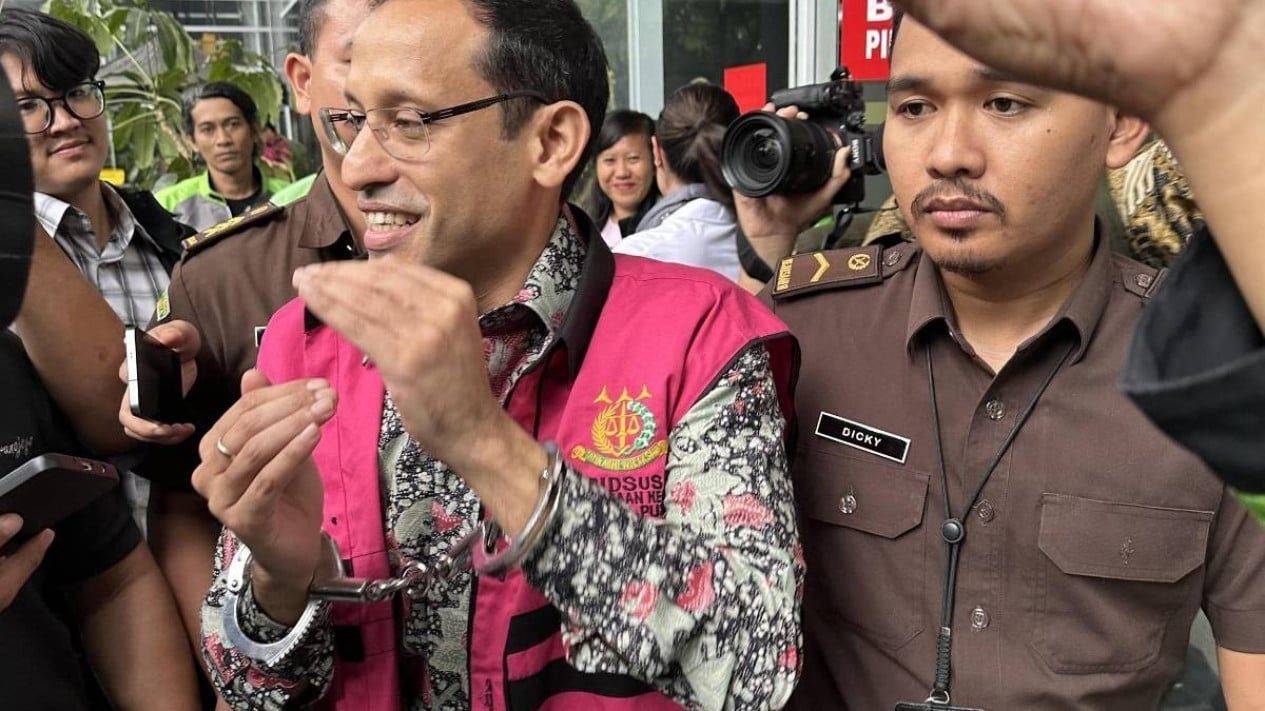
Jakarta, VIVA - The discussion on a possible limited revision of the Corruption Eradication Law (UU Tipikor) in the Legislation Body (Baleg) of the House of Representatives of the Republic of Indonesia (DPR RI) is considered not to be interpreted as an intervention in the ongoing legal proceedings of a corruption case, including the Chromebook procurement case involving defendant Nadiem Makarim.
Lucius Karus, a researcher at the Forum Masyarakat Peduli Parlemen Indonesia, said the Baleg discussions are still at the study-and-aspiration stage following the Constitutional Court’s decision on the authority to calculate state losses in corruption cases.
“I think the Baleg cannot intervene in proceedings or handling of ongoing corruption cases. The Chromebook case may be mentioned simply because it is being discussed,” he told reporters on Thursday, 21 May 2026.
According to him, the public hearing (RDPU) held by the DPR’s Baleg is part of the legislative function to discuss potential regulatory changes, particularly regarding the interpretation of the authority of institutions that calculate state losses in corruption cases.
Karus noted that the public should not drive the discussion on revising the UU Tipikor as an attempt to influence court proceedings.
“With discussing it, that does not mean the Baleg can intervene in the Chromebook trial. The public should not be swayed by information that does not reflect the facts of the proceedings,” he said.
He explained that the outcome of Baleg deliberations may not necessarily lead to a legislative revision, as the entire process still depends on agreement between the DPR and the government.
“The next steps depend heavily on the will of the Baleg and the government, whether they want to continue discussions on revising the UU Tipikor or not,” he said.
Chairman of the DPR’s Legislation Body, Bob Hasan, previously invited several experts to discuss the dual interpretations of Article 2 and Article 3 of the UU Tipikor with Articles 603 and 604 of the National Criminal Code (KUHP Nasional).
The discussion surfaced after the Constitutional Court’s Decision No. 28/PUU-XXIV/2026, which affirmed that the Audit Board of Indonesia (BPK) is the sole state institution authorised to calculate and determine losses in a corruption offence.
However, Bob said there are still differences in views, including following the Attorney General’s Office’s circular that is said to open space for many agencies to calculate state losses, including the Financial and Development Supervisory Agency (BPKP).
Source: jawawa.id (https://jawawa.id/newsitem/study-on-revising-the-corruption-eradication-law-in-the-dprs-legislation-body-said-not-to-influence-1779542398)
Originally published by VIVA.co.id (https://www.viva.co.id/berita/nasional/1900332-kajian-revisi-uu-tipikor-di-baleg-dpr-disebut-tak-bisa-pengaruhi-perkara-chromebook), translated from Indonesian