
Study Highlights Indonesian Youth as Most Vulnerable to Climate Change Impacts
The impact of climate change does not only threaten the environment but is also beginning to disrupt access to education, health, and the quality of life for children and young people in Indonesia. Ironically, the group that contributes the least to the climate crisis is the one experiencing the most severe consequences.
These findings emerged from a study titled ‘Climate Action Lab: Lessons from climate change education for youth in Jakarta, Pekindalongan, and Pontianak’, conducted by the Centre for Research and Advocacy for the Protection and Quality of Life of Children (Puskapa) at the University of Indonesia, alongside the Australian National University (ANU), with support from the Australian Government through Koneksi.
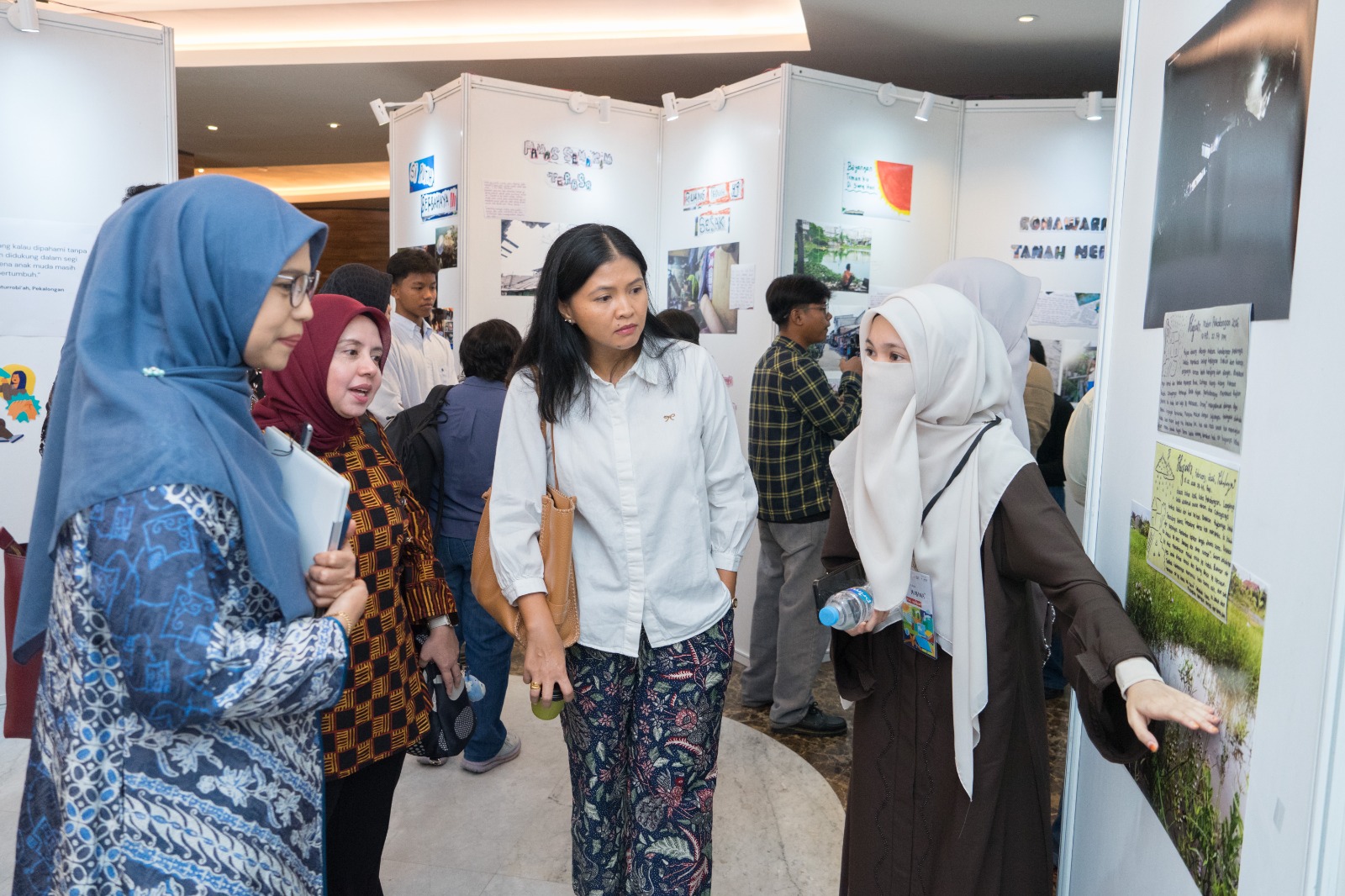
The study’s results, presented during a multi-stakeholder dialogue in Jakarta, revealed real-life experiences of young people facing climate impacts in their respective regions. Siti Nafisaturrobiah, a student in Pekalongan, shared how tidal flooding during the rainy season frequently disrupts learning activities, forcing students to evacuate and reducing classroom time.
Similar experiences were shared by Nur Alam Hidayatullah from Pontianak, who described the increasing hardships caused by tidal floods, rising temperatures, and air pollution from factories, vehicles, and forest fires. The study also highlighted significant challenges for youth with disabilities; Gressia Carolina, a visually impaired young woman in Jakarta, noted that extreme weather increases safety risks during daily activities.
Researchers noted that while marginalised youth live alongside the impacts of climate change, they often lack an understanding of the root causes and the platform to voice their experiences. Through the Climate Action Lab project, Puskapa and ANU are developing educational modules that cover climate justice, public policy, environmental governance, and the rights of vulnerable groups to encourage active participation in decision-making.
Endang Sulastri, Director of Higher Education, Knowledge, and Technology at the Ministry of PPN/Bappenas, stated that youth play a strategic role in achieving sustainable development towards ‘Indonesia Emas 2045’. She described young people not only as the most affected group but also as agents of change who will determine the future direction of Indonesia’s development.
Similarly, Woro Srihastuti Sulistyaningram, Deputy of the Coordinating Ministry for Human Development and Family Empowerment, emphasised that children should not merely be viewed as vulnerable groups to be protected, but as rights-holders and essential contributors to solutions.
However, the study also found issues beyond the capacity of youth to resolve alone. Participants highlighted difficulties in voicing concerns regarding deforestation and industrial waste contaminating groundwater. Senior Researcher at Puskapa, Shaila Tieken, noted that the primary issue is not a lack of experience among youth, but rather the lack of space, language, and support to articulate those experiences.
Participants agreed that addressing climate change requires cross-sector collaboration involving the government, academics, the business world, media, civil society, and youth communities to ensure research and climate education translate into impactful public policy.