
Study Finds Global Wildfires Decline but Become More Deadly
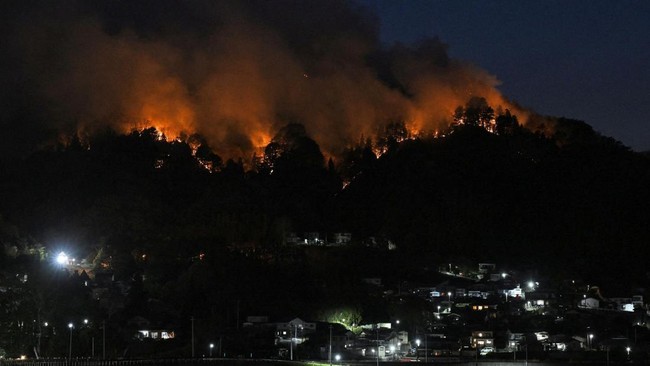
Jakarta, CNBC Indonesia - A recent study has revealed a paradox in global wildfires in 2025. Despite the total burned area globally declining to the second-lowest level since 2002, extreme fires caused massive damage in countries including the United States, Canada, the UK, Spain, Portugal, and South Korea.
According to The Guardian, the study recorded 335 million hectares burned in 2025, the second-lowest since 2002. This decline is largely due to agricultural expansion in Africa fragmenting landscapes and hindering large savannah fires.
However, major fires caused severe damage. In the US, the Palisades and Eaton fires in Los Angeles were among the most destructive in the country’s history. The UK recorded its highest burned area after a ‘major fire’ in Scotland destroyed over 100,000 hectares.
Meanwhile, severe fires in Spain and Portugal consumed over 500,000 hectares, while South Korea experienced its deadliest and largest wildfire season on record.
The study also found that wildfires accounted for over 38% of total insured losses from weather disasters in 2025.
Matthew Jones, a climate scientist at the University of East Anglia and lead author of the study, told The Guardian: ‘2025 shows that even a ’quiet’ global fire year can still be devastating.’ He added: ‘We are seeing a growing gap between the total burned area and the real-world impact.’
Researchers explained that while global burned area is decreasing, climate change is creating weather conditions that allow fires to spread more easily, especially in areas where forests meet densely populated regions.
In southern California and South Korea, dry vegetation and strong winds accelerated fire spread into populated areas, causing significant casualties and infrastructure damage. In the Mediterranean, heatwaves and extreme drought triggered large fires from Portugal to Turkey.
David Garcia, an applied mathematician at the University of Alicante, said: ‘These conditions don’t cause fires, but when they do occur, we have more flammable material due to dryness and wind conditions that fan the flames.’ He added: ‘This makes large fires more likely.’
Garcia cited attribution studies showing that extreme weather conditions triggering the 2025 fires in Portugal and Spain were 39 times more likely due to climate change. ‘If we continue warming the planet, large-scale fires will keep increasing,’ he said.
Despite global carbon emissions from wildfires dropping to the third-lowest ever recorded, Canada experienced a surge in emissions from extreme wildfires for three consecutive years. Since 2023, North American boreal forests have released nearly 4 billion tonnes of CO2, exceeding emissions from the previous 15 years.
The impact of wildfires extends beyond flames; smoke also causes harm. A September study found toxic particles from Canada’s 2023 wildfires contributed to approximately 82,000 deaths from air pollution, with smoke spreading to US cities, Europe, and Africa.
Adrián Regos, a landscape ecologist from Galicia’s Biology Mission in Spain, said: ‘2025’s experience shows that a few extreme fires can dominate ecological, social, and economic impacts in a single fire season.’ He added: ‘The broader pattern highlighted by this study aligns with what we see across southern Europe: while total burned area fluctuates yearly, climate change increases the likelihood of extreme weather triggering fires, and rural abandonment leading to fuel buildup makes landscapes more vulnerable to fast-spreading blazes.’ ‘The challenge is not just reducing fire numbers, but enhancing landscape and community resilience to extreme events,’ he concluded.