
Study AI-Based Agriculture in Chongqing, Transmigration Minister Urges Investment in Indonesia
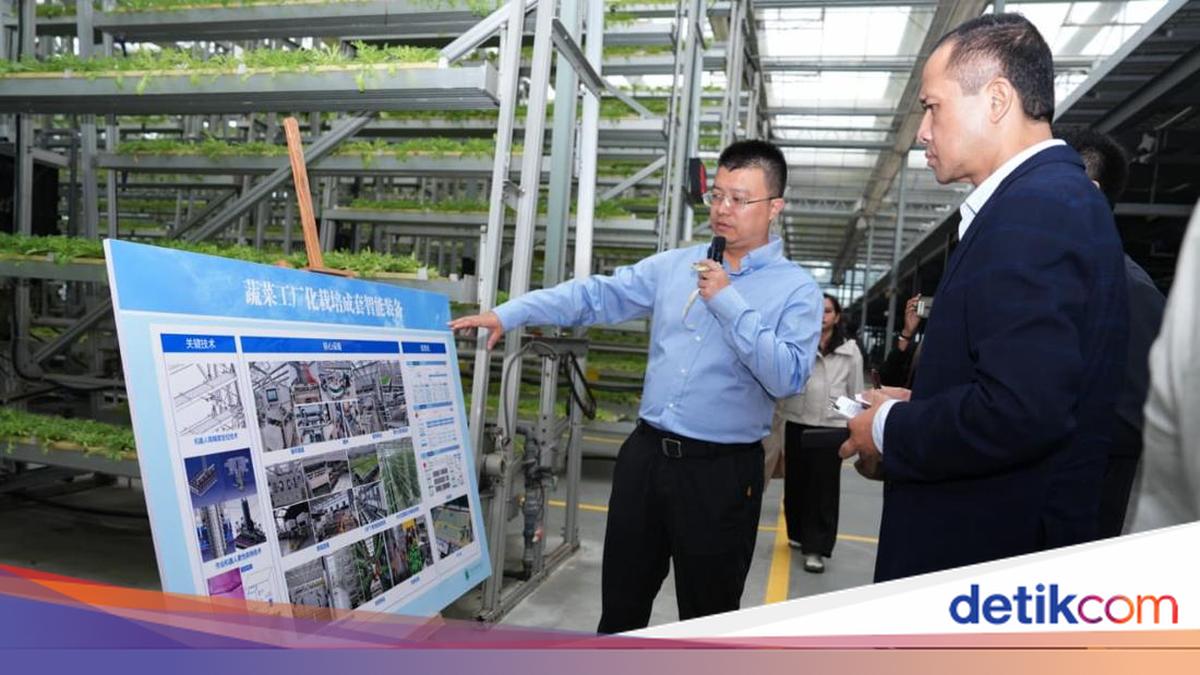
The use of artificial intelligence (AI) to boost agricultural productivity was one of the key lessons for Transmigration Minister M. Iftitah Sulaiman Suryanagara during a working visit to Chongqing, China.
During a visit to the Chongqing Academy of Agricultural Sciences (CQAAS) on Wednesday (14 October), Iftitah studied how research, digital technology and agricultural innovation are being applied to improve production efficiency and support rural economic development.
He said the experience was relevant to Indonesia, particularly efforts to develop transmigration areas in Papua, Sulawesi and other regions into new centres of economic growth based on modern agriculture and industrialisation.
“To generate new economic growth, we have learnt that development must be based on research and science. Otherwise, the results will be sporadic,” Iftitah said in a written statement on Sunday (18 October 2026).
Indonesia has abundant land and natural resources, he said, but successful agricultural development cannot rely solely on expanding farmland and providing infrastructure.
Higher productivity also requires knowledge of soil conditions, appropriate crop selection, cultivation technology, farmers’ skills and secure markets.
“We must also build the capacity of transmigrants and local communities in these areas so that they have the necessary know-how,” he said.
Learning from AI that helps farmers
One innovation that caught Iftitah’s attention was a smart farming system combining fish and vegetable cultivation in a single production system.
In the aquaponics system, water from fish ponds is treated and reused to provide nutrients to plants. The water is then circulated, making more efficient use of resources.
The system is also supported by AI and automation, including monitoring growing conditions, precision feeding and control of production processes.
The innovation shows how research can be turned into technology that helps increase output, conserve resources and reduce repetitive work.
CQAAS is also researching soil characteristics and crop suitability so that farming can be adapted to local land conditions. Iftitah focused on how research findings are carried beyond the laboratory and passed on to farmers for use in production.
“The government intervenes through research conducted every month, and the results are shared with all farmers. They also have a soil research centre,” he said.
The approach offers important lessons for Indonesia, Iftitah said. Each transmigration area has different land, climate and commodity potential, so development should be guided by research tailored to local needs.
Technology must also take into account communities’ ability to use, operate and maintain it sustainably.
Investment opportunities in Papua and Sulawesi
Alongside studying technology, Iftitah called for stronger agricultural investment cooperation between Indonesia and China. He said he had discussed opportunities to expand cooperation in agriculture, particularly in Papua, as well as in other potential sectors, including tourism, with China’s Ambassador to Indonesia, Wang Lutong.
“I have discussed this with Ambassador Wang Lutong, and we both agreed to develop cooperation in agriculture in Papua, as well as in other industries such as tourism,” he said.
Iftitah said the cooperation was expected to bring together Indonesia’s natural resources with Chinese technology, industrial experience, investment and market access. He also sees strong potential to develop Indonesian flagship commodities for international markets, including China.
Durian is one commodity of interest, with scope to expand cultivation in Sulawesi by increasing production, processing and strengthening supply chains.
“China needs a lot of durians. You can bring investment to Indonesia, grow durians in our country, for example in Sulawesi, and let us enjoy them together,” Iftitah said.
He said investment cooperation should build economic activity in commodity-producing regions rather than simply expand trade in raw materials. The introduction of cultivation technology, processing industries, storage facilities and marketing networks is expected to give local communities more opportunities to work and raise their incomes.
Iftitah also stressed that foreign investment should deliver benefits through the transfer of knowledge and technology, workforce skills development and the involvement of local businesses. This would mean local people were not only employed as workers, but also had opportunities to develop businesses and improve their economic capabilities independently.
Technology to address real needs in transmigration areas
Iftitah said Chongqing’s experience could serve as a reference for developing agricultural solutions suited to the needs of Indonesia’s transmigration areas. One example is the development of agriculture and agroforestry in the Barelang transmigration area, particularly Rempang, in Batam City.
He said BP Batam and the Batam City Government had offered around 25 hectares of land for temporary use by local communities for farming before industrial development begins. The opportunity could be assessed further to support seedling production, the development of crops suited to the land and productive farming for local residents.
The development is expected to help residents maintain and expand their livelihoods during the area’s construction. In addition to agriculture, the Ministry of Transmigration is encouraging the development of fisheries and the maritime economy through cooperation across ministries, including support for boats for coastal communities.
According to Iftitah, the experience shows that each area requires a different approach, while sharing the same aim: creating productive economic activity and improving community welfare.
Education, industrialisation and markets as drivers of growth
From his visits to China, Iftitah said he had seen the importance of linking education, industrialisation and market needs in building a sustainable economy.
Education and research are needed to build people’s capabilities and productivity. Industrialisation is necessary to create added value and jobs, while market demand and purchasing power are vital for sustaining production.
“Education is the key to development. Second, create more jobs through industrialisation. Third, what I have just learnt from this visit is consumption,” Iftitah said.
He said increased agricultural production must be accompanied by secure markets, through domestic processing industries and expanded access to international trade. Without these connections, higher output will not necessarily translate into increased incomes for farmers.
For that reason, transmigration is being transformed to create an economic ecosystem linking land, workers, research, technology, investment, industry and markets in a single regional plan.
Iftitah hopes the lessons from Chongqing and the exploration of cooperation with Chinese partners will help accelerate the development of modern agriculture and industries based on local potential in Indonesia.
However, the adoption of technology and development models must still be tailored to the land’s characteristics, community needs, infrastructure readiness and the economic viability of each area.
For Iftitah, the ultimate goal is not simply to introduce modern technology or increase investment, but to ensure that communities can produce more, earn better incomes and access a wider range of job opportunities.
“If we remain consistent, we will not be outmatched by products from overseas,” he concluded.
Source: jawawa.id (https://jawawa.id/newsitem/study-ai-based-agriculture-in-chongqing-transmigration-minister-urges-investment-in-indonesia-1792338638)
Originally published by detikcom (https://news.detik.com/berita/d-8713027/pelajari-pertanian-berbasis-ai-di-chongqing-mentrans-ajak-investasi-di-ri), translated from Indonesian