
Students with Disabilities Involved in Sustainable Lifestyle Education
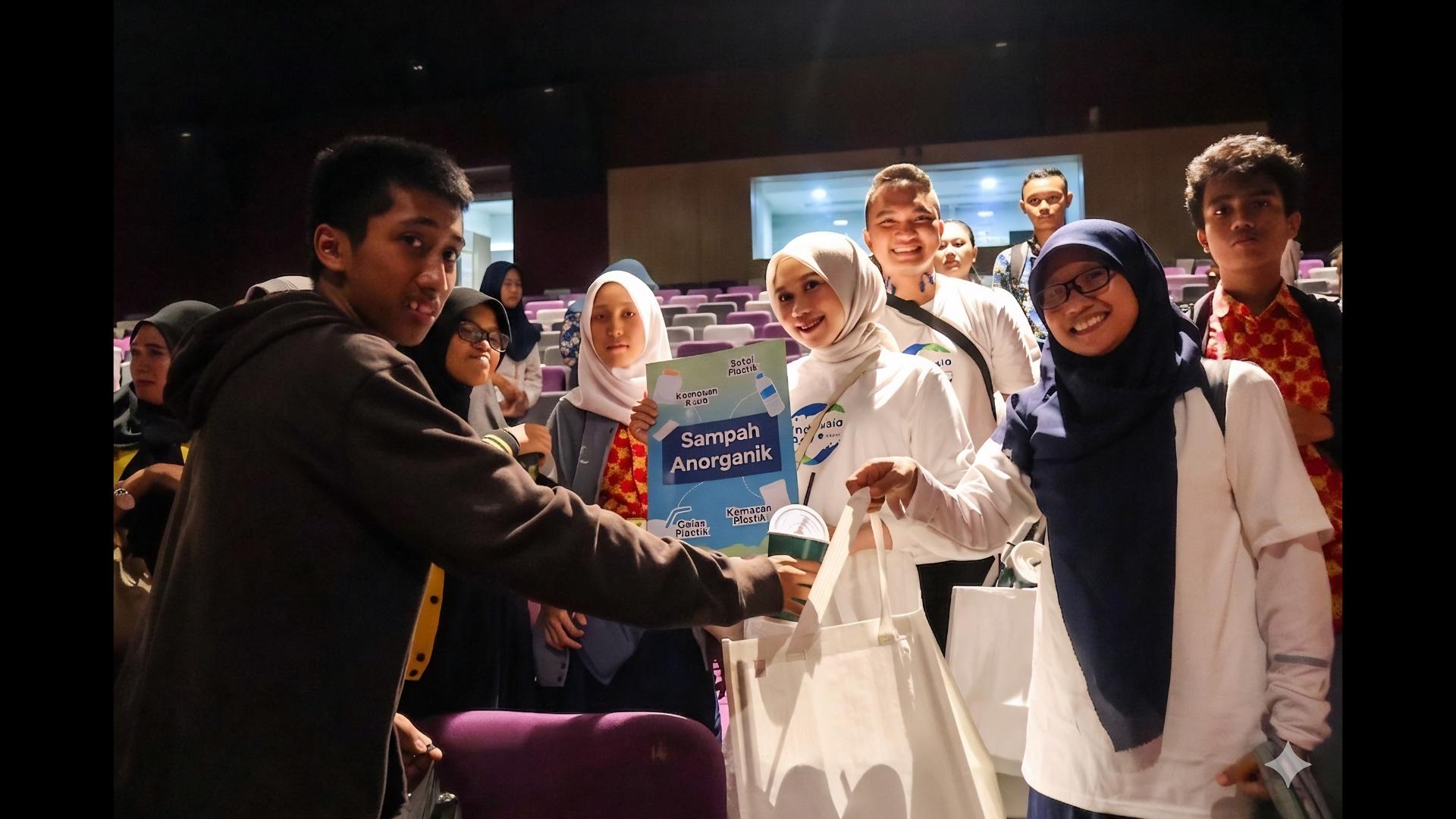
Education regarding sustainable lifestyles is considered essential to reach all layers of society, including people with disabilities, to ensure that waste reduction efforts and environmentally friendly behavioural changes are more inclusive. This approach is currently being implemented through various educational activities that combine recreational experiences, social interaction, and environmental learning.
One such initiative is the ‘Cinema Experience’ programme, which involved more than 150 students with disabilities from the Jabodetabek region. The cinema outing was designed not only as a means of entertainment but also as a learning space regarding the importance of sorting waste at the source as a simple yet impactful step for the environment.
This programme is part of the Indonesia Asri sustainability campaign, managed by Chandra Asri Group through its Inclusion & Diversity pillar in collaboration with the organisation Kitaoneus. Through this partnership, environmental education is packaged into activities that are more interactive and accessible to participants.
During the event, the Indonesia Asri community, known as Sobat Asri, participated as volunteers to accompany participants throughout the programme. These volunteers also provided introductions to various types of waste and methods for waste segregation in daily life.
Beyond introducing simple practices like waste sorting, the activity also encourages active public participation in creating more sustainable behavioural changes. Chrysanthi Tarigan, Head of Corporate Communications at Chandra Asri Group, stated that efforts to build environmental awareness must be inclusive so that all members of society have an equal opportunity to participate.
“As a sustainability campaign, Indonesia Asri must be inclusive. Behavioural changes towards the environment will become stronger if all layers of society have the same opportunity to be involved,” she said. She added that sustainability campaigns should also take the form of activities that are close to daily life to make them easier for the public to understand and implement.
She further noted that the collaboration with Kitaoneus for similar activities has now been conducted for the third time as part of strengthening the inclusive sustainability campaign. Maria Ulfah Hilmy, Chairperson of Kitaoneus, noted that the involvement of volunteers in the activity also helped create a positive space for social interaction for students with disabilities.
Through a more inclusive approach, education on waste sorting is expected to grow into a daily habit within society. Such efforts reaffirm that environmental sustainability is not merely the responsibility of specific groups, but requires the involvement of all elements of society without exception.