
Students' Struggle in Kutai Kartanegara: Crossing Crocodile Habitats via Cable Car to Reach School
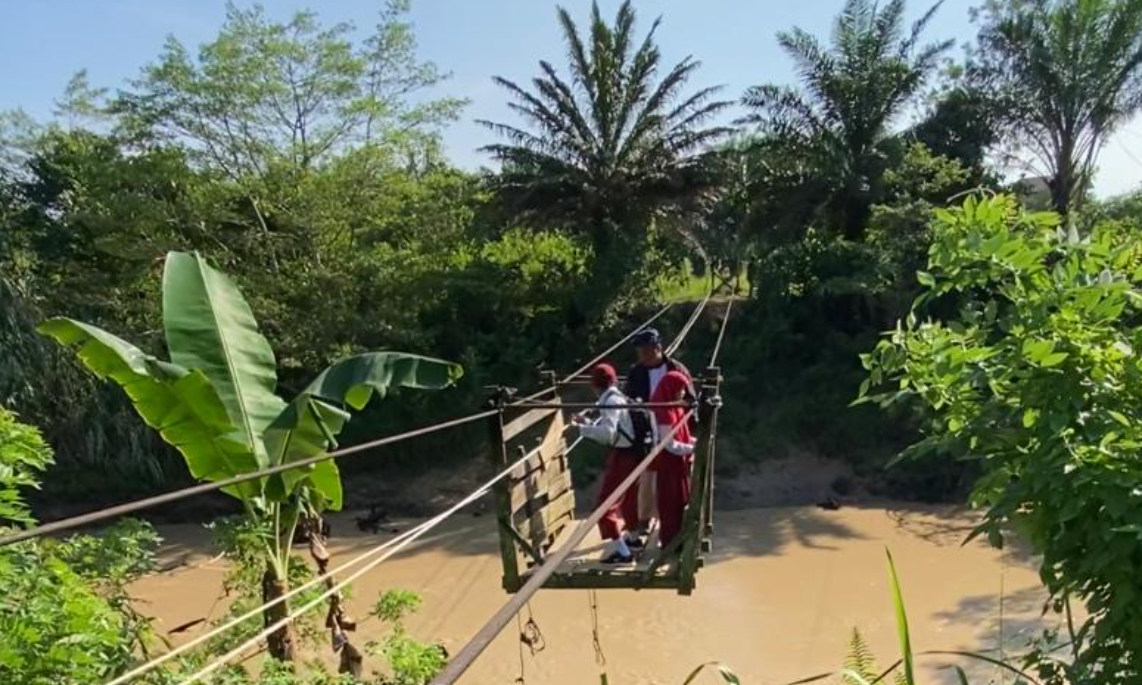
A quiet morning in Dusun Damai, Santan Ulu Village, Marangkayu District, Kutai Kartanegara, East Kalimantan, often begins with a life-threatening gamble. Ade Fahmi Maulana, a fifth-grade student at SD Negeri 021 Marangkayu, and his younger sister, Assyifa, a third-grader, prepare for school in their red and white uniforms. However, their journey is not along smooth asphalt, but across a rope cable car suspended over a river.
Instead of waiting at a bus stop, the siblings must walk 200 metres to the edge of the Santan River. The only rapid access to school is a simple cable car measuring 2.5 metres by 2 metres. This apparatus is far from modern; it lacks an engine, meaning Ade must manually pull the rope using his own strength to cross. Beneath the swaying carriage flows the Santan River, widely known by locals as a crocodile habitat. Tension is a daily reality for them.
While the crossing takes only about two minutes, the lurking risks are immense. Their father, Aceng Jainuddin, expressed deep anxiety every time he sends his children off. Nevertheless, the children’s high enthusiasm for learning often overcomes their fear. “If forbidden, they sometimes cry because they want to go to school. They are afraid of falling behind in their lessons,” said Aceng. For this family, education is the only way out of their limitations, even if it must be pursued through extreme means.
School Policy and Regulatory Constraints
The school authorities are fully aware of the risks faced by students from Dusun Damai. Badil, the Headmaster of SD Negeri 021 Marangkayu, explained that the school provides special tolerance for students arriving late due to weather conditions or dangerous river states. This includes no punishment for delays caused by natural conditions and the provision of online learning during extreme weather to ensure students can follow the curriculum without risking their lives.
Awaiting a Bridge in Protected Forest Areas
The hopes of Dusun Damai residents for a permanent bridge have long been voiced. The Head of Santan Ulu Village, Heri Budianto, stated that proposals for a suspension bridge have been submitted. However, realisation is hindered by complex regulatory hurdles. The planned construction site is located within a protected forest area, which requires specialised permit procedures and lengthy cross-sectoral coordination. Until such permits are granted, the manual cable car remains the sole lifeline for residents, farmers, and students alike. For Ade and Assyifa, every pull of the rope over the crocodile habitat is a tangible step towards their dreams, representing the significant challenges of infrastructure equality in Indonesia’s remote regions.