
Students Have Changed, Have Schools?
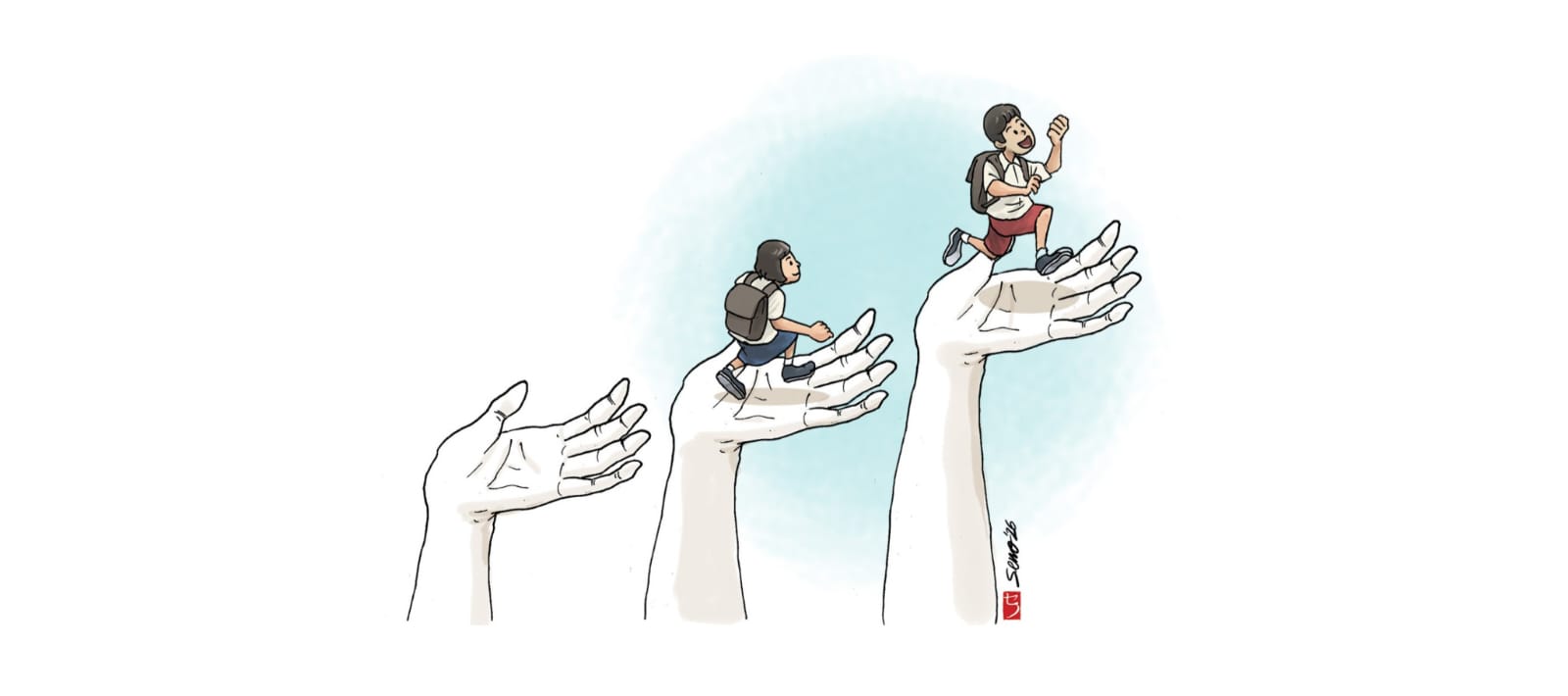
The beginning of July always marks the start of a new academic year. However, something is different compared to a few years ago. The students entering schools today are no longer a generation that depends entirely on textbooks or teacher explanations. They have grown up amidst the rapid flow of the internet and artificial intelligence (AI), which can present information in a matter of seconds.
APJII data from 2026 shows that internet penetration in Indonesia has exceeded 80% of the population. This figure illustrates that the majority of students entering schools today are accustomed to obtaining information independently through digital spaces. Observing this change, welcoming new students is no longer sufficient with just an introduction to the school environment; it also requires a change in how schools perceive students. Welcoming new students in the AI era means welcoming a generation with different ways of learning, thinking, and needs.
For decades, schools have developed as places for the transfer of knowledge. The teacher was the primary source of information, while students came to receive and learn that knowledge. This model made perfect sense in its time, when access to information was still limited. Today, knowledge is abundant, but precisely therein lies the new challenge for education: helping students verify and use information responsibly. Stanford research (2019) found that more than 80% of students were unable to assess the credibility of digital sources, while constant digital exposure erodes the ability to think deeply. They are accustomed to getting instant answers but are not used to questioning them. The current generation indeed has broader access than previous generations, but that access does not automatically give birth to better understanding. If schools continue to persist with rote memorisation patterns, the gap between education and real life will widen further.
This is where the greatest challenge for education currently lies. For many years, schools successfully addressed the problem of limited access to knowledge. Now, the challenge has shifted to how to guide students so they do not drown in the flood of information. If schools fail to read this change, the classroom will merely become a place to repeat what students already know, rather than a space to expand their way of thinking. This change does not mean schools are losing their relevance. On the contrary, when information is available everywhere, schools are increasingly needed as spaces that help students learn to distinguish facts from opinions, connect knowledge with life, and build critical thinking skills.
The next question is how schools should carry out this role. The answer lies in one word: experience. The Future of Jobs report from the World Economic Forum shows that the future workforce increasingly requires critical thinking, creativity, communication, collaboration, and a lifelong learning mindset. Interestingly, all these skills do not grow from memorisation, but through learning experiences that encourage curiosity, reflection, and the courage to try. Therefore, the classroom needs to transform into a space for exploration. Schools must become places for students to ask questions, discuss, conduct simple research, collaborate, and learn to solve real problems. When students learn about climate change, for instance, it is not enough for them to just understand the definition of global warming or memorise its causal factors. They need to be invited to observe environmental changes around them, analyse rainfall data, discuss with the community, design simple solutions, and communicate their ideas. It is experiences like these that students will remember. They may forget definitions they memorised, but they will not forget the experience of seeking solutions or engaging in discussions. It is this process that transforms knowledge into understanding and learning into a life experience.
Changes in how students learn also demand a shift in the role of the teacher. In the AI era, teachers do not compete with technology but complement it. Technology may be faster at providing information, but it cannot understand the character of each student, build emotional connections, instil values, or encourage them to keep learning. Ki Hadjar Dewantara emphasised that education is a process of guiding the natural potential of children towards safety and happiness, both as individuals and as members of society. This philosophy is increasingly relevant amidst the rapid advancement of technology. Guiding does not mean providing answers, but rather helping students find direction, build character, and develop their potential. A deep learning approach—mindful, meaningful, and joyful—is one of the answers. Students not only understand concepts but also connect them with experiences, reflect on their meaning, and use them to solve problems. The teacher is no longer merely a conveyor of knowledge, but also a guide who helps students grow into complete human beings. However, this change will not materialise if teachers are still burdened by a learning culture oriented towards completing materials and assessment scores. Teachers need space to design contextual learning experiences.
Welcoming new students is, in essence, also opening a new perspective on education. Students have changed, so schools must dare to change. In the AI era, schools are no longer the sole source of knowledge. Yet, schools remain the best place to cultivate future skills. Schools need to build a learning culture that provides space for exploration, collaboration, reflection, and the courage to try. The most important thing is to open a new perspective on the role of education in shaping a generation that is not only intelligent but also wise in facing the challenges of the times.
Source: jawawa.id (https://jawawa.id/newsitem/students-have-changed-have-schools-1786315828)
Originally published by Media Indonesia (https://mediaindonesia.com/opini/920001/murid-berubah-sekolah), translated from Indonesian