
Students Criticise GenSawit 2026 at Udayana University, Claiming Campus is Used for Palm Oil Glorification
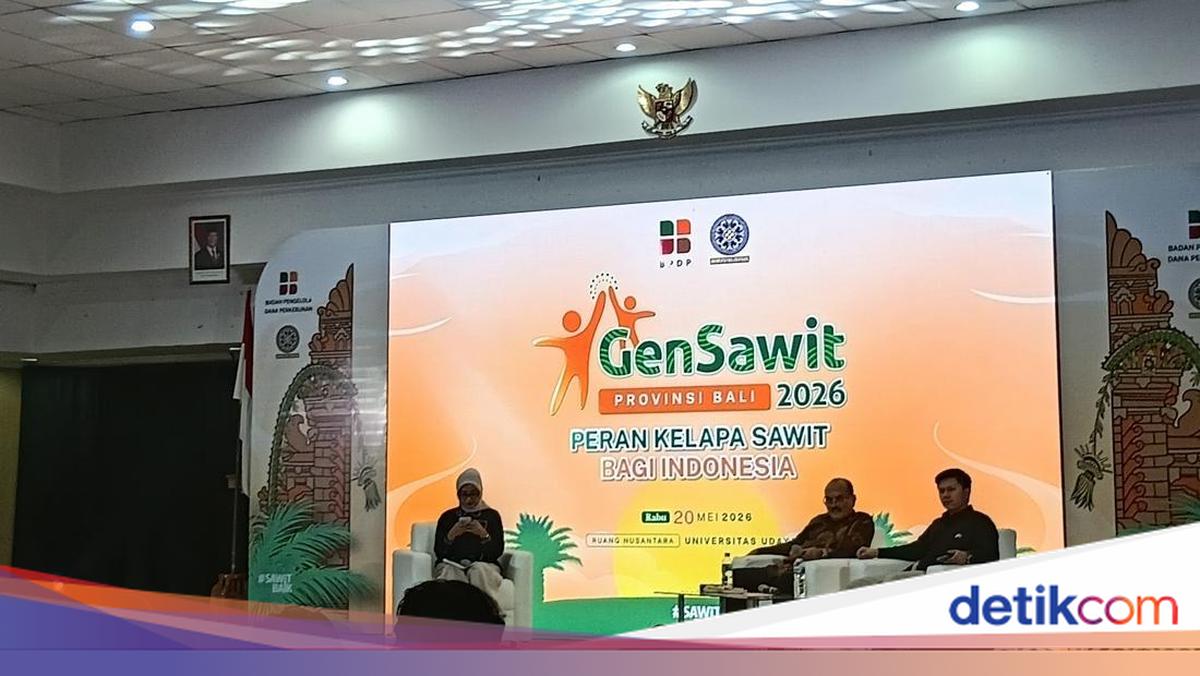
The GenSawit 2026 talkshow held at Udayana University (Unud), Denpasar, has sparked criticism from students across Bali and the Udayana University Student Executive Board (BEM PM Unud). The forum, which discussed the palm oil industry, was perceived as being biased towards defending the sector and highlighting positive narratives, while failing to address critical issues such as deforestation, agrarian conflicts, and forest fires.
Initiated by the Directorate General of Treasury of the Plantation Fund Management Agency (BPDB), the event took place at the Sudirman Campus, Denpasar, on Wednesday (20/5/2026). The forum brought together students from 22 universities in Bali, aiming to provide objective facts regarding the palm oil industry amidst widespread negative narratives on social and mass media concerning environmental, economic, and social aspects.
One of the speakers, Professor Yanto Santosa from the Bogor Agricultural Institute (IPB), noted that the palm oil industry is frequently targeted by negative campaigns, both nationally and internationally, particularly regarding deforestation, environmental damage, and carbon emissions. “There are three major environmental issues that continue to roll like a snowball,” Yanto stated during his presentation.
Yanto explained that most palm oil land in Indonesia originates from non-forest areas, including former production lands and open land. He argued that the loss of forests in Indonesia does not have a direct link to the expansion of palm oil plantations, stating, “If we use Indonesia’s deforestation criteria, only about 20 per cent involves converting forest areas into palm oil plantations.”
He also suggested that palm oil does not always have a negative impact on biodiversity or water usage, noting that some research shows species decline is not entirely due to land conversion for plantations.
Meanwhile, Djono Albar Burhan, Head of International Relations for Apkasindo, encouraged the younger generation to be more critical of information received on social media. He emphasised that the palm oil industry contributes significantly to the economy of farmers. “What we perceive as true may not be entirely true. Young people today are easily exposed to information on social media,” Burint stated.
Burhan argued that the palm oil industry possesses high productivity compared to other vegetable oils and serves as a livelihood for millions of Indonesian farmers. He also noted that negative campaigns against palm oil could impact other commodities, such as coffee and cocoa, which are subject to European Union deforestation regulations. Yanto also mentioned that palm oil is a crop capable of carbon sequestration, providing a greater benefit as a carbon sink for Indonesia.
However, the presentation’s perceived bias towards positive narratives drew significant scrutiny from students. Representing BEM PM Unud, students argued that the discussion primarily defended the industry without deeply addressing the social and ecological impacts occurring on the ground. They specifically highlighted issues such as forest fires, agrarian conflicts, and land clearing that remained unaddressed during the forum.
“We are not anti-palm oil, but we question how the government communicates regarding issues arising in society,” said a representative from BEM PM Unud.
The students and the Bali Student Alliance issued several firm stances:
Demanding the government cease the exploitation of indigenous territories and forests, which is seen as harming communities due to plantation expansion.
Rejecting programmes perceived as propaganda or the glorification of the palm oil industry without a holistic discussion of social, environmental, and economic impacts.
Urging the government and relevant ministries to evaluate palm oil expansion contributing to deforestation and environmental damage.
Requesting the government to open spaces for more critical and independent academic studies regarding the industry, rather than presenting only positive narratives.
Asserting that campuses must not be used as spaces for industry or government propaganda, but must remain spaces for objective scientific discussion.
Highlighting the importance of government transparency regarding forest fires, land conflicts, and ecological impacts associated with the industry.
Clarifying that they are not ‘anti-palm oil’ but demand transparency and balanced information regarding the industry’s impacts and benefits.