
Students Complain TKA Questions Are Long and Tricky; Education Minister Responds
The Academic Ability Test (TKA) for senior secondary school and equivalent levels is still under way. During the examinations, some students have complained that the questions are too long, particularly in Indonesian and English.
Some answer options in the Indonesian-language test were also considered misleading. Nairah Marwah Dewi, a TKA candidate from SMAN 3 South Tangerang City, said the questions required considerable care and concentration.
“The questions in the TKA we took earlier were quite tricky. So the tip is to read them properly and stay focused, so we can find the right answer,” she said when met at SMAN 3 South Tangerang City, Banten, on Monday (26 October 2026).
Another student from the same school, Abiyyu Desain Nagari, expressed a similar view. He said the TKA questions he answered demanded a thorough understanding of the texts.
“Understanding the text is important because every question uses a text, and the answer is based on it. So we have to read carefully to be able to answer,” he said.
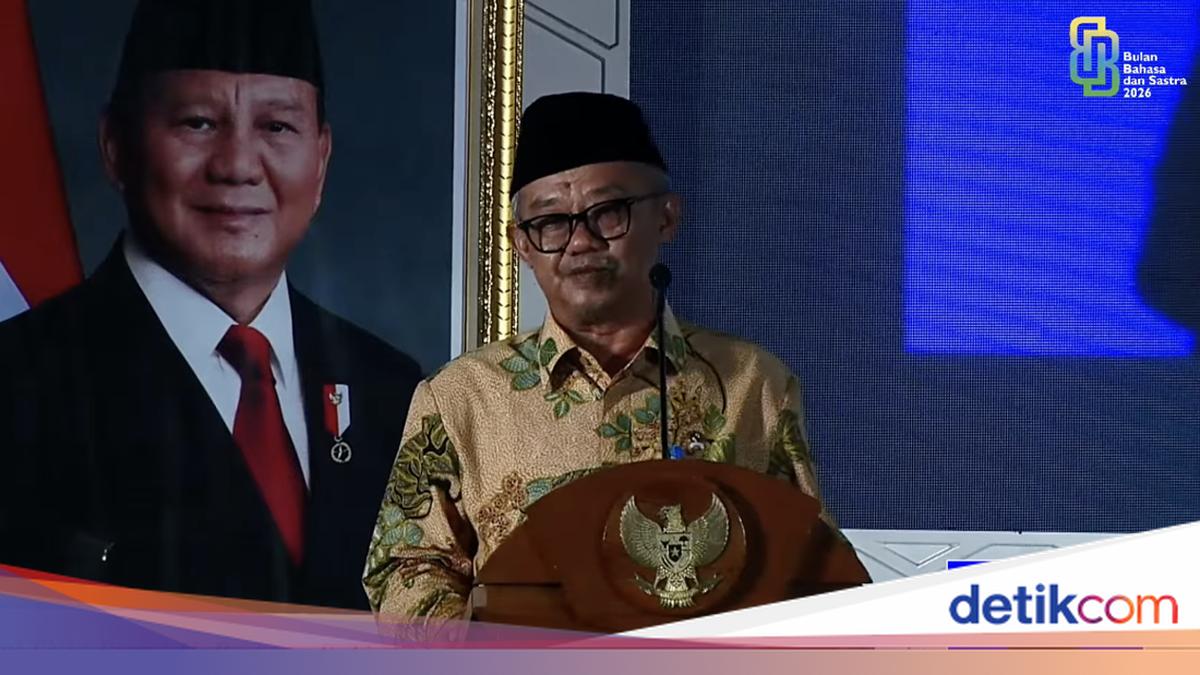
In response, Minister of Primary and Secondary Education Abdul Mu’ti explained the test format while visiting the TKA at SMAN 3 South Tangerang. He emphasised that the lengthy questions were designed that way for a reason.
The format was deliberately developed because the TKA assessment system has been standardised in line with international benchmarks. The test adopts the model used by the Programme for International Student Assessment (PISA).
“We have adapted the TKA to the PISA test model. PISA is more or less like that. So if people complained last year that ‘the questions are so long’, that is how they are meant to be,” the minister told reporters.
More than quick calculations
Mu’ti illustrated the fundamental difference between conventional questions based on memorisation and the higher-order thinking skills (HOTS) questions used in the TKA. Basic mathematics, he said, is no longer presented as a bare calculation.
“So when asking 3 times 3, it is not simply ‘what is 3 times 3?’ For example, Mr Toni has three eggs, the school principal has three, and the head of the regional education office has three; how many eggs do they have altogether? That is a different form of question,” Mu’ti explained.
Through this kind of narrative, examiners aim to assess students’ problem-solving reasoning. The questions therefore evaluate not only their ability to memorise formulae, but also their understanding.
“We use higher-order thinking skills as a benchmark for the TKA. Parents who want their children to do well should prepare them as thoroughly as possible. But if the test results are not what they hoped for, that is not the end of everything. There is still time for students to improve, and the results do not determine whether they graduate,” the minister said.
TKA questions use international standards
Mu’ti said the use of HOTS questions based on international standards also has a strategic purpose for students’ futures. He said the standardisation means Indonesian TKA results are beginning to be recognised internationally and by leading universities.
“This is part of an assessment system that we have standardised according to international standards. Our test is already recognised in the Netherlands, Hong Kong and other countries for those who want to study abroad,” he added.
Source: jawawa.id (https://jawawa.id/newsitem/students-complain-tka-questions-are-long-and-tricky-education-minister-responds-1793206236)
Originally published by detikBali (https://www.detik.com/bali/berita/d-8728650/siswa-ngeluh-soal-tka-panjang-dan-mengecoh-mendikdasmen-bilang-begini), translated from Indonesian