
Students as Drivers of the Local Economy
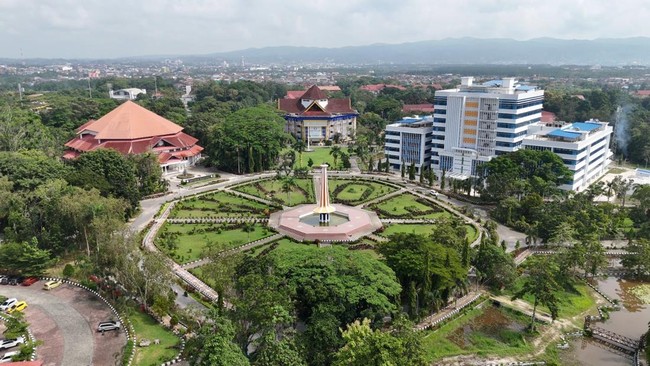
Universitas Halu Oleo (UHO) contributes not only to education but is also an important driver of economic activity in Kendari and the surrounding area. The large number of students from different regions who live in Kendari, particularly around the campus, generates a significant flow of money that is clearly felt in people’s daily lives.
Economic activity around the campus seems never to stop. From about 9am until night, sometimes as late as 10pm, trading and services continue. Students living in boarding houses are among the main consumer groups sustaining this activity.
This can be seen in the growing number of small businesses around the campus. Vegetable sellers, snack vendors, food stalls, coffee shops, laundries, convenience shops and various service businesses have emerged to meet students’ needs. Boarding houses have also expanded in response to demand for accommodation from students arriving from outside Kendari.
Students have diverse, recurring needs. They require food every day, drinking water, cooking essentials, study supplies, mobile phone credit and internet access, laundry, transport and other personal necessities. Because these needs continue throughout their studies, the money students spend circulates back through the community.
From the perspective of the local economy, this creates a multiplier effect. When students buy food at a stall, the owner earns income. The owner then buys ingredients from traders or the market.
Those traders earn income and spend it again on other needs. Student consumption, therefore, does not end with a single transaction; it can set off a chain of economic activity at local level.
One notable feature is that this economic activity lasts for much of the day. In the morning, residents begin selling daily necessities and food. Trading becomes busier from midday through the afternoon as classes take place. In the late afternoon and evening, food stalls, cafés, hangouts, convenience shops and other businesses once again become hubs of student activity.
The area around the campus has consequently developed into an economic ecosystem of its own. Students create demand not only for boarding houses but also opportunities for residents to establish new sources of income. Some residents who previously owned only a house have turned part of their land into boarding accommodation or opened businesses catering to students.
UHO students can therefore be seen as an important component in sustaining the economy around the campus. The university is not only a place of education but also a centre of economic activity, bringing together students as consumers, residents as business operators, and suppliers of goods and services.
This phenomenon shows that investment in education has a broader impact than simply producing graduates. When a university has a large student population and some students live near the campus, related economic activity emerges, creating opportunities for local residents.
For this reason, development around Universitas Halu Oleo is worth considering not only from an educational perspective but also in terms of urban economics. Busy food stalls, daily-needs vendors, boarding houses, laundries, convenience shops and other small businesses provide a clear example of how students can generate relatively stable demand.
Ultimately, students do not come to Kendari solely to study. In their daily lives, they also form part of the city’s economic pulse. The money they spend on food, accommodation, transport and other needs flows to local residents and businesses.
If managed and planned well, the area around Universitas Halu Oleo could continue to develop as an education-based economic district in Kendari. That growth should be matched by attention to environmental management, cleanliness, traffic, safety and public facilities, so economic development goes hand in hand with quality of life.
When Students Bring an Area to Life
When midday comes, the area grows livelier. As afternoon turns to evening, economic activity does not stop. Food stalls remain full of students, coffee shops begin to fill up, night-food vendors appear, and various service businesses continue to serve boarding-house residents.
There is an economic force that often goes unnoticed: students. They come to Kendari to pursue their education, but in daily life they are also consumers creating demand for a wide range of goods and services. This is especially true of students from outside Kendari who choose to live in boarding houses near the campus.
They need accommodation. They need food every day. They buy drinking water, mobile phone credit and internet packages, study supplies, toiletries and clothes; they use laundry and transport services and meet many other needs.
These needs are not one-off. They recur every day throughout students’ studies. This is where an economic chain takes shape. A student buys food at a stall. The owner earns income. To operate, the owner needs rice, vegetables, eggs, fish, cooking oil, spices and other ingredients.
Those goods are bought from traders or suppliers. The traders then earn income and spend it again on other needs.
One transaction can become part of the next. This is what makes student activity important to the economy around a campus.
From Boarding Houses to Food Stalls
The growth in the number of students living near the campus also creates demand for accommodation. Houses around the campus can be converted into boarding houses. Land that may previously have generated little income can acquire greater economic value as students seek places to live.
Boarding houses, in turn, create new needs. Residents need food and laundry services. They need shops selling everyday essentials, places to buy phone credit and internet packages, and places to study, discuss, meet friends or simply spend time.
It is therefore unsurprising that the area around the campus has filled with different kinds of businesses, from street vendors to more formal enterprises.
From simple food stalls to restaurants and cafés, and from sellers of basic necessities to service businesses, they have all grown in response to needs that must be met.
An Economy in Motion from Morning to Night
Economic activity around the campus follows an interesting pattern. In the morning, vendors selling daily necessities, breakfast and various services begin work. As classes get under way, students generate new demand at different locations.
Lunchtime is busy for food stalls and vendors.
In the late afternoon, activity shifts again. Students leave campus, some returning to their boarding houses, looking for food, shopping or meeting friends.
The area may not become quiet even at night. Food stalls, coffee shops, night-food vendors and other businesses continue serving customers.
Put simply, the economic district around the campus has a long daily rhythm, running roughly from morning to night.
Of course, the level of activity varies by business and changes according to the day, class schedules, university holidays and the economic circumstances of residents. But one striking feature is the relatively continuous consumer base while classes are in session.
Students and the Economic Multiplier Effect
What matters is not simply how many students spend money, but what happens to that money afterwards. The money students spend does not stop with the seller.
Food-stall owners use their income to buy ingredients. Food traders earn income. Boarding-house owners receive rent. Laundry operators gain customers. Transport drivers get passengers. Convenience shops gain buyers, and so on.
Students can thus generate a multiplier effect for the economy around an education district. This is why a large university matters not only to academia. It can also influence the development of the surrounding urban area.
UHO and Kendari’s Economy
In Kendari, the area around UHO offers an interesting example of the relationship between education and the local economy. The campus brings students; students create demand; demand creates business opportunities; those opportunities generate income; and that income circulates back through the community’s economy. This chain demonstrates the close links between education, trade and services.
Development around the campus should therefore not be judged solely by the growing number of buildings, boarding houses, food stalls and businesses. Local government and residents should also view it as part of urban economic development that needs careful planning.
Cleanliness must be addressed. Waste management needs strengthening. Parking and traffic need to be organised. Drainage and public facilities must be adequate. Neighbourhood safety is also an important part of the area’s growth.
Good economic growth is not just about having more people selling goods. It should also produce an environment that is pleasant to live, study and work in.
A Campus Is More Than a Place to Study
Ultimately, the presence of students in Kendari tells a broader story than academic activity alone. They come to campus to learn, but their lives outside the classroom also drive various forms of economic activity.
They eat at food stalls. They live in boarding houses. They have their clothes washed at laundries. They buy everyday necessities, use transport and purchase goods and services provided by residents. All these activities generate transactions.
So when we see the area around UHO bustling from morning to night, we are seeing more than students gathering.
We are seeing education, population mobility, consumption and local businesses come together in one place to create a local economic pulse.
UHO and its student ecosystem are an example of how an educational institution can form part of a city’s economic dynamics.
Behind every busy food stall, fully occupied boarding house, vegetable seller working day after day and café open late into the night lies the same story: education not only enlightens people, but can also bring life to the economy around it.
When 40,000 Students Drive Kendari’s Economy
The presence of Universitas Halu Oleo (UHO) in Kendari is important not only to education; it also generates substantial economic activity in the surrounding area. Assuming UHO currently has about 40,000 students, the potential economic impact can be illustrated with a simple calculation.
Suppose each student spends an average of just Rp5,000 a day on everyday needs — whether snacks, drinks, breakfast, meals, phone credit, boarding-house supplies or other small purchases. Then: 40,000 students × Rp5,000 = Rp200 million a day.
Mathematically, that represents potential transactions of Rp200 million daily if every student spends at least Rp5,000 a day.
Multiplied by 30 days, the figure comes to about Rp6 billion a month.
If used simply as a 365-day illustration, it reaches Rp73 billion a year. This does not mean that Rp73 billion actually circulates around the campus every year.
It is an illustration of potential spending, since students have different spending patterns; some may return to their home regions, some shop outside the campus area, and economic activity is also affected by university holidays. Even so, the simple calculation gives an idea of how significant students are as consumers in the local economy.
The Small Amount That Adds Up
To some people, Rp5,000 may seem like a very small amount. But when there are 40,000 consumers, that small sum becomes a substantial total. One student buys a snack; another buys a drink.
Others buy rice, cigarettes, phone credit, toiletries or cooking supplies for their boarding house. Some use laundry services. Some buy vegetables or study supplies, while others use transport services.
Each transaction generates income for a business. A trader receives money from a customer, then buys more stock from a supplier. The supplier earns income and makes further transactions. In this way, money spent by students can move from one economic actor to another.
From Students to Drivers of the Local Economy
Students occupy an interesting position in the urban economy. They are not simply a group of people who come to campus for education; they are also consumers with recurring needs.
Many students come from outside Kendari and choose to live in boarding houses around UHO. They need accommodation.
They need food, drinking water, laundry, phone credit and internet, transport and other everyday essentials.
Those needs create a market. When a market forms, residents see business opportunities. Boarding houses, food stalls, coffee shops, convenience shops, vegetable sellers, snack vendors, laundries, transport services and other enterprises emerge.
Rp200 Million a Day and a Business Ecosystem
The Rp200 million-a-day estimate is worth considering. Not only because it is a large sum, but because it represents the potential demand generated by one group of people in an education district.
If some of that spending takes place near the campus, many businesses stand to benefit. Small traders gain customers. Food stalls gain patrons. Boarding-house owners receive income.
Source: jawawa.id (https://jawawa.id/newsitem/students-as-drivers-of-the-local-economy-1793274718)
Originally published by CNBC Indonesia (https://www.cnbcindonesia.com/opini/20261029173229-14-780686/mahasiswa-sebagai-penggerak-ekonomi-lokal), translated from Indonesian