
Student Protests in Albania Spread Further
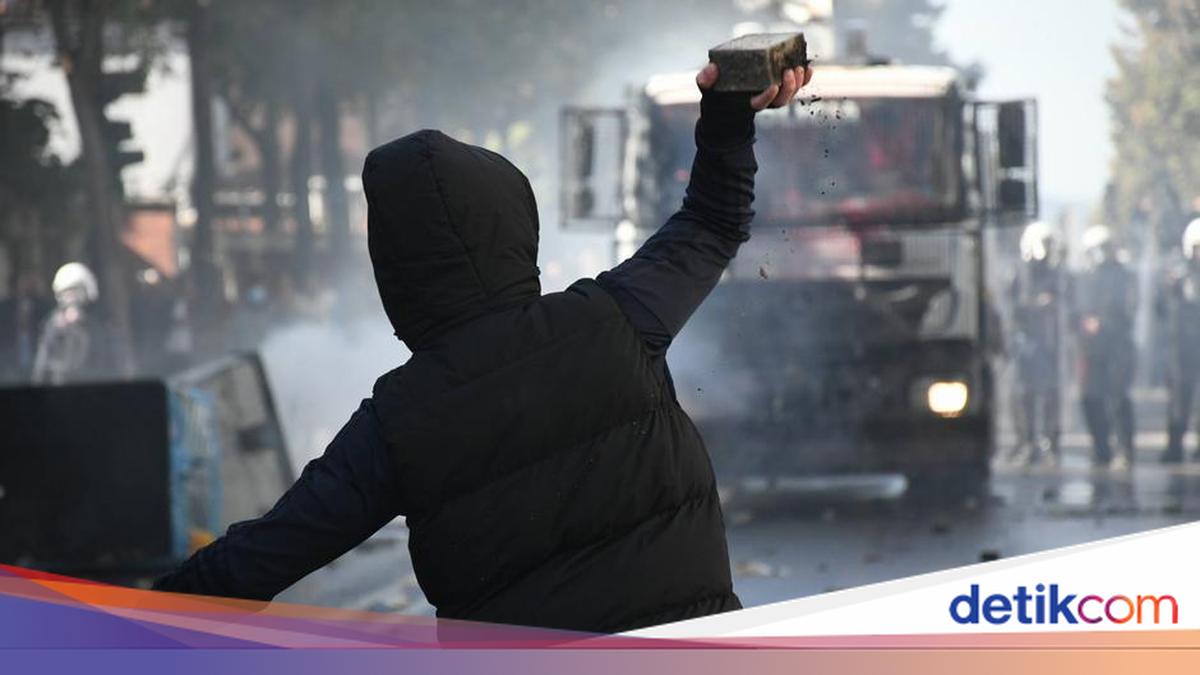
The impact of the 13 October demonstrations was still visible as students and lecturers from the University of Tirana gathered outside the Ministry of Education in Albania’s capital on Tuesday (20 October) to voice their dissatisfaction once again.
Broken windows had yet to be replaced, and the building’s walls remained blackened by a fire during the demonstration. For nearly five months, Albania has been gripped by a wave of peaceful protests against the government. The actions were initially prompted by plans by Jared Kushner, US President Donald Trump’s son-in-law, and associates to build a luxury hotel complex in a protected nature reserve. The plans became public and sparked opposition.
Since then, anti-government and anti-corruption demonstrations have continued to grow. University students and secondary-school pupils are now involved in almost daily clashes with police. The most intense clashes so far took place last week.
Protesters have denounced corruption, poor university management and rising education costs in Albania. They are also demanding the resignation of Prime Minister Edi Rama, who has been in office since 2013.
Social media drives demonstrations
Wearing a black hooded jacket and a scarf over her face to conceal her identity, a woman who asked to be called Sara told DW she feared the consequences of speaking to the press.
“Protesters communicate through text messages. That’s the only way,” she said.
Sara ended the interview early when some demonstrators began throwing stones at the Ministry of Education building. Police then pushed protesters and journalists away from the scene and used water cannon to disperse the crowd.
“Social media has now become the most important public space, even more important than physical spaces,” Besmir Semanaj, a prominent Albanian cybersecurity activist, told DW.
“Young Albanians no longer organise through traditional structures such as political parties, associations or public calls to action. Instead, they organise through tools that are part of their everyday lives: their phones,” he added.
According to Semanaj, the most widely used channels include Instagram, WhatsApp groups organised by year, department and student residence, and Telegram channels for general announcements. TikTok is used to share videos. He added that those particularly concerned about communications security also use the Signal messaging app.
“This is a horizontal organisational structure, without individual ‘leaders’ and without a central command,” Semanaj said. “That is what makes it difficult for the government to understand and control the situation.”
PM Edi Rama accuses Antifa of driving protests
Rama has described the wave of youth resistance as a “hybrid war”. He said demonstrators believe they can “make Albania a better country through TikTok, even though they can’t string together more than seven sensible words”.
Rama said that not all protesters were terrorists, but accused them of being influenced by an ideology aimed at destroying and overturning the existing order.
For nearly five months, Rama has accused various parties of being behind the anti-government and anti-corruption protests. He has alleged that the governments of Greece, Russia and Iran are also fuelling public discontent.
Most recently, Rama accused “Antifa”, the decentralised global anti-fascist movement, of stoking anti-government and anti-corruption sentiment in Albania.
“These are young people who have been radicalised and ideologically indoctrinated, and are acting under pressure from or the influence of a new dark force emerging in Europe and the United States. This force has been designated a terrorist organisation by the US president: Antifa,” Rama claimed.
However, Redion Qirjazi, a security researcher specialising in violence prevention and conflict resolution, told DW that Rama’s accusation was unlikely to be true.
“That is a serious allegation requiring equally strong evidence,” Qirjazi said. “So far, there has been no verifiable evidence of an organised Antifa structure in Albania, let alone of its involvement in coordinating the demonstrations.”
According to Qirjazi, Rama’s reference to Trump’s statement describing Antifa as a terrorist group is also problematic.
“Antifa is not a single international organisation with a centralised structure or leadership. The term is a broad label for various movements and groups that share one fundamental feature: an anti-fascist stance,” he said.
Sara also rejected Rama’s description of her and fellow demonstrators as “terrorists”.
“There are groups willing to use violence. That’s true. But I have nothing to do with them,” she said. “As soon as I see violence, I move away. I oppose it.”
Is Rama trying to divert attention?
Arlind Qori, leader of the Together Movement, a social-democratic opposition party with only one seat in Albania’s parliament, said young people had taken to the streets because they were dissatisfied with conditions, not because of any particular ideology.
“Young Albanians are angry about the current socio-economic situation: poverty, the number of parents forced to emigrate because they cannot support their families, the deterioration of the education system, and the lack of prospects after graduation,” Qori said.
He added that students’ main demand was Rama’s resignation, not a socialist revolution.
“People are not demanding anything radical. They simply want a corrupt head of government to resign. That is a basic and moderate demand. But Edi Rama continues to respond with police violence and arrogance,” Qori said.
Qirjazi said Rama’s allegations of foreign interference could be a political strategy.
“When a government faces demonstrations and public dissatisfaction, linking protesters to extremism and foreign influence can shift attention away from the root causes and towards a national security narrative,” he said.
According to Qirjazi, this approach can be used to undermine public trust in protesters, weaken public support for them and justify harsher repressive measures in the name of law and order.
Semanaj said governments often use this pattern to dismiss or discredit critical voices.
“Demonstrations are portrayed as violent actions. Young people are depicted as being manipulated, while the legitimate issues they raise—university conditions, tuition fees, corruption and a lack of future prospects—disappear from the news agenda,” he said.