
Struggling with Bureaucracy, Street Food Vendor Files Judicial Review to Simplify Halal Certification
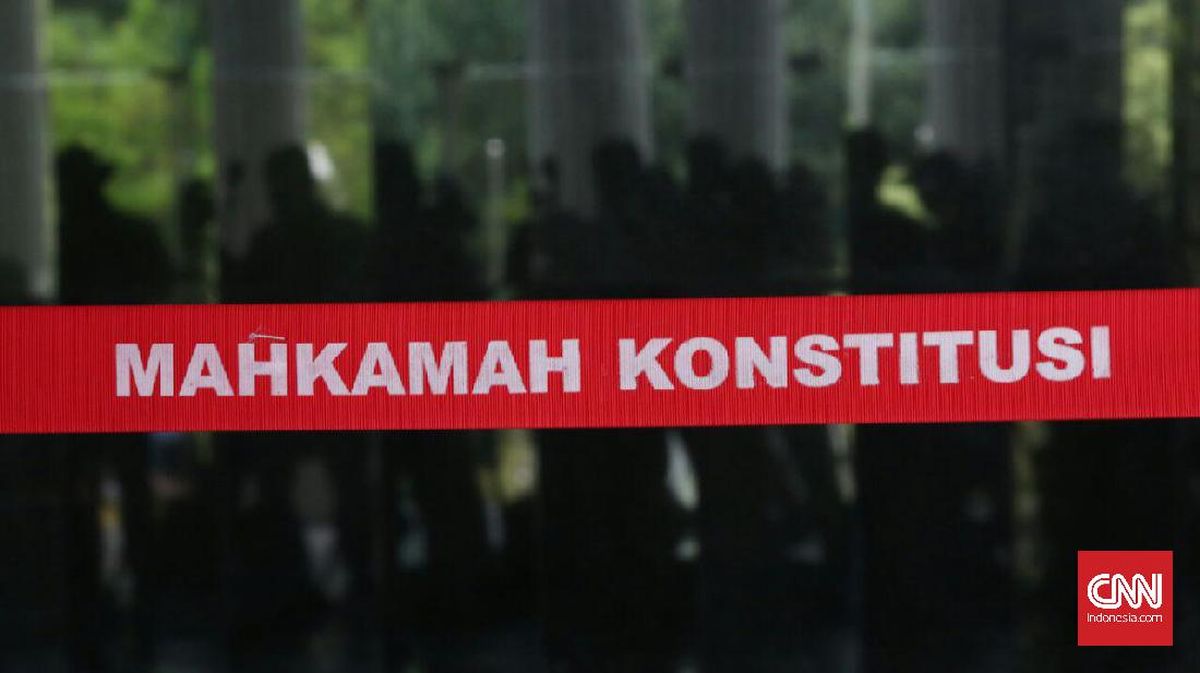
A culinary trader named Wahyu Triana Sari, commonly known as Ana, filed a petition for a judicial review of Law Number 33 of 2014 concerning Halal Product Assurance (UU JPH), as amended by Law Number 6 of 2023 (Job Creation Law), to the Constitutional Court on Wednesday (23/9).
The application was submitted through legal counsel Viktor Santoso Tandiasa, Nur Rizky Khafifah, and Isam Saifudin from the VST and Partners Law Office.
“This step is not taken to reject halal certification, but rather so that she, as a micro and small enterprise (MSE) actor, can receive ease of processing and facilitation from the Government in managing/obtaining halal certificates/statements, as well as receiving fair treatment regarding the timeframe for the implementation of halal product obligations, which has resulted in sanctions ranging from warnings to product withdrawals,” said Viktor in a written statement on Wednesday (2rol9).
Viktor noted that Ana sells seblak, risoles, toast, iced tea, instant noodles, and gabin cakes daily, both online and offline. From this small business, she supports her family’s livelihood.
Ana reportedly only recently learned that her products must be halal-certified or have a halal statement by 17 October 2026, as mandated by Article 160 of Government Regulation Number 42 of 2024. Failure to comply puts her at risk of administrative sanctions, which could lead to products being withdrawn from circulation.
Ana fears she will be unable to meet the deadline despite her efforts to arrange certification. Viktor explained that Ana’s efforts have been hindered by several factors, including a lack of guidance, manuals, and government socialisation; the requirement to possess a Business Identification Number (NIB) through the OSS system, including selecting the correct Indonesia Standard Industrial Classification (KBLI); limited quotas for Free Halal Certification (SEHATI) assistance; and the costs of assistance from Halal Inspection Agencies for those who do not receive free quotas.
“The greatest difficulty Ana faces is having to seek information independently, as socialisation regarding how to obtain halal certificates or statements has not yet reached micro-level entrepreneurs like herself,” said Viktor.
Furthermore, when attempting to process the halal statement via the SIHALAL website online with her husband’s help, Ana encountered obstacles. The first step requires an NIB from the OSS. In creating the NIB, Ana had to provide administrative location documents, determine coordinates, and determine the KBLI. It was at this stage that she became confused.
“If the wrong classification is chosen, she must restart the process, yet an easy-to-understand guide to matching her products with the KBLI has not been found on the OSS website of the Ministry of Investment and Downstreaming/BKPM,” said Viktor.
As of the filing of this petition to the Constitutional Court, Viktor explained that Ana does not yet possess a halal certificate or statement, as she is still waiting for the verification of basic requirements on 1 October 2026 to obtain an NIB. Even then, there is a possibility that the KBLI on the obtained NIB will not match the products Ana sells, forcing her to repeat the process.
Even after the NIB is issued, Viktor clarified, there are several other stages before a halal certificate is issued. This means that even if the NIB is issued on time, Ana would only have about two weeks to complete all stages before the 17 October 2026 deadline.
Viktor stated that what Ana is experiencing is shared by many other traders. According to data from the Ministry of Cooperatives and SMEs and BPS, there are approximately 1.77 million small businesses and 64.6 million micro-enterprises, while registered Halal Product Process Assistants (PPH) number only about 107,000 people—roughly one assistant for every 618 entrepreneurs. The quota for Free Halal Certification for 2026 is only 1.35 million, or about two per cent of MSEs.
Therefore, if many entrepreneurs fail to meet the deadline, the cause lies more in the limited state facilitation and the backlog of certification applications, rather than the negligence of the entrepreneurs themselves.
In the main petition, the Petitioner through his counsel, Viktor Santoso Tandiasa, is requesting the Constitutional Court to review the management of Halal Statements (Article 4A paragraph (1) and Article 33A).
“The Petitioner requests that the halal statement for MSEs be interpreted as ‘independent’ or ‘self-declare.’ The multi-layered mechanism—comprising PPH assistance, the Fatwa Committee determination, and the issuance of the BPJPH certificate—is deemed contrary to the spirit of easy self-declaration. For processed products where all raw materials are already halal-labelled, the processed products should be able to obtain a halal statement, accompanied by the government’s responsibility to prepare guidelines and conduct coaching and supervision,” explained Viktor.
The Petitioner also requests that the sanctions for MSEs under Article 67 paragraph (3) of the UU JPH only apply after the government has provided facilitation for MSE actors to obtain halal certificates or statements.
“This means that before the government fulfills its responsibility to provide facilitation, sanctions regarding the halal obligation for products traded by MSEs should not be applied,” said Viktor.
Additionally, the Petitioner is requesting an interlocutory injunction—a temporary suspension of the halal certification obligation for products traded by MSE actors until the Constitutional Court delivers its final decision. This is due to the fact that the 17 October 2026 deadline is less than a month away.
According to the Petitioner, if product withdrawal sanctions are immediately enforced, the resulting losses would be difficult to recover. For small traders, product withdrawal means the cessation of a family’s livelihood. Furthermore, withdrawn products may be perceived by the public as having questionable halality, and once customer trust is lost, it does not easily return.
Source: jawawa.id (https://jawawa.id/newsitem/struggling-with-bureaucracy-street-food-vendor-files-judicial-review-to-simplify-halal-certification-1790143082)
Originally published by CNN Indonesia (https://www.cnnindonesia.com/nasional/20260923113150-12-1407190/kepentok-birokrasi-tukang-seblak-uji-materi-permudah-sertifikat-halal), translated from Indonesian