
Struggling to Find Work After Vocational School? Try This Ministry Programme
Employment opportunities abroad for SMK (vocational school) graduates remain wide open. Malaysia, Japan, Taiwan, Hong Kong, Germany, Turkey and a number of European countries currently need Indonesian workers across various sectors, ranging from caregivers, manufacturing, welding, construction and transportation to hospitality, nursing, agriculture and wellness therapy.
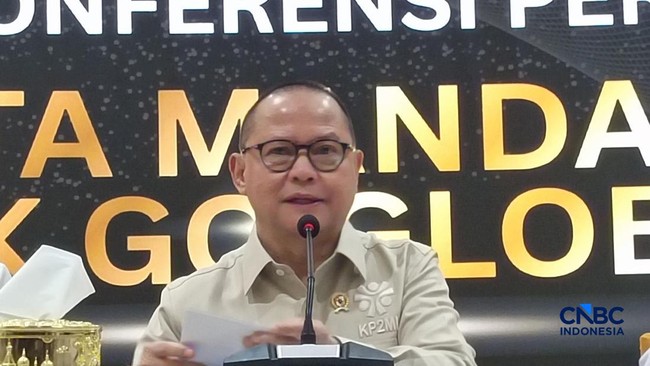
To meet this demand, the Ministry for the Protection of Indonesian Migrant Workers (KP2MI) has launched the Asta Mandala SMK Go Global programme, aimed at equipping SMK graduates and members of the public with competencies matching the needs of industries in destination countries.
Minister of P2MI Mukhtarudin said the training under the programme is not carried out generically, but is based on workforce requests submitted by the placement countries. As such, participants who complete the programme are expected to be absorbed directly into the international labour market.
“So the mechanism is: first there is the market, first there is the placement country and the sector, then we identify what competencies are needed before deciding what training to provide. So it is train, certify, place. The KPI is therefore placement, not merely training,” Mukhtarudin said at a press conference at his office in Jakarta on Wednesday (5/8/2026).
He explained that the government first maps workforce needs through job orders (JO) verified by Indonesian representatives in each placement country. Only once the required competencies are known are participants given matching training.
“So the orders already exist. Once we have the order, we know what competencies are needed and then train accordingly,” he said.
Mukhtarudin revealed that the countries currently needing the most Indonesian migrant workers include Malaysia, Taiwan, Japan, Hong Kong, Turkey, Germany, and several countries in Europe and the Middle East.
“The countries with the greatest demand are Malaysia, Taiwan and Japan, including Hong Kong, and several European countries including Turkey and Germany. In Asia there is also the Maldives, for wellness therapists. So most demand is from Asia, Europe and also the Middle East, but for formal work — hospitality and nursing — that is in the Middle East,” he said.
Registration opens on 12 August 2026
Mukhtarudin said those interested in joining the Asta Mandala SMK Go Global programme can register from 12 August 2026. Registration is conducted through the Ministry of P2MI centres spread across 23 provinces.
“Registration starts on 12 August. It is now being publicised by all our centres in the 23 provinces,” he said.
He explained that the programme is prioritised for SMK graduates and members of the public who wish to work abroad. In the initial phase, the government is applying an upskilling scheme — enhancing the competencies of participants who already possess basic abilities in their field of work.
“Because this is a quick win, we are starting with upskilling. So not from zero. It is not for people who have no background in a particular skill. For example, someone may already have welding skills but lacks the language and certification. Others may have language skills but lack the technical training. So we profile each participant during recruitment — what abilities they already have, what their basic skills are, which languages they command and whether they hold any certifications,” Mukhtarudin explained.
The training provided comprises three main components: improving technical ability, foreign language learning according to the destination country, and competency certification.
“The capacity-building activities include technical training, then language and certification. So there are three kinds: language, technical, and certification,” he said.
According to him, the training does not form part of the formal curriculum at SMKs or higher education institutions. The programme is designed as supplementary training so that participants meet the competency standards required by global industry.
“We are not linking it to the curriculum in Dikdasmen (primary and secondary education) or Dikti (higher education). It is entirely separate. This is more about strengthening technical skills, language and certification. It is not included in the curriculum because this is a short-term programme, a quick win,” he said.
These are the requirements
Mukhtarudin said prospective participants must also be committed to working abroad. For this reason, from the outset participants are required to sign a declaration of willingness to work overseas and obtain parental permission.
“Equally important is a declaration of willingness to work abroad, because the target is indeed to go overseas. So from the start there is a written statement of parental permission, and a declaration of willingness to work abroad, so participants know that joining this training means working overseas,” he said.
He added that from 2027 the training will be conducted on a regular basis, so that participants without basic skills can also join the programme, with a longer training duration of around six to seven months.
Mukhtarudin assured that all training through to certification is provided free of charge, as it is funded through the state budget (APBN).
“Everything is funded by the APBN, free of charge. There are no fees for this capacity-building training, right through to certification. The technical training, the language training, the certification — all are financed by the APBN. So everything is free for prospective migrant workers who are ready to work abroad and need their capacities enhanced,” he concluded.