
Struggling to Coordinate Public Transport as the Master Plan Is Violated
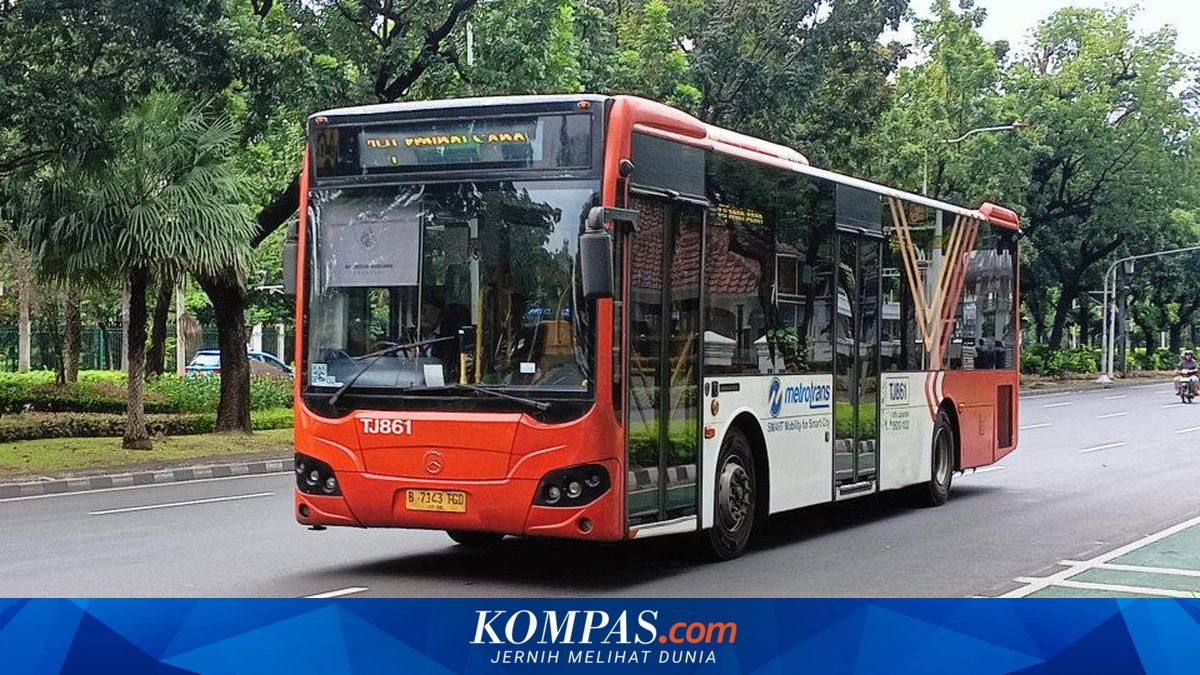
Jakarta — Coordinating Indonesia’s tangled public transport system remains a never-ending challenge, with mass transit in many regions failing to progress and often appearing disorganised. Agus Pambagio, adviser to the Indonesia Transport Advisory Council (MTI) and a public policy observer, said public transport in Indonesia is not operating well.
‘The problem is that coordinating public transport in Indonesian cities is difficult because the master plan is broken. When the master plan changes, there is a law; it overrides everything,’ Agus said when contacted by Kompas.com recently.
Ignoring the master plan forces the government to expend far more energy and budget if it wants to rebuild the system from scratch.
Although Indonesia’s national performance remains poor, Agus concedes a glimmer of hope in the capital. Jakarta is increasingly regarded as starting to integrate its transport modes, although it still has work to do in first mile and last mile accessibility.
‘For example, Jakarta still lacks the first mile; the last mile must exist. And Jakarta has become good; JakLingko just needs to be expanded. So, in the future it will be easy to connect to Transjakarta, to the LRT, to the MRT, to KCI (Kereta Commuter Indonesia),’ he said.
However, Jakarta’s success story has not spread to other major cities in Indonesia. Disparities in facilities and commitment from local leaders mean major cities like Bandung or Surabaya remain trapped in classic congestion and car-dominance.
‘Jakarta is already okay, say around 70-80 per cent. But in other areas, not yet, such as Bandung, Surabaya, and others. That’s because the master plan is being violated. The planners are confused about where to begin,’ he said.
On the other hand, Agus highlighted how the government seems hesitant to restrict the growth of private vehicles, both cars and motorcycles. As a result, road capacity growth will never catch up with vehicle numbers.
‘The easiest solution is public transport. And the policy on vehicles has never been properly settled, for how many years. But again, all planning must be done in stages,’ Agus said.
According to Agus, Indonesia is a highly heterogeneous country. Hence a roadmap is needed to resolve transport problems.
He regrets the sectoral ego and short-term political zeal of policymakers who often ignore careful planning in favour of pursuing instant development or simply political commodities.
‘I’ve always warned about that. But the government wants to act while in power, so just strike now. There should be a staged approach,’ Agus said.
Moving forward, transport challenges are expected to grow more complex as demographics shift and user attitudes towards public transport change.
Agus added that the development of public transport must also follow public demand; he believes different generations may have different expectations.
Reforming transport is no longer merely about moving people from point A to point B, but about comfort, timeliness, and using technology appropriate for the era.