
Strongest in 75 Years, 'Monster' El Niño Threatens Millions with Famine
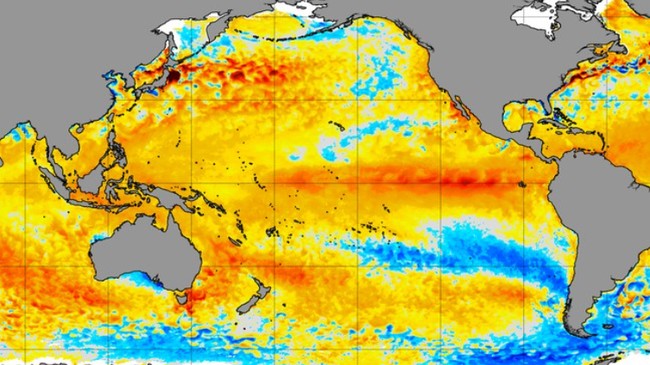
The current El Niño phenomenon has the potential to become one of the strongest in 75 years, with rising sea temperatures that could surpass historical records. This event is expected to increase global temperatures while triggering extreme weather such as droughts, floods, heatwaves, and forest fires across various parts of the world. Southern Africa, the Sahel region, Central America, the Caribbean, and parts of Asia are the most vulnerable to its impacts. The risk is compounded because many countries are already facing food crises, geopolitical conflicts, and disruptions to fertiliser supplies due to war in the Middle East.
Hundreds of years ago, Peruvian fishermen noticed that every few years, anchovies in the equatorial Pacific Ocean would suddenly disappear. Because this phenomenon occurred around Christmas, they named it after El Niño Jesus—the Christ Child. Today, the phenomenon known as El Niño is recognised as a recurring climate pattern that influences weather worldwide. On 11 June, the United States’ National Oceanic and Atmospheric Administration (NOAA) announced that a new El Niño had begun, and this time, its impacts could be enormous. El Niño is triggered by changes in wind patterns over the equatorial Pacific, drawing warmer surface water masses into the region. Its strength is measured by the increase in sea temperatures; a rise of more than 2°C above the long-term average is classified as a strong El Niño.
Most global climate forecast models predict sea surface temperatures will rise by more than 2.5°C throughout the remainder of this year and into the first few months of 2027, potentially exceeding 3°C. If this occurs, it would be the strongest event in 75 years of modern observational records, surpassing the previous record held by the 1982-1983 El Niño, which saw a temperature increase of 2.5°C. Anchovies prefer cooler waters and migrate south during El Niño, but the impacts extend far beyond Peruvian fishermen. The vastness of the Pacific Ocean and the interconnectedness of global weather systems mean that every El Niño triggers a massive redistribution of heat and moisture around the world.
One of the primary effects is an increase in global temperatures. While El Niño is not caused by climate change, the two phenomena reinforce each other. The strong El Niño of 1997-1998 made 1998 the hottest year on record at the time, with average temperatures nearly 1°C above pre-industrial levels. That record was broken after the strong El Niño of 2015-2016, when global temperatures in 2016 exceeded 1°C above the pre-industrial average. Currently, the hottest year on record is 2024, with global temperatures reaching 1.6°C above pre-industrial levels. Climate scientists predict that 2027 could be even hotter.
The impacts of El Niño vary across countries and continents. The 1997-1998 and 2015-2016 events caused major disruptions in eastern and southern Africa, Central America, and Oceania. Droughts devastated farmland and grazing areas, leaving millions facing hunger and forcing many to migrate in search of food. Similar impacts are likely to recur. On 9 June, the UN’s Food and Agriculture Organization (FAO) warned that populations in southern Africa and the Sahel region, a semi-arid belt south of the Sahara Desert, face the highest risk. The previous El Niño in 2023-2024, when sea temperatures peaked at 1.5°C above normal, was linked to the worst drought in over a century in southern Africa. In East Africa, the FAO warned that Somalia could face a double blow of drought until October, followed by heavy rains until December. This is not necessarily good news; after a prolonged dry period, parched soil struggles to absorb water, so heavy rains can actually trigger major flooding. Central America, the Caribbean, and parts of Asia also face drought risks.
El Niño typically makes Indonesia, Australia, India, South Africa, and parts of Central America drier, increasing the risk of drought, forest fires, and food production disruptions. Conversely, regions such as the west coast of South America, East Africa, and parts of North America and China tend to receive higher than normal rainfall. These impacts can last for several months to more than a year, depending on El Niño’s strength. Many of these regions are already in a vulnerable state due to ongoing armed conflicts and pre-existing food crises. The war in Iran and the closure of the Strait of Hormuz caused fertiliser shortages just as many farmers needed it for the next planting season. The reopening of the strait, announced by US President Donald Trump on 14 June, was deemed too late to address the urgent need. The European Commission has even warned of potential humanitarian disasters in several African nations such as Sudan, Somalia, South Sudan, and Chad, as well as in Ecuador, Venezuela, and Haiti in the Americas.
Nevertheless, the impacts of El Niño can still be mitigated through various measures, such as planting drought-resistant seeds, preparing livestock feed reserves, and storing water supplies. However, experts stress that preparations must begin now. Indonesia’s Meteorology, Climatology, and Geophysics Agency (BMKG) has reminded the public to be vigilant for the peak of the dry season, which is expected to occur between July and September 2026. Early anticipation is needed to maintain water availability, public health, and to minimise impacts on strategic sectors such as agriculture, energy, and the environment.
Source: jawawa.id (https://jawawa.id/newsitem/strongest-in-75-years-monster-el-nino-threatens-millions-with-famine-1781675506)
Originally published by CNBC Indonesia (https://www.cnbcindonesia.com/research/20260617101101-128-743289/terkuat-dalam-75-tahun-el-nino-monster-ancam-jutaan-orang-kelaparan), translated from Indonesian