
Strongest El Niño in a Century Looms: Can Asia Meet Its Food Needs?
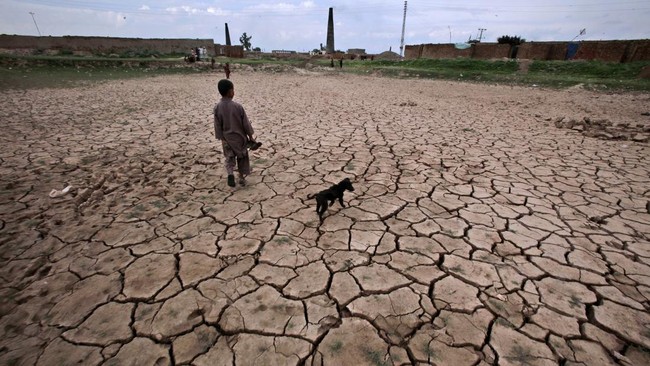
El Niño has returned to global attention because of its potential to disrupt agricultural production and food security in various regions, including Asia and Indonesia. This phenomenon is not merely a change in the weather. When rainfall patterns shift, the impact can spread from farmland to food production, commodity prices, farmers’ incomes, and the need for humanitarian assistance.
El Niño is a natural climate phenomenon in which sea surface temperatures in the central and eastern Pacific Ocean become warmer than normal. This change then affects rainfall patterns and temperatures in various parts of the world. The Food and Agriculture Organization of the United Nations (UN FAO) notes that El Niño occurs on average every two to seven years and usually lasts around nine to twelve months. Because its development is relatively slow and can be predicted several months in advance, its impact can actually be anticipated through early warning systems and preparation in the food sector.
Southeast Asia is threatened with drier conditions. The impact of El Niño differs by region. In parts of Southeast Asia, the phenomenon generally brings below-normal rainfall. Drier conditions can reduce water availability for agriculture while increasing pressure on food production. Conversely, some parts of Central Asia may experience above-average rainfall. The risks that arise are also different, ranging from floods to landslides that can damage crops, wash away seeds, and cause livestock losses.
Disruption to agriculture can quickly develop into an economic and humanitarian problem. Crop failure depresses farmers’ incomes and food supplies, while livestock losses can wipe out the main assets of households in rural areas. FAO notes that the 2015-2016 El Niño affected more than 60 million people and triggered humanitarian assistance needs of around US$5 billion, or Rp88.59 trillion (US$1 = Rp17,717), in 23 countries.
The risk is not determined solely by the size of the rainfall decline. The impact can be far more severe in countries already facing conflict, chronic food insecurity, and high dependence on rain-fed agriculture. FAO estimates that more than 80% of the impact of drought on the agricultural sector will occur in low- and middle-income countries. The pressure can also cascade. Farmers may first lose their harvests, then their livestock, and finally their main source of livelihood. For this reason, El Niño can develop from a weather disruption into economic pressure and a humanitarian crisis.
Asia is entering a food risk zone. Asia is one of the regions receiving major attention because El Niño can disrupt food markets that are important to the world. In India, the phenomenon can weaken the summer monsoon and depress rain-dependent crops, including rice and maize, during crucial growth periods. The experience of 2015 showed the risk. Maize and rice production declined in several major producing countries and helped drive up food commodity prices.
For the current El Niño episode, FAO has mapped the risk of agricultural drought stretching from Pakistan and India towards Myanmar, Thailand, Cambodia, Vietnam, the Philippines, Indonesia, and Timor-Leste. With Asia’s position as both a major producer and consumer of rice, maize, vegetable oils and various other food commodities, production disruptions in the region can affect not only farmers but also food inflation and trade.
One key to facing El Niño is knowing the risk before losses occur. FAO uses 41 years of satellite data through the Agricultural Stress Index System (ASIS) to map agricultural areas and grazing land most vulnerable to El Niño-related drought. In some locations, the analysis can narrow the risk to a scale of around one square kilometre. This information allows farmers to make earlier decisions, from delaying planting, choosing drought-resistant varieties, providing animal feed, to increasing water reserves. Governments can also concentrate assistance such as irrigation, seeds, animal feed, and cash transfers to the most at-risk areas.
This approach has been shown to reduce impact. Ahead of the 2023-2024 El Niño, almost US$31 million, or around Rp549.23 billion, was allocated to more than two million people in seven southern African countries for the provision of seeds, livestock support, and strengthening of early warning systems.
Indonesia is already facing El Niño pressure. The risk is increasingly relevant for Indonesia. Indonesia was already facing strengthening El Niño pressure in August 2026. BMKG recorded that El Niño had reached a very strong category, while 76.5% of Indonesia’s territory had entered the dry season and low rainfall dominated 90.79% of the territory. For the agricultural sector, these conditions increase the risk of water shortages, shifts in the planting season, and pressure on the productivity of rain-dependent crops. For this reason, irrigation readiness, water reserves, adjustments to planting times, and the delivery of climate information to farmers are important to reduce potential disruptions to food production.
El Niño is disrupting commodity markets. The El Niño phenomenon, which is expected to be one of the strongest in more than a century, is beginning to raise concerns in commodity markets. The accompanying extreme weather risks disrupting production of a number of major food commodities, from sugar and cocoa to coffee. The UK Met Office estimates that sea surface temperatures in the Pacific region could rise by up to 3 degrees Celsius, far above the increase that generally occurs during El Niño, namely more than 1 degree Celsius.
Source: jawawa.id (https://jawawa.id/newsitem/strongest-el-nino-in-a-century-looms-can-asia-meet-its-food-needs-1787647892)
Originally published by CNBC Indonesia (https://www.cnbcindonesia.com/research/20260824170448-128-762026/el-nino-terkuat-seabad-mengintai-sanggupkah-asia-penuhi-bahan-pangan), translated from Indonesian