
Strong US Dollar and Rising Oil Prices Put Rupiah Under Pressure as BI Steps In
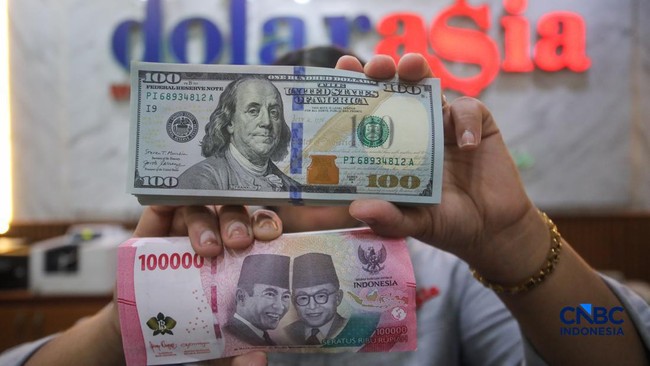
Jakarta, CNBC Indonesia — Bank Indonesia (BI) has outlined several external factors putting pressure on the rupiah, including higher-than-expected inflation in the United States and uncertainty over the Middle East conflict, which has kept global oil prices above US$105 a barrel.
Erwin G. Hutapea, head of BI’s Monetary and Securities Asset Management Department, said rising US inflation had fuelled expectations that the Federal Reserve would pursue a more aggressive interest-rate policy.
Uncertainty over the resolution of the conflict in the Middle East has also kept oil prices high and increased future fiscal risks.
“These conditions have strengthened the US dollar and driven portfolio outflows from emerging-market assets amid rising bond yields,” Erwin said in a written statement on the rupiah exchange rate on Thursday (15 October 2026).
Pressure on emerging-market currencies was also reflected in the US Dollar Index (DXY), which rose sharply at one point to its highest level since May 2025.
According to Refinitiv data, the rupiah opened at Rp17,900 per US dollar, weakening by 0.03% from Wednesday’s close (14 October 2026) of Rp17,895 per dollar.
At 9am Western Indonesian Time, the DXY, which measures the greenback against six major currencies, was down 0.47% at 102.068.
In the bond market, the yield on two-year US Treasuries briefly rose by 12 basis points to 4.90%. Higher US bond yields make dollar-denominated assets more attractive to investors, adding to pressure on capital flows in emerging markets.
Despite the external pressures, BI said the rupiah’s movements remained broadly in line with those of regional currencies. Quarter-to-date, the rupiah had weakened by a limited 0.17%.
Indonesia’s external resilience also remained intact, with foreign exchange reserves totalling US$146.3 billion at the end of September 2026, BI said.
BI continues intervention to support the rupiah
BI said it would remain active in the market to ensure that market mechanisms function properly and that the rupiah’s movements remain consistent with economic fundamentals.
Erwin said intervention was being carried out consistently through several instruments, both in domestic and overseas markets.
In offshore markets, BI intervenes through Non-Deliverable Forward (NDF) transactions. In the domestic market, it intervenes through spot transactions and Domestic Non-Deliverable Forward (DNDF) transactions.
BI also buys government bonds (SBN) in the secondary market to support financial-market stability.
The central bank also manages the money-market interest-rate structure by maintaining adequate liquidity. It continues to coordinate and communicate intensively with corporations and market participants.
These measures are intended to stabilise the rupiah amid heightened global uncertainty, particularly developments in US inflation, the direction of Federal Reserve interest-rate policy and geopolitical dynamics affecting energy prices and international capital flows.
Source: jawawa.id (https://jawawa.id/newsitem/strong-us-dollar-and-rising-oil-prices-put-rupiah-under-pressure-as-bi-steps-in-1792032653)
Originally published by CNBC Indonesia (https://www.cnbcindonesia.com/market/20261015090856-17-776356/dolar-as-strong-minyak-memanas-bi-mati-matian-jaga-rupiah), translated from Indonesian