
Stroke Services in Indonesia Face Referral Obstacles and Access Inequality
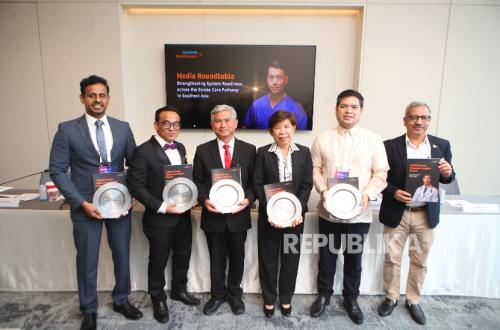
Delays within the healthcare system before patients receive medical intervention remain the greatest obstacle to stroke services in Indonesia. This finding was revealed in the latest ‘Strengthening Stroke System Readiness Across ASEAN’ report, launched by Siemens Healthineals at the Hospital Management Asia 2026 event in Bangkok, Thailand.
The report summarises perspectives from seven leading health experts from Indonesia, Malaysia, the Philippines, Singapore, Thailand, and Vietnam, including Dr Affan Priyambodo, Medical Director of Dr. Sardjito Central General Hospital, Yogyakarta.
According to the experts, the main challenges in stroke management in Indonesia relate more to the medical service system than to clinical aspects. Significant time is wasted during the inter-hospital referral process and the administration of insurance before patients receive medical treatment.
Stroke is a leading cause of death and disability in the Southeast Asian region. According to the World Health Organisation (WHO), Southeast Asia accounts for more than 40 per cent of stroke-related deaths globally and bears almost half of the total stroke burden in developing nations. Approximately one-third of stroke survivors experience severe long-term disability.
In Indonesia, stroke is a leading cause of death. The burden of this disease is increasing alongside the growing elderly population, while access to specialist services remains uneven between Western and Eastern Indonesia.
“Every healthcare system in Southeast Asia is at a different stage of stroke service development. However, many of the challenges faced are actually the same,” said Fabrice Leguet, Managing Director, ASEAN, and Head of Enterprise Services, Asia Pacific & Japan, Siemens Healthineers, in a statement on Thursday (3/9/2026).
“In Indonesia, the challenge is ensuring that the type of stroke a patient experiences can be identified accurately and quickly. The outcome of treatment depends heavily on how well the entire stroke service system works in an integrated manner, from recognising symptoms and activating emergency medical services to rapid diagnosis, treatment, and rehabilitation,” said Alfred Fahringer, President Director of Siemens Healthineers in Indonesia.
Indonesia has made significant progress through the Stroke Empowerment Programme, a national initiative aimed at strengthening stroke service capacity across 514 regencies and cities.
As of April 2026, 231 regencies/cities have developed the capability to provide thrombolysis (blood clot-dissolving medication) as a standard for emergency stroke treatment. Another 81 regencies/cities possess more advanced capabilities for thrombectomy (clot removal) or treating brain aneurysms. The government aims for 100 per cent national coverage for thrombolysis services by 2027.
However, the availability of these services remains highly unequal. Almost all regencies/cities with thrombectomy capabilities are located in Western Indonesia, particularly Java, while communities in Eastern Indonesia still face limited access.
As a result, patients suffering from severe strokes often have to be referred from the hospital where they first received medical aid to facilities capable of performing thrombectomies. This referral process is a primary source of delay in stroke management.
Delays can even occur before the referral process begins. Low public awareness regarding stroke symptoms means the condition is often recognised too late. Furthermore, the lack of integrated emergency medical services (EMS) and triage protocols means many patients arrive at healthcare facilities without a clear treatment plan. Hospital workflows also vary significantly.
Financing factors further contribute to delays. BPJS Kesehatan, the organiser of the national health insurance programme, provides wide service coverage. However, gaps in financing for emergency stroke treatment and specialised services continue to slow access for some patients, even where facilities and treatment capacities are available.