
Strengthening the role of fathers through Pela Gandong
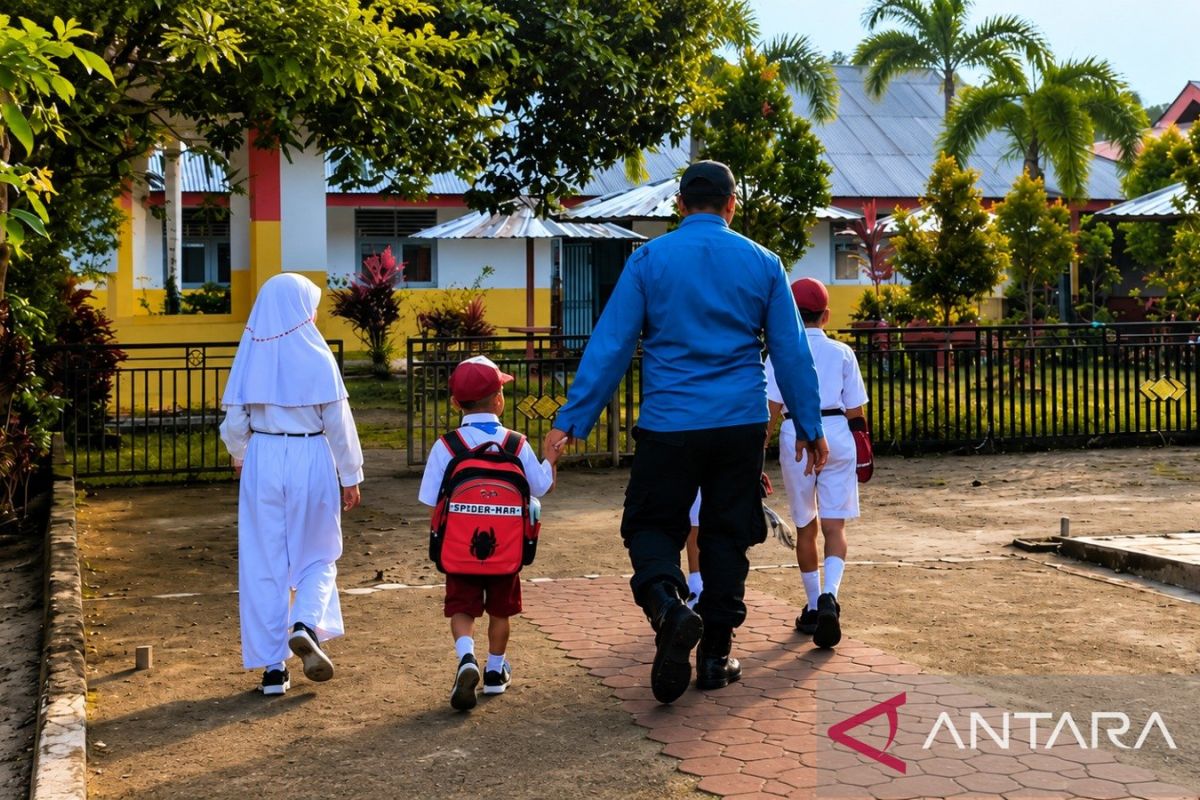
In the Land of Kings, the spirit of Pela Gandong serves as a reminder that raising children is not merely a domestic matter. It is a shared responsibility to prepare for Indonesia’s Golden Generation of 2045.
Ambon (ANTARA) - The morning sun had only just warmed the skies over Ambon City when a primary school child held her father’s hand at the school gate.
With a bag that looked larger than her body, Khayla Zhakira walked along, chatting about her lessons, her friends, and her ambitions. Her father listened, stroked her head, then hugged her before saying, “Study hard, won’t you? Father will be waiting to hear all about it this evening.”
To some, such a moment may seem ordinary. Yet for a child, this simple attention can become the foundation of a sense of security, self-confidence, and the conviction that there is always someone by their side at every stage of growth.
A father’s presence does not stop at the school gate. At home, he accompanies study and play, engages in dialogue, teaches discipline, and serves as a role model in daily life. It is from these humble family spaces that the character of future generations is formed.
The Head of the Ministry of Population and Family Development (Kemendukbangga)/BKKBN for Maluku Province, Dr. Edi Setiawan, said that paternal involvement is one of the key investments in building human resources towards Golden Indonesia 2045.
“Children need their father’s presence, not only physically but also emotionally. That presence will influence their psychological development, social abilities, and even their academic achievement,” said Edi.
Various studies also show that children who grow up with positive paternal involvement tend to be better able to manage their emotions, possess self-confidence, and build healthy social relationships.
Pela Gandong
In Maluku, strengthening the father’s role has strong social capital through the philosophy of Pela Gandong, a cultural heritage that teaches brotherhood, mutual care, communal cooperation, and shared responsibility.
Pela Gandong has long been known as a bond between villages, even across religions. Yet its values are equally relevant to child-rearing.
This philosophy teaches that everyone bears a moral responsibility to protect and strengthen one another. Within the family, this affirms that parenting is the shared responsibility of both father and mother, not solely the mother’s duty.
The spirit of ale rasa beta rasa (feeling what others feel) also fosters a warm family environment. In the context of parenting, the father is present as a listener, a guide, and a role model for his children.
Pela Gandong also builds a social environment that helps safeguard children’s growth and development. Children are raised not only by their immediate family but also by a community that reminds, protects, and instils life values.
Such togetherness is increasingly important amid the growing complexity of modern family challenges. Work commitments, high mobility, and technological developments often reduce the intensity of communication between parents and children. Yet emotional closeness is one of the primary defences in shaping a child’s character.
For this reason, Kemendukbangga/BKKBN continues to strengthen the culture of parenting through the Exemplary Father Movement of Indonesia (GATI), which encourages fathers to be actively present in their children’s lives.
The movement is reinforced by the Exemplary Father Movement for Civil Servants (GAT-Link), which encourages civil servants to set an example in building quality families. The government has also campaigned for the “Father Escorts the Child on the First Day of School” movement as a symbol that education is the joint responsibility of both father and mother.
According to Edi, all of these movements are not mere ceremony.
“What we want to build is a cultural change. Children need a father figure who is consistently present in their daily lives, not only on particular occasions,” he said.
Source: jawawa.id (https://jawawa.id/newsitem/strengthening-the-role-of-fathers-through-pela-gandong-1784245923)
Originally published by Antara (Indonesian) (https://www.antaranews.com/berita/5653159/menguatkan-peran-ayah-dengan-pela-gandong), translated from Indonesian