
Strengthening the Independent Seed Programme to Address Seed Shortages
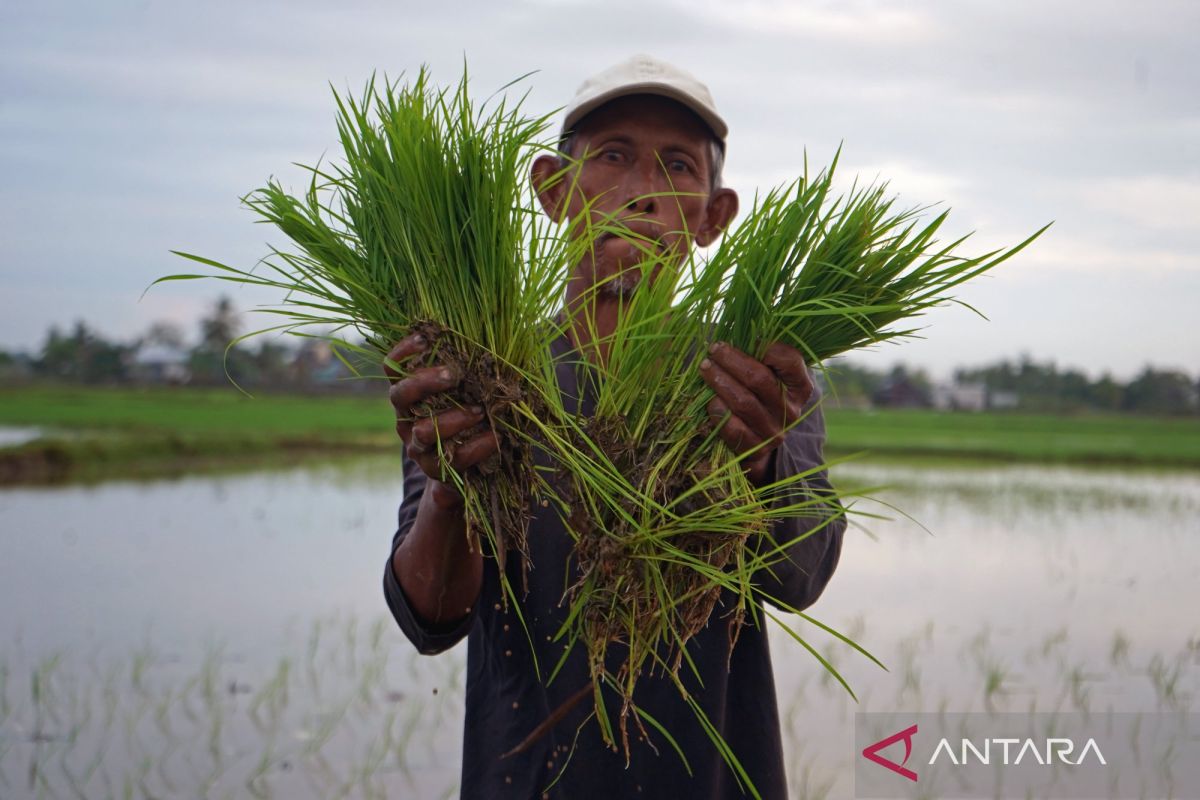
Jakarta — The Ministry of Agriculture is pursuing food self-sufficiency by 2025 as part of national food security. This success has been achieved through a range of efforts, such as accelerating the area under cultivation; providing agricultural production facilities including pre-harvest farm machinery, ameliorants, fertilisers, seeds, pesticides, and post-harvest machinery; increasing crop intensity; boosting productivity; and creating new paddy fields.
Among these efforts, seeds have emerged as a production factor playing a strategic role in boosting agricultural output. Empirically, high-quality certified rice seeds are shown to contribute 40-60 percent as a determinant of production. The government recognises this, protecting farmers when using seeds, as stated in Articles 30(1) and 30(2) of Law No. 22 of 2019 on Sustainable Agricultural Cultivation, which requires seeds to meet quality standards, be certified and labelled.
Seeds must be available to meet farmers’ needs. Farmers require seeds according to six ‘right’ principles: the right variety, the right quality, the right quantity, the right time, the right location, and the right price. Seeds that are not available as needed could be fatal for farmers’ livelihoods and could undermine national food security stability.
The Ministry of Agriculture previously pioneered the Mandiri Benih (Seed Self-Reliance) Programme by the Directorate of Seed Planting, Directorate General of Food Crops since 2015, by giving local breeders space to meet seed needs in situ (locally), which has proven to significantly support farming.
Now the programme needs to be strengthened and developed continuously and sustainably, especially in areas lacking superior quality varieties, thus relying on certified seeds from outside the region. The Seed Self-Reliance Programme aims to grow and develop seed producers, both new and established, to raise the capacity of Seed Distribution (BR) and enhance farmers’ ability to produce seeds locally (in situ) independently.
The Seed Self-Reliance Programme provides facilities to farmer groups/producers in the form of inputs such as seed sources, fertilisers, pesticides, and seed-packaging equipment. It even provides seed warehouses, drying floors, seed transport equipment, and training in rice seed production.
The operation principle of PMB (Mandiri Benih Programme) is to provide equipment for seed production and cultivation of candidate rice seeds for one PMB unit per one farmer group. One farmer group equates to 10 hectares. From that area, the programme aims to produce at least 30 tonnes of seed, assuming a high-quality seed yield of 3 t/ha. That figure is sufficient to meet seed needs for 1,200 hectares, assuming 25 kg of seed per hectare. The production could support seed self-sufficiency for six villages, each with 200 ha of paddy fields.
Since its launch in 2015, the programme has shown significant results, having developed 1,313 units on seed-breeding grounds spanning 13,130 hectares. Average potential seed production is 2.62 tonnes per hectare, equating to around 34,361 tonnes of rice seed—enough for seed needs across 1.3 million hectares.
In Majalengka, West Java, the Gangsa I Farmers Group has become a seed breeder. The lead breeder, Nasihin, is a former Mandiri Benih beneficiary, and to date can produce 1,200 tonnes of rice seed per year.